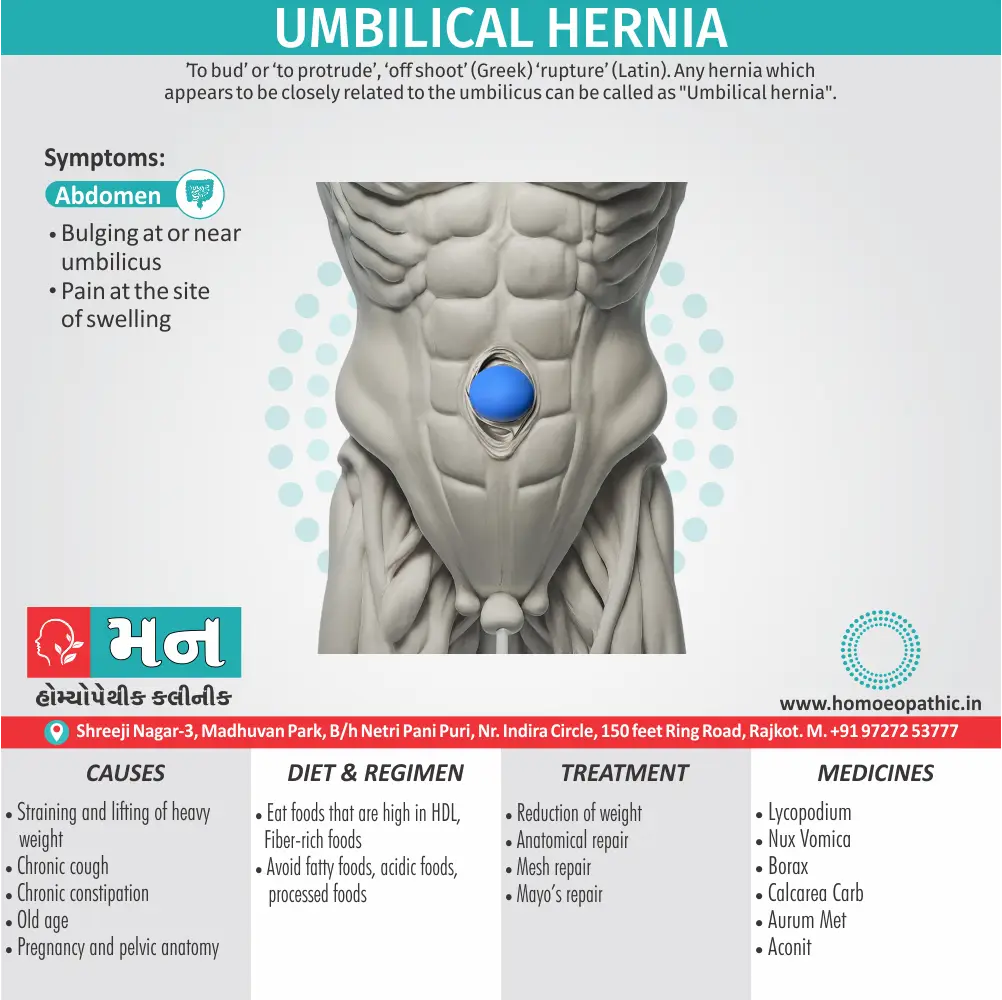
Umbilical Hernia
Definition
In Umbilical Hernia, Hernia means – ’To bud’ or ‘to protrude’, ‘off shoot’ (Greek) ‘rupture’ (Latin).[1]
Any hernia which appears to be closely related to the umbilicus can be called as “Umbilical hernia”.[2]
There are no direct synonyms for umbilical hernia, but it is sometimes referred to by other names, depending on the context:
- Omphalocele: This is a birth defect where the infant’s intestines or other abdominal organs stick out of the belly button (navel) through an opening in the abdominal muscles.
- Navel hernia: This is a more common term used to describe an umbilical hernia, especially in infants and children.
- Belly button hernia: This is a colloquial term for an umbilical hernia.
While these terms might be used interchangeably in some contexts, it’s important to note that omphalocele is a more severe condition present at birth, whereas umbilical hernias can develop later in life and are usually less serious.
Frequently Asked Questions (FAQ)
What is an Umbilical Hernia?
An umbilical hernia occurs when a part of the intestine pushes through the abdominal wall at the belly button (umbilicus). This creates a bulge in the navel area. Umbilical hernias are most common in infants, but adults can get them too.
What are the risks of umbilical hernia surgery?
Umbilical hernia surgery is generally safe, but like any surgery, it carries some risks, including:
- Infection
- Bleeding
- Recurrence of the hernia
- Anesthesia complications
Can Homeopathy Help Umbilical Hernias?
This mode of Treatment, Homeopathy is a form of alternative medicine that uses very diluted substances to stimulate the body’s natural healing abilities.
What are the Benefits of Homeopathic Treatment for Umbilical Hernias?
It can help to reduce the size of an umbilical hernia and relieve associated symptoms such as discomfort or pain. Homeopathy is also generally considered to be a safe and gentle form of medicine.
What are the Limitations of Homeopathic Treatment for Umbilical Hernias?
Homeopathy should not be used as a substitute for conventional medical care. In some cases, umbilical hernias, particularly in adults, may require surgery to repair the defect in the abdominal wall.