Cognitive Behaviour Therapy
Definition
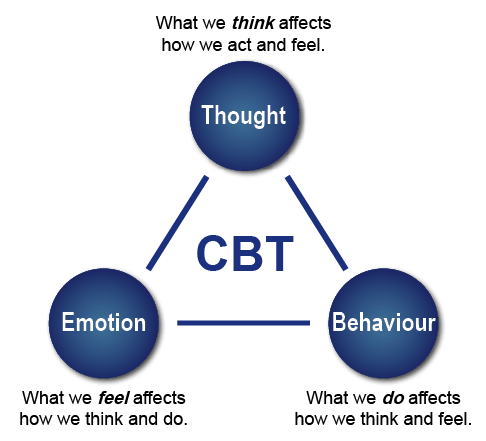
Cognitive behavioural therapy (CBT) is a type of talking treatment which focuses on how your thoughts, beliefs and attitudes affect your feelings and behaviour, and teaches you coping skills for dealing with different problems. [2]
Here are some synonyms for cognitive behavioral therapy (CBT) along with a brief description:
- Cognitive therapy (CT): Focuses on identifying and changing unhelpful thought patterns.
- Behavior therapy: Aims to modify behaviors through techniques like exposure therapy and response prevention.
- Cognitive psychotherapy: Combines elements of both CBT and traditional psychotherapy altogether.
- Cognitive treatment: A broader term for any treatment that uses cognitive principles.
- Therapeutic counseling: A general term for therapy that can include CBT techniques.
- CBT (cognitive behavioral therapy): The most common abbreviation for this type of therapy.
Overview
CBT MODEL
Principles of CBT
CBT For common problems
Cognitive Behaviour Therapy Approach
CBT Schedule
Homoeopathic Treatment
Terminology
Reference
Also search as
Overview
Overview of Cognitive Behaviour Therapy:
It combines cognitive therapy (examining the things you think) and behaviour therapy (examining the things you do).
- An agoraphobic may exposed to their feared stimulus (e.g. busy supermarket).
- This might be beneficial alone, by reducing avoidance, but it will also trigger physical symptoms (palpitations) and associated negative automatic thoughts (e.g. ‘I’m having a heart attack’).
- These can used as the basis for simple cognitive interventions, using a dysfunctional thought record, which can help the patient to regain control over their anxious thoughts.
- This increase in self- perception of control makes further exposure easier.
- Behavioural experiments can prescribed that test out the beliefs that patients have about how their body and the world around them work (e.g. running up and down stairs to increase heart rate and give ‘palpitations’, and to thereby demonstrate a benign cause of ‘palpitations’).
Therapy of CBT
- CBT therapists can help the patient to analyse the varied forms of avoidance in their life, which are maintain by their beliefs about their vulnerabilities (in this case cardiac).
- Avoidance includes over avoidance, such as avoiding busy shops, and also covert avoidance, which includes safety behaviours.
- These are personal ways of reducing the sense of threat, such as always carrying a mobile phone in case of the need to summon assistance, or hanging on very tightly to a supermarket trolley to avoid the risk of collapse.
- CBT requires special training, and generalists need know only the principles of the treatments and the main reasons for referral.
- There are, however, some simpler procedures that can be used by non-specialists, such as relaxation, graded exposure, and anxiety management. [1]
CBT MODEL
CBT MODEL
If your negative interpretation of situations goes unchallenged, then these patterns in your thoughts, feelings and behaviour can become part of a continuous cycle:
Cognitive Behavioural Therapy
Principles of CBT
Principles of CBT
- The general approach to CBT is that the therapist helps patients first to become aware of, and then to modify, their maladaptive thinking and behaviour.
- The treatment is collaborative, and the patient is treated as an active and expert partner in care.
- Patients practise new ways of thinking and behaving between the sessions of treatment; this is call homework.
- Written instructions are often used to supplement the explanations give by the therapist during treatment sessions, because it is important that they understand the procedures clearly and are well motivated to carry them out.
- Symptoms, cognitions, and associated behaviours monitore by recording them in a diary or dysfunctional thought record,
in which are noted the occurrence of
(i) Symptoms,
(ii) Thoughts and events that precede and possibly provoke the symptoms, and
(iii) Thoughts and events that follow and possibly reinforce the symptoms.
- Treatment takes the form of a graded series of tasks and activities such that patients gain confidence in dealing with less severe problems before attempting more severe ones.
- Tasks and activities present as experiments in which the achievement of a goal is a success, while on achievement is not a failure but an opportunity to learn more by analysing constructively what went wrong.
- This format helps to avoid discouragement and maintain motivation.
- Behavioural experiments can use to test out a patient’s predictions (invariably negative, due to active cognitive biases) of what will happen in a particular circumstance. [1]
CBT For common problems
CBT For common problems
1. CBT for Anxiety Management:
The components of anxiety management are;
(i) Assessment of the problem,
(ii) Relaxation,
(iii) Techniques for changing anxiety-provoking cognitions, and
(iv) Exposure.
Anxiety management is a time-limited, focused intervention.
However, when delivered face to face, one to one, it still demands a significant amount of a healthcare professional’s time, with a resulting impact on feasibility and cost.
The First Step:
Generally, It is applicable to most patients, is bibliotherapy, with the recommendation or provision of self-help materials including a booklet or book and relaxation tape or CD.
The Second Step:
In brief, This is applicable to some patients, might be group anxiety management.
The Final Step:
For a few patients who have not been helped by steps one and/or two, is individual anxiety management.
2. Cognitive behaviour therapy for panic disorder:
Patients with panic disorder are convince that some of the physical symptoms are not caused by anxiety but are the first indications of a serious physical illness (often that palpitations signal an impending heart attack).
This conviction causes further anxiety so that a cycle of mounting anxiety is set up.
The treatment includes the general components listed above under anxiety management, with the following additional features:
- The therapist explains that physical symptoms are part of the normal response to stress, and that fear of these symptoms sets up a vicious circle of anxiety.
- Patients record the fearful thoughts that precede and accompany their panic attacks. Patients who cannot identify their thoughts during naturally occurring panic attacks can often do so if panic-like symptoms are induced by voluntary hyperventilation.
- The therapist demonstrates that fearful cognitions can induce anxiety, by asking patients to remember and dwell on these cognitions and observe the effect.
- Patients attempt to think in the new way when they experience symptoms, and they observe the effect of this change on the severity of the panic attacks.
By repeating this sequence many times they gradually gain control of the panic attacks.
3. Therapy for depressive disorder:
The three kinds of cognitive abnormality in depressive disorder are deal with as follows;
Intrusive thoughts i.e.:
- They are usually of a self-depreciating kind (e.g. ‘I am a failure’).
- When they are weak such thoughts can counteract by distraction, using the methods describe above, but when they are strong they are difficult to control.
Logical errors i.e.:
- It distort the way in which experiences interpreted, and maintain the intrusive thoughts.
- The therapist helps the patient to recognize these irrational ways of thinking and change them into more realistic thoughts.
Maladaptive assumptions i.e.:
- They often about social acceptability; for example, the assumption that only good-looking and successful people are liked by others.
- The patient help to examine how ideas of this kind influence the ways in which they think about themselves and other people. [1]
Cognitive Behaviour Therapy Approach
Cognitive Behaviour Therapy Approach
The cognitive-behavioural approach in everyday clinical practice:
Although formal CBT is a complex procedure that requires special training, three features of the cognitive behavioural approach are useful in everyday clinical practice.
1. Recording thoughts i.e.:
- It occur when symptoms are experience, via a diary.
- There is no fix design for a diary/dysfunctional thought record—the professional and patient can design one together that will work for that patient’s particular circumstances.
- However, standard templates are widely available.
2.Abnormal behaviours and events i.e.:
That precede and follow them (the ABC approach—e.g.Antecedents, Behaviours, Consequences).
3. Asking patients to monitor and record their progress i.e.:
Both as a way of judging the success of treatment and as a way of increasing their collaboration with treatment. [1]
CBT Schedule
CBT Schedule
A typical cognitive therapy schedule consists of about 15 visits over a three-month period.
Some important techniques in CBT are:
i. Cognitive techniques such as recognising and correcting negative automatic thoughts, teaching reattribution techniques, increasing objectivity in perspectives, identifying and testing maladaptive assumptions, and decentering,
ii. Behavioural techniques such as activity scheduling, homework assignments, graded task assignment, behavioural rehearsal, role playing, and diversion techniques, and
iii. Teaching problem-solving skills.
iv. Mindfulness, originally a Buddhist technique, can also combined with CBT. [2]
Homoeopathic Treatment
Homoeopathic Treatment
Homeopathic Treatment for Cognitive Behavioral Therapy (CBT): A Complementary Approach
Cognitive Behavioral Therapy (CBT) is a well-established psychotherapy for various mental health conditions, focusing on identifying and changing negative thought patterns and behaviors. While effective, some individuals may seek complementary or integrative approaches to enhance their well-being further. Homeopathy, a system of medicine based on the principle of “like cures like,” offers a potential avenue for supporting individuals undergoing CBT.
How Homeopathy Complements CBT:
- Individualized Treatment: Homeopathy emphasizes personalized treatment plans based on an individual’s unique physical, mental, and emotional symptoms. This aligns with CBT’s focus on tailoring interventions to individual needs.
- Addressing Root Causes: Homeopathic remedies aim to stimulate the body’s innate healing abilities and address the root causes of emotional imbalances, potentially enhancing the effectiveness of CBT.
- Reducing Symptom Intensity: Certain homeopathic remedies may help alleviate symptoms such as anxiety, depression, and sleep disturbances, making it easier for individuals to engage in CBT.
- Holistic Approach: Homeopathy views the individual as a whole, considering the interconnectedness of mind, body, and emotions. This holistic perspective aligns with the CBT principle that thoughts, feelings, and behaviors are interconnected.
Commonly Used Homeopathic Remedies:
- Aconitum Napellus: For acute anxiety, panic attacks, and fear.
- Ignatia Amara: For grief, loss, emotional shock, and mood swings.
- Natrum Muriaticum: For depression with a tendency to dwell on past hurts, suppressed emotions, and difficulty expressing feelings.
- Arsenicum Album: For anxiety with restlessness, perfectionism, and fear of being alone.
- Pulsatilla: For mild depression with mood swings, tearfulness, and a need for comfort.
- Other remedies: A qualified homeopath may recommend other remedies based on individual symptoms and overall constitution.
Important Considerations:
- Consult a Professional: Always consult with a qualified homeopath and therapist before combining homeopathic remedies with CBT.
- Not a Replacement for CBT: Homeopathy should not be considered a replacement for CBT. It can be a valuable complementary therapy, but the guidance and techniques of a qualified therapist remain essential for CBT.
- Research: Further research is needed to establish the efficacy of homeopathyas a complementary therapy for CBT.
By integrating homeopathic remedies with CBT under professional guidance, individuals may experience enhanced well-being and a more comprehensive approach to their mental and emotional health.[3][4][5]
Terminology
Terminology
CBT Terminology:
- Cognitive Behavioral Therapy (CBT): A type of psychotherapy that helps people identify and change negative thought patterns and behaviors that contribute to emotional difficulties.
- Negative Automatic Thoughts (NATs): Spontaneous, often negative thoughts that occur in response to situations and can influence emotions and behaviors.
- Cognitive Restructuring: A CBT technique that involves identifying and challenging NATs to develop more balanced and realistic thinking patterns.
- Behavioral Activation: A CBT technique that focuses on increasing engagement in positive activities to improve mood and motivation.
- Exposure Therapy: A CBT technique that involves gradually facing feared situations or objects to reduce anxiety.
Homeopathic Terminology:
- Homeopathy: A system of alternative medicine based on the principle of “like cures like,” using highly diluted substances to stimulate the body’s healing response.
- Remedy: A substance prepared according to homeopathic principles and used to treat specific symptoms or conditions.
- Constitution: An individual’s overall physical, mental, and emotional makeup, considered when selecting homeopathic remedies.
- Proving: A process in homeopathy where healthy individuals are given a substance and their symptoms are recorded to determine the substance’s therapeutic effects.
- Potentization: The process of diluting and succussing (shaking) a homeopathic remedy to increase its potency.
Additional Terms in Your Article:
- Complementary Therapy: A therapy used in conjunction with conventional medicine to enhance its effects.
- Integrative Approach: Combining conventional and complementary therapies to provide a holistic treatment plan.
- Emotional Imbalance: A state where emotions are not in harmony, leading to distress or dysfunction.
- Symptom Relief: Reduction in the severity or frequency of symptoms associated with a condition.
Understanding Terminology Usage in the Article:
The article effectively combines terminology from both homeopathy and CBT to explain how homeopathic treatment can complement traditional CBT. It uses terms like “individualized treatment” and “holistic approach” to highlight the similarities between the two modalities. The mention of specific homeopathic remedies (e.g., Aconitum Napellus, Ignatia Amara) demonstrates how homeopathy can be tailored to address specific symptoms relevant to CBT.
Reference
References
- Psychiatry, Fourth Edition- Oxford Medical Publications – SRG- by Geddes, Jonathan Price, Rebecca McKnight / Ch 14.
- A Short Textbook of Psychiatry by Niraj Ahuja / Ch 19.
- Comparative Efficacy of Homoeopathy, Cognitive Behavior Therapy and Placebo on Depression.
- The Role of Homeopathic Remedies in Cognitive Neuropsychology.
- Management of Depression Through CBT and Homoeopathy.
Also search as
Also Search As
Keywords:
- Incorporate relevant keywords throughout your article:
- Homeopathic treatment
- Cognitive behavioral therapy (CBT)
- Homeopathy for mental health
- Natural remedies for anxiety/depression
- Complementary therapies for CBT
- Specific remedy names (e.g., Aconitum Napellus, Ignatia Amara)
Title:
- Craft a clear and concise title that includes your primary keywords, such as:
- Homeopathic Treatment for Cognitive Behavioral Therapy: A Complementary Approach
- Exploring Homeopathy as a Support for CBT
- Natural Remedies to Enhance Cognitive Behavioral Therapy
Search Engines:
Keywords: The most common way is to use search engines like Google, Bing, or DuckDuckGo. They can enter relevant keywords or phrases such as:
- “homeopathic treatment for CBT”
- “homeopathy for anxiety and depression”
- “natural remedies for CBT”
- “complementary therapies for mental health”
- Specific homeopathic remedy names (e.g., “Aconitum Napellus for CBT”)
Long-tail keywords: These are more specific phrases that might include:
- “how to use homeopathy with CBT”
- “best homeopathic remedies for anxiety during CBT”
- “homeopathic approach to emotional imbalances”
Social Media:
Hashtags: People may use relevant hashtags on platforms like Twitter, Instagram, or Facebook, such as:
- #homeopathy
- #CBT
- #mentalhealth
- #naturalremedies
Groups and communities: They may also search within specific groups or communities focused on homeopathy, CBT, or mental health.
Homeopathic Websites and Forums:
- Dedicated websites: Many homeopathic organizations or practitioners have websites with articles and resources. People may search within those sites using similar keywords.
- Forums: Online forums dedicated to homeopathy can be a place where people discuss various treatment options, including those for CBT.
Direct Search:
- Website or blog name: If they are already familiar with your website or blog, they can directly search for it by name.
- Article title: If they remember the exact title of your article, they can search for it directly.
Referral Links:
- Other websites or articles: Your article may be linked or referenced in other online resources, so people could find it through those links.
- Social media shares: If someone shares your article on their social media, others in their network may see it and click through.
Frequently Asked Questions (FAQ)
What is Cognitive Behaviour Therapy?
Cognitive behavioural therapy (CBT) is a type of talking treatment which focuses on how your thoughts, beliefs and attitudes affect your feelings and behaviour, and teaches you coping skills for dealing with different problems.
How can homeopathic remedies support CBT?
Homeopathic remedies, when chosen carefully based on an individual’s symptoms, can help reduce anxiety, improve mood, and enhance the overall effectiveness of CBT.
What are the components of Cognitive Behaviour Therapy?
- Cognitive Therapy
- Behaviour Therapy
What are the features of Cognitive Behaviour Approach in everyday clinical practice?
- Recording thoughts
- Recording abnormal behaviours and events
- Asking patients to monitor and record their progress
How long does CBT treatment typically last?
The duration of CBT treatment can vary depending on the individual’s specific needs and the severity of their condition. However, most CBT treatment plans range from 5 to 20 sessions, with each session lasting approximately 50-60 minutes.
What is the role of a therapist in CBT?
A therapist plays a crucial role in CBT by:
- Providing guidance and support throughout the treatment process.
- Helping individuals identify and challenge negative thoughts and behaviors.
- Teaching coping skills and relaxation techniques.
- Assigning homework and exercises to practice skills learned in therapy.
How does CBT work?
CBT works by helping individuals:
- Identify and challenge negative thoughts: Learn to recognize and question unhelpful or distorted thought patterns that contribute to negative emotions and behaviors.
- Develop coping skills: Acquire practical skills to manage stress, anxiety, and other challenging emotions.
- Change behaviors: Gradually change unhelpful behaviors and develop healthier coping mechanisms.
Cognitive behavioural therapy (CBT) is a type of talking treatment which focuses on how your thoughts, beliefs and attitudes affect your feelings and behaviour, and teaches you coping skills for dealing with different problems.
Homeopathic remedies, when chosen carefully based on an individual’s symptoms, can help reduce anxiety, improve mood, and enhance the overall effectiveness of CBT.
- Cognitive Therapy
- Behaviour Therapy
- Recording thoughts
- Recording abnormal behaviours and events
- Asking patients to monitor and record their progress
The duration of CBT treatment can vary depending on the individual’s specific needs and the severity of their condition. However, most CBT treatment plans range from 5 to 20 sessions, with each session lasting approximately 50-60 minutes.
A therapist plays a crucial role in CBT by:
- Providing guidance and support throughout the treatment process.
- Helping individuals identify and challenge negative thoughts and behaviors.
- Teaching coping skills and relaxation techniques.
- Assigning homework and exercises to practice skills learned in therapy.
CBT works by helping individuals:
- Identify and challenge negative thoughts: Learn to recognize and question unhelpful or distorted thought patterns that contribute to negative emotions and behaviors.
- Develop coping skills: Acquire practical skills to manage stress, anxiety, and other challenging emotions.
- Change behaviors: Gradually change unhelpful behaviors and develop healthier coping mechanisms.