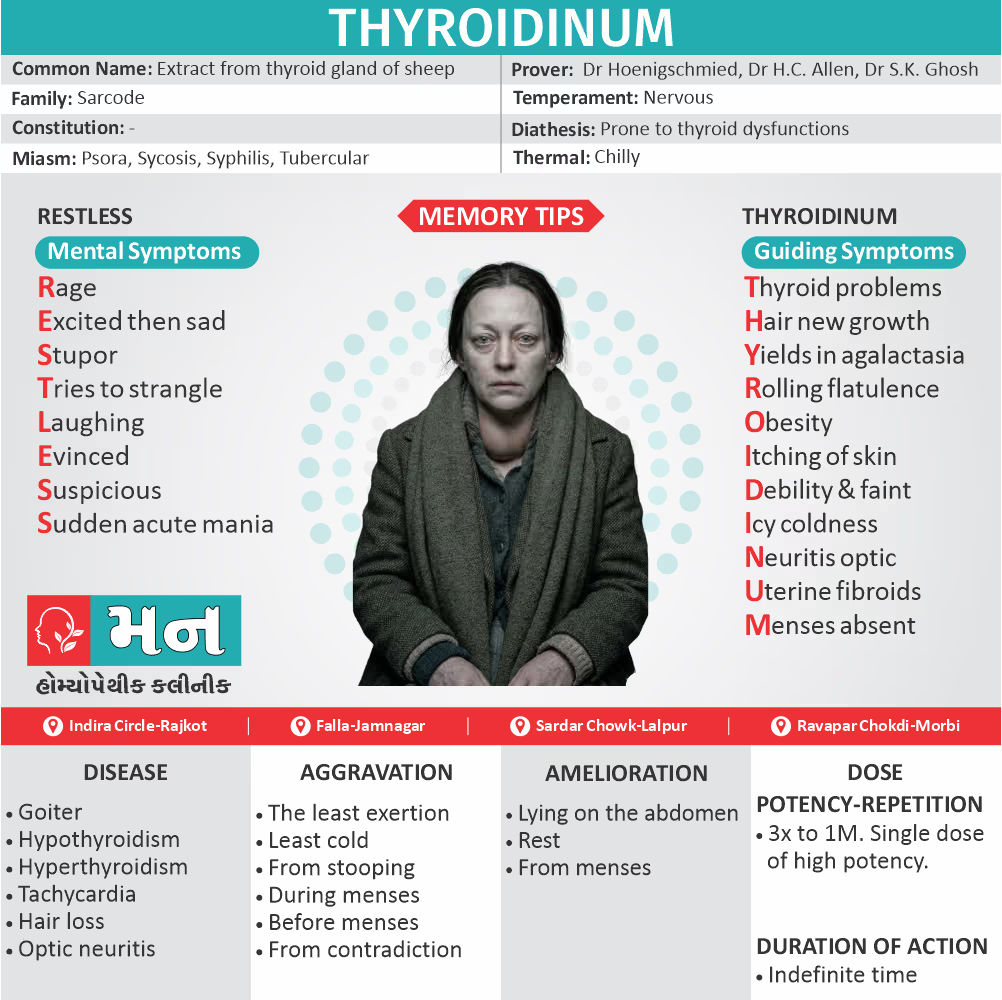
Thyroidinum
Overview:
Thyroidinum is a powerful homeopathic remedy, classified as a sarcode, prepared from the thyroid gland of a healthy sheep. It is primarily used to address a wide range of symptoms associated with thyroid dysfunction, particularly hypothyroidism. Practitioners often prescribe it for individuals experiencing profound exhaustion, sensitivity to cold, unexplained weight gain, goiter, and dry, puffy skin. Operating on the principle of “like cures like,” Thyroidinum aims to stimulate the body’s own healing mechanisms to restore the thyroid’s normal function rather than simply replacing hormones. Due to its deep-acting nature, it is essential to use this remedy under the guidance of a qualified homeopathic professional.
Memory Tips for Guiding Symptoms
Hi Friends Let’s memorize guiding symptoms of Thyroidinumthrough name of Medicine ‘THYROIDINUM’.
T
H
Y
R
O
I
D
I
N
U
M
T
T – Thyroid problems
Description : The gist of the remedy , that is primary malfunction of the thyroid gland . Goitre. Tingling. Myxoedema, with loss of hair; and cretinism. Arrested development of children. Infantile wasting. Undescended testicle in boys. Thyroid weakness causes decided craving for large quantities of sugar.
Reference : Concise Materia Medica Of Hom. Remedies By S.R. Phatak
H
H – Hair new growth
Description: Some curiosities have been noted in the action of Thyr. on the growth of hair. Myxedema patients lose their hair as a rule, and Thyr. when successful restores the growth
Reference: [A Dictionary of Practical Materia Medica by J.H. Clarke]
Y
Y – Yields in agalactasia
Description : Thyr. has increased the flow of milk in nursing women when the flow has been deficient.
Reference : [Dictionary Of Practical Materia Medica (All 3 Vol.) By Clarke J. H.]
R
R – Rolling flatulence
Description: Rolling flatulence with gurgling, then a loose, gassy stool. Bearing or aching down thro’ pelvis, into anterior thighs.
Reference: [A Synoptic Key of the Materia Medica by C.M. Boger]
O
O – Obesity
Description: This remedy is strongly associated with an unhealthy tendency towards obesity and weight gain that is resistant to diet. This is often accompanied by oedema (swelling), particularly in the face and limbs, giving a characteristic puffy appearance.
Reference: [Materia Medica by William Boericke]
I
I – Itching of skin
Description: The skin becomes extremely dry, scaly, and is plagued by persistent itching, often without any visible rash. Conditions like eczema and psoriasis in hypothyroid individuals often call for this remedy.
Reference: [A Dictionary of Practical Materia Medica by J.H. Clarke]
D
D – Debility & faint
Description: A profound sense of weakness and exhaustion from the slightest physical effort is a central feature. This debility is so severe that it can lead to frequent fainting spells, indicating a deep state of low vitality.
Reference: [Keynotes and Characteristics with Comparisons by H.C. Allen]
I
I – Icy coldness
Description: The patient feels an intense, persistent chilliness and is extremely sensitive to cold air. This icy coldness, especially of the extremities like hands and feet, is a hallmark of the poor circulation and low metabolic rate governed by this remedy.
Reference: [Materia Medica of Homoeopathic Medicines by S.R. Phatak]
N
N – Neuritis optic
Description: (Prominence of eyeballs exophthalmic goitre.) Optic neuritis ( in five persons, four of them women, under treatment for obesity, no other symptoms of thyroidism). Accommodative asthenopia.
Reference: [Dictionary Of Practical Materia Medica (All 3 Vol.) By Clarke J. H.]
U
U – Uterine fibroids
Description: Thyroidinum has a marked clinical application for uterine fibroids, especially when they appear in conjunction with other remedy keynotes like obesity, fatigue, and profuse menstrual bleeding.
Reference: [A Dictionary of Practical Materia Medica by J.H. Clarke]
M
M – Menses absent
Description: The menstrual flow is characteristically profuse, long-lasting, and occurs too frequently. The excessive bleeding often leads to associated conditions like anemia and extreme weakness.
Reference: [Dictionary Of Practical Materia Medica (All 3 Vol.) By Clarke J. H.]
Memory Tips for Mental Symptoms
Hi Friends Let’s memorize mental symptoms of Thyroidinum through name of Medicine ‘RESTLESS’.
R
E
S
T
L
E
S
S
R
R – Rage
Description: “Irritable, worse least opposition; goes into a rage over trifles.”
Reference: [Materia Medica By Boericke W.]
E
E – Excited, then sad
Description: “Very excited; excited state followed by considerable depression.”
Reference: [Keynotes With Nosodes By Allen H.C.]
S
S – Stupor
Description: “Stupor, alternating with restless melancholy.”
Reference: [Materia Medica By Boericke W.]
T
T – Tries to strangle
Description: Acute stupor alternating with restless melancholia, at times could not be got to speak, but would lie on floor with limbs rigid, at other times would weep and undress herself, at times dangerous and homicidal, would put her arms round the necks of other patients so tightly as almost to strangle them, (in this case the insanity was primary and the myxedema secondary, both conditions were removed).
Reference: [Dictionary Of Practical Materia Medica (All 3 Vol.) By Clarke J. H.]
L
L – Laughing
Description: State of idiocy, fearful nightmares. Excited condition, lasting all the rest of the day, grunting continuously and laughing in a way that was peculiar to herself.
Reference: [Dictionary Of Practical Materia Medica (All 3 Vol.) By Clarke J. H.]
E
E – Evinced vivacity
Description: Evinced increased vivacity by quarrelling with another patient about a trifling difference of opinion Depression. Fretfulness and moroseness gave way to cheerfulness and animation.
Reference: [Dictionary Of Practical Materia Medica (All 3 Vol.) By Clarke J. H..]
S
S – Suspicious
Description: Argues with family. Suspicious. Paranoia that they are being pursued or persecuted.
Reference: [Nature’s Materia Medica By Robin Murphy, Md]
S
S – Sudden acute mania
Description: “Sudden acute mania occurring in myxœdema, perfectly restored mentally and bodily under Thyr.”
Reference: [Dictionary Of Practical Materia Medica (All 3 Vol.) By Clarke J. H.]
Introduction
Constitution
Clinical
Mental Symptoms
Guiding Symptoms
Characteristic
Therapeutic Value
Modality
Remedy Relationship
Dose
Terminologies
Reference
Also Search As
Introduction
Introduction of Thyroidinum
Common name:
Thyroid extract from thyroid gland of sheep, Iodothyrinum,
Iodothyrine [1]
Synonyms
–
Family / Group / Class / Order
Sarcode
Habit and habitat / Description
This gland consists of two lobes situated one on each side of the trachea close to the larynx. These lobes are joined by an isthmus of tissue similar to that of the lobes.[2]
Formula / Symbols
–
Name of prover
Dr Hoenigschmied, Dr H.C. Allen, Dr S.K. Ghosh of Calcutta
Introduction and history
When the treatment of myxoedema and allied
diseases by ‘Thyroid feeding’ was introduced by Murray in 1892, many accidents
occurred from overdosing.
Doctrine of signature
–
Parts used
Dried thyroid gland of sheep
Active principles
–
Preparation
Trituration of the fresh thyroid gland of sheep or calf is prepared. Attenuation is prepared from the liquid extract of the gland.
Constitution
Constitution of Thyroidinum
Physical make up
No particular physical make-up.
Temperament
Irritable
Diathesis
Prone to thyroid dysfunctions
Relation with heat & cold
Chilly
Miasm
Psoric, Sycotic, Tubercular, Syphilitic [3]
Clinical
Clinical conditions of Thyroidinum
Abscesses. Acromegaly. Albuminuria. Amblyopia. Amenorrhea. Anemia, pernicious. Angina pectoris. Backache. Bedwetting. Breast, tumors. Chilblains. Constipation. Convulsions, puerperal. Cretinism. Cysts. Diabetes. Diarrhea. Diuresis. Dropsy. Dysmenorrhea. Ear, disorders. Eczema. Edema. Epilepsy. Fainting. Fibroma. Fractures. Goiter, exophthalmic. Hair, loss. Heart, disorders. Hysteria. Ichthyosis. Idiocy. Leprosy. Malnutrition. Mania. Milk, deficiency. Myxedema. Neurasthenia. Obesity. Optic neuritis. Paralysis, hands and arms. Paraplegia. Pityriasis rubra. Psoriasis. Puerperal fever. Rupia. Scleroderma. Syphilis. Tetanus. Tachycardia. Thyroid, disorders. Tuberculosis. Uterine, fibroids. Vomiting. [4]
Sites of action / Pharmacodynamics
It acts on the central nervous
system, glands, skin, heart, respiration and female sexual organs.
Causation (Causes / Ailments from)
–
Physiological action
–
Patho-physiological changes / Pathogenesis
It acts upon varoius systems by regulating the metabolic processes. It has significant effects on mental and physical exhaustion as well as various forms of chronic inflammation and tumors.
Mental Symptoms
Characteristic Mental Symptoms (psychology) of Thyroidinum
1. Stupor alternating with restless melancholy.
2. Patient weeps, undresses. Homicidal tendency.
3. Patient is suspicious. Ideas of persecution.
4. Ill-tempered, worse opposition; goes into a rage over trifles.
5. Patient is grumbling; continuously.
6. Patient is laughs in a way peculiar to herself
Guiding Symptoms
Guiding Symptoms of Thyroidinum
Generalities
Thyroidinum, a sarcode derived from the thyroid gland, powerfully regulates the body’s nutrition, growth, and development. It is primarily indicated for conditions involving the heart and nervous system, manifesting as profound fatigue, a state of puffiness and obesity, goiter, and myxoedema. Keynotes also include tremors, a craving for large amounts of sugar, and arrested development in children.
Head
Feeling of lightness in brain. Persistent frontal headache; heaviness over eyes. Falling of hair.[5]
Eye
Exophthalmic goitre. Progressive loss of sight with central scotoma.
Ears
Sclerosis of ossicles.
Nose
Dry, indoors; runs outdoors.
Face
Flushed. Lips; dry, red, burn; with free desquamation.
Mouth
Tongue thickly coated; metallic taste at tip.
Throat
Dry, burning. As of a splinter struck across the throat.
Stomach
Desire for sweets and thirst for cold water. Vomiting of pregnancy.
Abdomen
Cutting in liver worse deep breathing. Rolling flatulence with gurgling, then loose gassy stool. Bearing and aching down through pelvis into anterior thigh.
Urinary Organ
Increased flow of urine. Diabetes mellitus. Urine smells of violets. Enuresis of weakly children.
Sexual Organ
Amenorrhoea. Gnawing in uterus. Agalactea. Vomiting of pregnancy. Uterine fibroids. Mammary tumours. Puerperal; convulsions; insanity.
Respiratory System
Larynx dry. Dry painful cough on entering a warm room, from cool air. Breathlessness better lying in recumbent position.
Heart & Pulse
*Palpitation worse least exertion; hammering; beats felt in ear. Tachycardia. Heart pains radiate into axilla; clutching, constricting, worse lying down; causing short breath. Hypertrophy after hard labour. As if blood were rushing downwards, through the body. Jumping sensation at heart. Large veins on arms and hands. Valvular diseases of heart.
Extremities
Quivering of limbs; tremors. Numb left fingers then right leg. Left hand icy cold. Cold clammy hands. Abnormal growth of limbs due to excessive exertion.
Skin
Very dry. Itching without eruptions. Psoriasis with adiposity. Ichthyosis. Itching with jaundice. Peeling of lower limbs. Brawny swelling. Symmetrical serpiginous eruptions.
Fever
Hot flushes; then chills, or drenching sweats. Oily musty sweat.
Characteristic
Important characteristic features of Thyroidinum
Keynotes / Redline
1. Craving for large amounts of sugar, sweets.
2. Breathlessness > lying in recumbent position.
Guiding
Profound weakness and exhaustion from slight exertion.
Extreme sensitivity to cold and poor circulation.
Tendency towards obesity, goiter, and puffiness (oedema).
Irritability and rage alternating with deep melancholy.
Dry, impoverished skin and falling hair.
PQRS
Feels faint and weak from going downstairs, but not upstairs.
Weeps when undressing.
Desire for a large quantity of undiluted sweets.
Homicidal impulse to strangle someone.
Sensation of having a foreign body in the eye.
Confirmatory
1.Arrested development.
2.Craving for large amounts of sugar, sweets.
3.Thirst for cold drinks.
4.Tachycardia.
5.Palpitation from least exertion < stooping, hammering, beats heard in ears.
6.Skin dry, impoverished.
Nucleus symptoms
A remedy to be considered in case of arrested development in children and has a regulatory influence on the mechanism of the organs of nutrition, growth and development. Of use in obstinate disorders of heart, sexual organs, skin.
Therapeutic Value
Therapeutic Value of Thyroidinum
Allergy, Aphonia, Dentition, Diabetes, Goitre, Infantile
disorders, Myxoedema, Obesity, Rickets, Sexual disorders, Undescended testicles.
Modality
Modality of Thyroidinum
Aggravation
The least exertion
Least cold
From stooping
From entering a warm room from cold air
During menses
Before menses
From contradiction
Amelioration
From lying on the abdomen or reclining
Rest
From menses
Remedy Relationship
Remedy Relationship of Thyroidinum
Follows Well
Lach, Bac
Comparison
Ars, Bac, Carbn-s, Iod, Kali-i, Lach, Merc, Spig, Spong, Symph, Syph, Tab
Dose
Dose of Thyroidinum
crude doses for structural pathology
for amenorrhoea 3x to 1M
Potency
Single dose of high potency.
Duration of Action
Indefinite time of action
Terminologies
Terminologies of Thyroidinum
Fundamental Concepts
Sarcode:
This term refers to homeopathic remedies prepared from healthy animal tissues or secretions. Thyroidinum is a sarcode as it’s derived from the thyroid gland. The theory is that these preparations can help restore the normal functioning of the corresponding organ in the patient.
Nosode:
In contrast to sarcodes, nosodes are homeopathic remedies prepared from diseased tissues or pathological secretions.
Materia Medica:
This is a comprehensive collection of information about homeopathic remedies. A Materia Medica for Thyroidinum would detail its preparation, the symptoms it can produce in a healthy person (a “proving”), and the clinical conditions it is used to treat.
Proving:
This is a fundamental homeopathic process where a substance is administered to healthy volunteers to determine the symptoms it produces. These recorded symptoms then form the basis for prescribing the remedy to a sick person exhibiting a similar symptom picture, under the principle of “like cures like.”
Similia Similibus Curentur:
This Latin phrase translates to “let likes be cured by likes” and is the foundational principle of homeopathy. It means that a substance that can cause symptoms in a healthy person can be used to treat similar symptoms in a sick person.
Potency and Dosage
Potency:
This refers to the dilution and succussion (vigorous shaking) of a homeopathic remedy. Potencies are denoted by a number followed by a letter, such as 3X, 6C, 30C, 200C, or LM.
X Potency:
A decimal scale where the substance is diluted in a 1:10 ratio.
C Potency:
A centesimal scale with a 1:100 dilution ratio.
Trituration:
The process of diluting a substance by grinding it with lactose powder. This is often the first step in preparing remedies from insoluble substances.
Succussion:
The process of vigorously shaking the diluted substance at each stage of potentization. It is believed to be essential for releasing the medicinal energy of the substance.
Aggravation:
A temporary worsening of symptoms after taking a homeopathic remedy. This is often considered a sign that the remedy is working and stimulating the body’s healing response.
Clinical Application
Constitutional Remedy:
A homeopathic remedy selected to treat the whole person, considering their physical, mental, and emotional makeup, rather than just the specific symptoms of a disease.
Intercurrent Remedy:
A remedy given during a course of treatment to address a specific obstacle to cure or to complement the action of the primary constitutional remedy. Thyroidinum is sometimes used as an intercurrent remedy in cases of hypothyroidism.
Totality of Symptoms:
The complete picture of a patient’s symptoms, including their mental, emotional, and physical characteristics. Homeopathic prescriptions are based on matching the totality of the patient’s symptoms to the symptom picture of a remedy as detailed in the Materia Medica.
Miasm:
A term used in homeopathy to describe an underlying inherited or acquired predisposition to chronic disease. There are three primary miasms: Psora, Sycosis, and Syphilis.
Reference
Reference of Thyroidinum
[1] Gems textbook of materia medica by Dr.Patil
[2] A Manual Of Materia Medica, Therapeutics And Pharmacology By Blackwood, Alexander Leslie
[3] Zomeo
[4] Nature’s Materia Medica By Robin Murphy, Md
[5] Concise Materia Medica Of Hom. Remedies By S.R. Phatak
Also Search As
Also Search As of Thyroidinum
1.Online Databases and Journals
PubMed & Google Scholar: Use specific keywords.
Examples: “Thyroidinum homeopathy research,” “case study Thyroidinum,” “homeopathic proving of Thyroidinum.”
Homeopathic Journals: Search their archives directly.
Key Journals: British Homeopathic Journal, American Journal of Homeopathic Medicine, Indian Journal of Research in Homoeopathy.
Specialized Databases:
CORE-Hom: A database specifically for homeopathic research.
HOM-Inform: A portal managed by the Homeopathy Research Institute.
2. Reputable Homeopathic Websites
National Center for Homeopathy (NCH): Offers articles and resources for both practitioners and the public.
Homeopathy Research Institute (HRI): Provides high-quality scientific research on homeopathy.
Major Homeopathic Pharmacies: Websites of companies like Boiron or Hyland’s often have educational sections.
3. Books and Reference Materials
Digital Libraries:
Internet Archive & Google Books: Search for classic and modern homeopathic Materia Medicas.
Examples: “Boericke’s Materia Medica Thyroidinum,” “Clarke’s Dictionary of Practical Materia Medica.”
Homeopathic Software:
Professional software like RadarOpus or MacRepertory contains extensive libraries and articles.
4.Effective Search Strategy
Start Broad: Use terms like “Homeopathy Thyroidinum.”
Narrow Your Search: Add specific terms like “hypothyroidism,” “autoimmune,” “clinical trial,” or “symptomatology.”
Use Synonyms: Search for “thyroid extract in homeopathy” as well.
Filter by Date: Look for recent articles for the latest research.
Frequently Asked Questions (FAQ)
What is Thyroidinum in homeopathy?
Thyroidinum
is a homeopathic remedy, specifically a sarcode, prepared from the thyroid gland of a healthy sheep. It is used in homeopathy to address symptoms related to thyroid gland dysfunction based on the principle of “like cures like.”
What conditions is Thyroidinum used for?
Uses
Thyroidinum is primarily indicated for symptoms associated with hypothyroidism, such as unexplained weight gain, extreme fatigue, goiter, dry skin, and sensitivity to cold. It may also be considered for other related conditions like fibroids, anemia, and certain heart issues when the symptom picture matches.
Is Thyroidinum safe to take?
Safety
When prepared according to homeopathic pharmacopeia standards, Thyroidinum is highly diluted and is generally considered safe. However, it is crucial to use this remedy only under the supervision of a qualified homeopathic professional who can prescribe the correct potency and dosage.
How does Thyroidinum differ from conventional thyroid medication?
Difference
Conventional thyroid medication, like Levothyroxine, replaces the hormone the thyroid gland isn’t producing. Homeopathic Thyroidinum, as a sarcode, is believed to work by stimulating the body’s own healing mechanisms to help restore the normal function of the thyroid gland, rather than simply replacing the hormone.
Can Thyroidinum be taken with allopathic thyroid medicine?
Yes
You should never stop or alter your prescribed thyroid medication without consulting the prescribing doctor. A qualified homeopath can advise on whether Thyroidinum can be used as a complementary treatment alongside your conventional medicine.
What conditions typically make the symptoms of Thyroidinum worse or better?
Aggravation /Amelioration
In homeopathy, we refer to factors that change symptoms as “modalities.” For a person needing Thyroidinum, their symptoms characteristically worsen from the slightest physical or mental exertion, which often brings on fatigue or fainting spells. Furthermore, they are extremely sensitive to cold; consequently, cold, damp weather and drafts will almost always aggravate their condition. Many complaints, especially depression and weakness, are also noticeably worse upon waking in the morning.
Thyroidinum
is a homeopathic remedy, specifically a sarcode, prepared from the thyroid gland of a healthy sheep. It is used in homeopathy to address symptoms related to thyroid gland dysfunction based on the principle of “like cures like.”
Uses
Thyroidinum is primarily indicated for symptoms associated with hypothyroidism, such as unexplained weight gain, extreme fatigue, goiter, dry skin, and sensitivity to cold. It may also be considered for other related conditions like fibroids, anemia, and certain heart issues when the symptom picture matches.
Safety
When prepared according to homeopathic pharmacopeia standards, Thyroidinum is highly diluted and is generally considered safe. However, it is crucial to use this remedy only under the supervision of a qualified homeopathic professional who can prescribe the correct potency and dosage.
Difference
Conventional thyroid medication, like Levothyroxine, replaces the hormone the thyroid gland isn’t producing. Homeopathic Thyroidinum, as a sarcode, is believed to work by stimulating the body’s own healing mechanisms to help restore the normal function of the thyroid gland, rather than simply replacing the hormone.
Yes
You should never stop or alter your prescribed thyroid medication without consulting the prescribing doctor. A qualified homeopath can advise on whether Thyroidinum can be used as a complementary treatment alongside your conventional medicine.
Aggravation /Amelioration
In homeopathy, we refer to factors that change symptoms as “modalities.” For a person needing Thyroidinum, their symptoms characteristically worsen from the slightest physical or mental exertion, which often brings on fatigue or fainting spells. Furthermore, they are extremely sensitive to cold; consequently, cold, damp weather and drafts will almost always aggravate their condition. Many complaints, especially depression and weakness, are also noticeably worse upon waking in the morning.