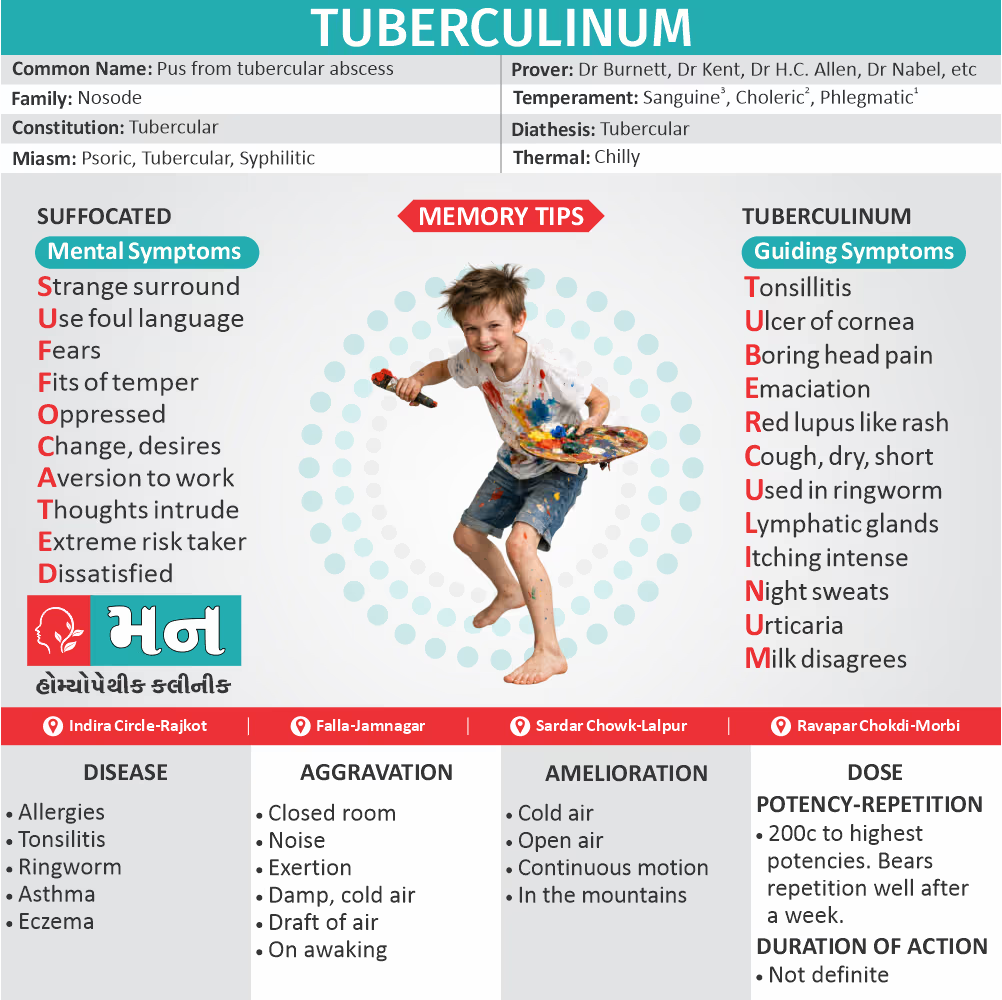
Tuberculinum
Overview:
Tuberculinum is a homoeopathic nosode, a remedy prepared from a pathological specimen, in this case, from the tuberculous abscess or the bacteria that infect cattle. It is considered a deep-acting constitutional remedy, primarily indicated for individuals with a personal or family history of tuberculosis, exhibiting a tendency towards chronic weakness, recurrent respiratory issues, and a constant desire for change. Homoeopathic practitioners may prescribe Tuberculinum for a wide range of shifting symptoms, both physical and mental, including chronic coughs, colds, skin inflammations, and psychological states such as irritability and depression, particularly when other well-selected remedies fail to produce a lasting effect.
Memory Tips for Guiding Symptoms
Hi Friends Let’s memorize guiding symptoms of Tuberculinum through name of Medicine ‘TUBERCULINUM’.
T
U
B
E
R
C
U
L
I
N
U
M
T
T – Tonsillitis
Description: Indicated for chronically enlarged and inflamed tonsils, especially in children who are prone to frequent colds. The tonsils may appear pale and are often covered with cryptic follicles. This condition is a hallmark of a weak immune response typical of the tubercular diathesis.
Reference: [Boericke, William; Pocket Manual of Homoeopathic Materia Medica]
U
U – Ulcer of cornea
Description: Effective for phlyctenular keratitis and conjunctivitis, conditions involving small ulcers on the cornea. It is often seen in scrofulous children and is accompanied by intense light sensitivity (photophobia) and excessive tearing (lachrymation).
Reference: [Clarke, John Henry; A Dictionary of Practical Materia Medica]
B
B – Boring head pain
Description: Relieves deep, intense, boring headaches, particularly in the temples or at the base of the brain. The pain can feel as though a screw is being driven into the skull and may be associated with a sensation of an iron band tightening around the head.
Reference: [Hering, Constantine; The Guiding Symptoms of Our Materia Medica]
E
E – Emaciation
Description: A key indicator is pronounced and rapid weight loss, even when the patient has a good appetite and eats well. The body, especially the neck and limbs, appears wasted and thin, reflecting a deep-seated nutritional disturbance.
Reference: [Nash, E. B.; Leaders in Homoeopathic Therapeutics]
R
R – Red lupus like rash
Description: Nose swollen, tense, erysipelatous-looking epidermis in lupus patch raised by yellow fluid.
Reference: [Dictionary Of Practical Materia Medica (All 3 Vol.) By Clarke J. H.]
C
C – Cough, Dry, Short
Description: Addresses a hard, dry, and short hacking cough that is particularly worse at night, often waking the patient from sleep. The cough is teasing, with very little expectoration, and can be accompanied by a tickling sensation in the larynx.
Reference: [Tyler, M. L.; Homoeopathic Drug Pictures]
U
U – Used in ringworm
Description: Ringworm on scalp; lymphatic glands everywhere palpable; ribs very flat; strawberry tongue, bad cough, agg. at night; although 11 years old she had practically no teeth, they were rudimentary, and not above level of gums. Burnett.
Reference: [The Guiding Symptoms Of Our Materia Medica (All 10 Vols.) By Hering C.]
L
L – Lymphatic glands
Description: Indicated for swollen, hard, and tender lymphatic glands, especially in the neck (cervical chain), under the arms, and in the groin. The glands can feel like small, hard “shots” under the skin and are a classic sign of a scrofulous or tubercular constitution.
Reference: [Boger, Cyrus Maxwell; A Synoptic Key of the Materia Medica]
I
I – Itching intense
Description: Useful for severe and persistent itching of the skin, which is characteristically worse at night in the warmth of the bed and when undressing. The itching can occur with or without visible eruptions and is often associated with conditions like eczema.
Reference: [Knerr, Calvin B.; Repertory of Hering’s Guiding Symptoms]
N
N – Night sweats
Description: Treats profuse, drenching sweats that occur during sleep, particularly in the early morning hours. These sweats are debilitating, leaving the patient feeling weak and exhausted, and are a classic symptom of the underlying tubercular miasm.
Reference: [Kent, James Tyler; Lectures on Homoeopathic Materia Medica]
U
U – Urticaria
Description: Helpful for cases of hives or urticaria, especially when the condition is chronic or recurrent. The rash is typically triggered by eating certain foods, such as meat or milk, and is intensely itchy.
Reference: [Farrington, E. A.; A Clinical Materia Medica]
M
M – Milk disagrees
Description: A strong guiding symptom, especially in children, is the inability to tolerate milk. Consumption of milk leads to digestive upset, causing watery, offensive diarrhea and vomiting. This often contributes to the child’s failure to thrive despite a good appetite.
Reference: [Gibson, Douglas M.; Studies of Homoeopathic Remedies]
Memory Tips for Mental Symptoms
Hi Friends Let’s memorize mental symptoms of Tuberculinum through name of Medicine ‘SUFFOCATED’.
S
U
F
F
O
C
A
T
E
D
S
S – Strange surround
Description: Confusion everything in the room seems strange.
Reference: [Concise Materia Medica Of Hom. Remedies By S.R. Phatak]
U
U – Use foul language
Description: Desire to use foul language,curse and swear.
Reference: [Concise Materia Medica Of Hom. Remedies By S.R. Phatak]
F
F – Fits of temper
Description: Fits of violent temper; wants to fight; throws anything at anyone even without a cause.
Reference: [Concise Materia Medica Of Hom. Remedies By S.R. Phatak]
F
F – Fear
Description: Fear something will happen. Fear of animals, particularly averse to dogs and cats.
Reference: [Nature’s Materia Medica By Robin Murphy, Md]
O
O – Oppressed
Description: The feeling of being stuck, suffocated and oppressed is not an acute feeling in Tuberculinum, it as a chronic feeling.
Reference: [The Soul Of Remedies By Rajan Sankaran]
C
C – Change, desires
Description: Dissatisfied; always wants a change, wants to travel; does not want to remain in one place long…
Reference: [Concise Materia Medica Of Hom. Remedies By S.R. Phatak]
A
A – Aversion to work
Description: Aversion to all labor, especially mental work.
Reference: [Dictionary Of Practical Materia Medica (All 3 Vol.) By Clarke J. H.]
T
T – Thoughts intrude
Description: thoughts intrude and crowd upon one another during the night.
Reference: [Homoeopathic Drug Pictures By M.L.Tyler.]
E
E – Extreme risk taker
Description: The only way that Tuberculinum sees out of this situation is through hectic, intense activity. Therefore, if he finds orthodoxy oppressive, he will break free from the bonds of society and undertake exploits which are rash, bold, daring and at times destructive. He cannot stick to the straight and narrow, he will not be confined by monotony. He needs to take risks and does so quite fearlessly
Reference: [Concise Materia Medica Of Hom. Remedies By S.R. Phatak]
D
D – Dissatisfied
Description: Dissatisfied, always wants a change, wants to travel; does not want to remain in one place long, wants to do something different or even find a new doctor, weary of life.
Reference: [Concise Materia Medica Of Hom. Remedies By S.R. Phatak]
Introduction
Constitution
Clinical
Mental Symptoms
Guiding Symptoms
Characteristic
Therapeutic Value
Modality
Remedy Relationship
Dose
Terminologies
Reference
Also Search As
Introduction
Introduction of Tuberculinum
Common name:
Pus [with bacilli] from tubercular abscess[1]
Synonyms
–
Family / Group / Class / Order
Nosode
Habit and habitat / Description
Mycobacterium tuberculosis, the bacillus from which the homoeopathic remedy Tuberculinum is derived, is a strictly aerobic, rod-shaped bacterium that primarily inhabits human lungs as an obligate parasite. Its habit is to live and multiply within the host’s macrophages, spreading to new hosts via airborne droplets. A defining characteristic is its unique, waxy cell wall rich in mycolic acid, which makes it an Acid-Fast Bacillus (AFB) and highly resistant. This oxygen-dependent, slow-growing nature explains its preference for the upper lung lobes and the significant delay often encountered in its laboratory culture and diagnosis.
Formula / Symbols
–
Name of prover
Dr Burnett, Dr Kent, Dr H.C. Allen, Dr Nabel, etc[2]
Introduction and history
Fragmentary provings by Swan, upon M.B.B. with cm.; Edna Rose, with cmm.
Authorities:-Refer to new Organon, July, 1879, pp. 342, 439 449; Swan’s Morbific Products, 1886; Burnett’s New Cures, 1885 to 1890; J.A. Biegler’s Report; C.F. Nichol’s paper in Popular Science News, April, 1891.[3]
Doctrine of signature
–
Parts used
A glycerine extract of a pure cultivation of tubercle bacilli
Active principles
–
Preparation
Dr. Kent’s Tuberculin
was prepared from the infected lymph – glands of cattle. The tubercular glands were removed from the cattle by a veterinary doctor and potentised by boericke and Tafel. It is also Myco – bacterium Tuberculosis Bovis.
Koch’s Tuberculinum
was prepared from cultures of Tubercular Bacilli macerated in glycerine broth. It is called Old tuberculin. It was found to be very toxic when given in the from of injections hence was rejected by emulsion to settle down for hours. The preparation from the lower layer was called T. R. (Tuberculin Residue). Dr. F. Bernoville of france found to his great surprise that the provings of Koch’s tuberculin resembles the symptoms of Psora. He considers that Tuberculosis is nothing but Pseudo – Psora. [4]
Constitution
Constitution of Tuberculinum
Tubercular
Physical make up
It is adapted of persons of light complexion; blue eyes, blonde in preference to brunette; tall, slim, flat, narrow chested; active and precocious mentally,
physically weak – the tubercular diathesis
Temperament
Sanguine 3 , Choleric 2 , Phlegmatic 1
Diathesis
Tubercular
Relation with heat & cold
Chilly
Miasm
Psoric, Tubercular, Syphilitic [5]
Clinical
Clinical conditions of Tuberculinum
Acne. Albuminuria. Allergies. Appendicitis. Asthma. Bedwetting. Bones, decay. Breast, tumors. Bronchitis. Broncho-pneumonia. Catarrh. Chilblains. Chilly. Colds. Cornea, opacity, ulceration. Coughs. Dentition. Diarrhea. Dysmenorrhea. Dyspnea. Ear, infections. Edema. Emaciation. Epilepsy. Erysipelas. Erythema. Glands swollen. Hematuria. Hemoptysis. Headache. Heart, disorders. Hyperactivity. Influenza. Leprosy. Leucorrhea. Lungs, disorders. Lupus. Mania. Menses,early. Nephritis. Neurasthenia. Night sweats. Night, terrors. Paralysis. Pleurisy. Pneumonia. Throat, sore. Tonsillitis. Tuberculosis.[6]
Sites of action / Pharmacodynamics
LUNGS
Mind
Head
Occiput
Glands
Larynx[6]
Causation (Causes / Ailments from)
-Tubercular heritage
-Exposure to slightest cold air
Physiological action
–
Patho-physiological changes / Pathogenesis
It stimulates patient’s weakned immune system and aids in expulsion of toxins and restores body’s metabolic functions.
Mental Symptoms
Characteristic Mental Symptoms (psychology) of Tuberculinum
Anxiety, gloomy, melancholy humor. Has lost melancholy expression she formerly had (lpr.). Is disposed to whine and complain, dejected mind, anxiety. She is very sad. Nervous irritation, aversion to labor. Indifferent. Forgetful. Aversion to all labor, especially mental work. Sensibility to music. Does not like to be disturbed by people, trembling of hands.[7]
Guiding Symptoms
Guiding Symptoms of Tuberculinum
Generalities
This nosode, derived from tubercular bacilli, is invaluable for incipient tuberculosis and cases with a tubercular taint. It primarily affects the lungs, glands, larynx, and mind. Key indicators include constantly changing symptoms that begin and end suddenly, extreme susceptibility to catching colds, and profound weakness or emaciation despite a good appetite. It suits light-complexioned, narrow-chested individuals who are always tired and sensitive to weather changes. It is often used when well-selected remedies fail to produce a lasting improvement.
Head
*Deep violent head pains; tears hair or beats head with fist or dashes against the wall or floor, worse : motion. Shooting from over eyes (right) through the head to back of ear (left) or from right frontal protuberance to right occipital region. Brain feels loose. Meningitis. Sensitive scalp. Plica polonica (i.e. matted hair). Periodical headaches.
Eye
Eczema of margins of eyelids. Sore bruised eyeballs worse on turning them. Meningitis with squint.
Ears
Persistent offensive otorrhoea. Perforation of tympanum with ragged edges.
Nose
Crops of small boils, very painful successively appear in nose; green foetid pus. Sweat, on. Colds, ending in diarrhoea.
Face
Old, oedematous, pale. Aching in malar bones.
Mouth
Feeling as if the teeth were all jammed together and too many for his head. Teeth sensitive to air. *Delayed dentition. Dryness, stickiness. Black blisters on lips.
Throat
Hawks mucous after eating. Adenoids. Dryness of the posterior nares. Enlarged tonsils.
Stomach
*Craves told milk* or sweets. Aversion to meat, to all food. All gone hungry sensation, which drives one to eat.
Abdomen
Early morning sudden diarrhoea. Stools; brown; *foul; watery; discharged with much force. Tabes mesenterica. Diarrhoea of children running for weeks; with wasting; exhaustion and bluish pallor. Tearing in rectum on coughing. Inguinal glands indurated and visible. Drum belly. Chronic diarrhoea, with excessive sweat. Constipation; stools large and hard, then diarrhoea. Spleen region bulging out; stitching pain in sides after running.
Urinary Organ
Must strain at stool to pass water. Bed wetting. Sticky urinary sediment.
Sexual Organ
Menses; soon after child birth; too early, too profuse, long lasting. Dysmenorrhoea; pain increases with the flow. Mammary tumours; benign. Retraction of nipples. Amenorrhoea. Severe pain in breast at the beginning of menses.
Respiratory System
***SENSATION OF SUFFOCATION; even with plenty of fresh air; longs for cold air. Hoarseness better : talking. Cough; dry; hard, more during sleep; worse dyspnoea; with chill and red face worse evenings; worse : raising arms. Mucous rattle in chest; without expectoration. Sore spot in chest. Asthma. Pneumonia; after influenza. Profuse expectoration. Thick yellow or yellow green sputum.
Heart & Pulse
Heaviness and pressure over the heart. Palpitation; on taking deep breath; after evening meal.
Neck & Back
Tension in nape. Pain in back, with palpitation. Chill between shoulders or up back.
Extremities
Hands and arms unable to write or raise a cup or a glass. Finger tips brown. Sensation of fatigue in limbs. Cold feet; in bed. Limbs feel weak or as if paralyzed worse : dinner. Acute articular rheumatism. Pains in ulnar nerve.
Skin
Dry, *harsh; sensitive, easily tanned; itching in cool air. Branny scales. Psoriasis. Chronic eczema. Itching changes places on rubbing.
Sleep
Dreams; vivid; of shame; frightful. Awakes in horror. Shuddering sensation on falling to sleep. Restless at night and screams in sleep.
Fever
Chilly, when beginning to sleep yet wants fresh air. Heat on cheek; of affected side; in spots. Flushes of heat worse : eating. Burning in genitals. *Sweat; easy; cold; clammy; on upper parts; on hands; worse : coughing; stains yellow. Wants covers in all stages.
Characteristic
Important characteristic features of Tuberculinum
Keynotes / Redline
1. Profound and rapid emaciation, though eating well.
2. Crops of small boils with green, foetid pus (Sec).
Guiding
Constant desire for change; wants to travel
Takes cold easily without knowing how or where
Symptoms are ever-changing and contradictory
Rapid and pronounced emaciation, even with a good appetite
Personal or family history of tuberculosis (Tubercular taint)
PQRS
Intense fear of animals, especially dogs
Headache as if from an iron hoop around the head
Desire to use foul language, curse, and swear
Everything seems strange on waking
Craving for smoked meats or cold milk
Confirmatory
1. History of tubercular affection.
2. Takes cold easily even on slightest exposure to cold air.
3. Rapid and profound emaciation while eating well.
4. Fear of animals especially dogs, cats.
5. Always tired, motion causes intense fatigue.
Nucleus symptoms
-Persons of tubercular heritage, when symptoms are ever changing and well selected remedies fail to improve.
-Take cold easily from the slightest exposure.
-Chronic or recurrent illness like diarrhoea, epilepsy, arthritis, boils.
-Craves open air.
-Rapid and pronounced emaciation though eating well.
Therapeutic Value
Therapeutic Value of Tuberculinum
Arthritis, Asthma, Bronchopneumonia, Cholera
infantum, Diarrhoea, Dysmenorrhoea, Eczema, Epilepsy, Hallucinations, Hay
fever, Headache, Hodgkin’s disease, Hydrocephalus, Insanity, Laryngeal phthisis,
Meningitis, Ringworm, Tabes mesenterica, Tonsillitis, etc
Modality
Modality of Tuberculinum
Aggravation
Closed room
Noise
Exertion
Damp, cold air
Draft of air
On awaking
Amelioraiton
Cold air
Open air
Continuous motion
In the mountains
Remedy Relationship
Remedy Relationship of Tuberculinum
Follows Well
Acon, Ambr, Calc, Calc-i, Calc-p, Hydr, Nat-c, Nux-v, Ph-ac, Phos, Puls, Sep, Thuj, Viol-o
Comparison
Ars, Bac, Calc, Con, Iodof, Iris-t, Lach, Med, Psor, Sulph, Syph, Thuj, Thyr
Dose
Dose of Tuberculinum
Potency
200c to highest potencies. Bears repetition well after a week.
Duration of Action
Not definite
Terminologies
Terminologies of Tuberculinum
Key Terminologies
Nosode:
A homoeopathic remedy prepared from pathological tissue, diseased secretions, or microorganisms. Tuberculinum is a nosode made from tuberculous material.
Miasm:
A concept in homoeopathy referring to an underlying, inherited, or acquired disease predisposition that influences a person’s health. Tuberculinum is the primary remedy for the “Tubercular Miasm,” which is characterized by a constant desire for change, respiratory weakness, and a pattern of rapid decline.
Constitutional Remedy:
A remedy selected to treat the whole person—their physical, mental, and emotional makeup—rather than just the symptoms of a specific disease. Tuberculinum is used constitutionally for individuals fitting its specific profile.
Diathesis:
A constitutional predisposition to a particular disease or group of diseases. “Tubercular diathesis” or “scrofulous diathesis” refers to a tendency towards tuberculosis, swollen glands, and weak immunity.
Keynote Symptom:
A peculiar, striking, or characteristic symptom that strongly points to a specific remedy. For Tuberculinum, keynotes include the “desire for travel/change” and “emaciation while eating well.”
Materia Medica:
A collection of information on homoeopathic remedies, detailing the symptoms they are known to cause in healthy individuals (provings) and cure in the sick. Books by Boericke, Kent, and Clarke are examples of Materia Medicas.
Repertory:
An index of symptoms used by homoeopaths to find the most suitable remedy. It lists remedies associated with specific symptoms. Kent’s and Knerr’s works are famous repertories.
Additional Terminologies
Proving:
A systematic process in homoeopathy where a substance is administered to healthy volunteers (provers) to discover the symptoms it can produce. This symptom picture then becomes the basis for its therapeutic use.
Polychrest:
A remedy with a very broad sphere of action that has been well-proven and is used frequently to treat a wide range of common diseases. Tuberculinum is considered a polychrest.
Modality:
The circumstances that make a patient’s symptoms better or worse (amelioration or aggravation). For Tuberculinum, a key modality is aggravation from the slightest cold air and amelioration in mountain or sea air.
Scrofula:
An archaic medical term for a form of tuberculosis affecting the lymphatic glands of the neck. In homoeopathy, “scrofulous diathesis” refers to a constitutional tendency toward swollen glands, skin issues, and respiratory weakness, for which Tuberculinum is often indicated.
Phthisis:
An older term for pulmonary tuberculosis, characterized by wasting away (emaciation) of the body. Tuberculinum is historically and constitutionally linked to this condition.
Sycotic Miasm:
One of the three primary miasms described by Hahnemann, associated with overgrowth (like warts and tumors) and fixed states. Sankaran’s analysis places the Tubercular miasm between the Sycotic and Syphilitic miasms.
Syphilitic Miasm:
Another primary miasm associated with destruction, ulceration, decay, and degeneration (e.g., bone pains at night, gangrene). Tuberculinum shares destructive features with this miasm, such as the cavitation in lungs.
Reference
Reference of Tuberculinum
[1] Allen’s keynotes
[2] Gems textbook of homoeopathic materia medica by Dr.Patil
[3] The Guiding Symptoms Of Our Materia Medica (All 10 Vols.) By Hering C.
[4] Systematic Materia Medica Of Homoeopathic Remedies By Dr. K. N. Mathur
[5] Zomeo
[6] Nature’s Materia Medica By Robin Murphy, Md
[7] Dictionary Of Practical Materia Medica (All 3 Vol.) By Clarke J. H.
[8] Concise Materia Medica Of Hom. Remedies By S.R. Phatak
Also Search As
Also Search As of Tuberculinum
1.User Role
Patients:
Use simple terms like “Tuberculinum for cough,” “Tuberculinum for children,” or “Tuberculinum benefits.”
For Students: Use academic terms like “Tuberculinum materia medica,” “Tuberculinum keynote symptoms,” or “Tubercular miasm.”
For Practitioners: Use clinical terms like “Tuberculinum case studies,” “Tuberculinum differential diagnosis,” or “Tuberculinum remedy relationships with Phosphorus.”
2. By Information Type
For Foundational Knowledge:
Search for “Materia Medica of Tuberculinum” on websites archiving classical texts (e.g., Kent, Boericke, Clarke).
Clinical Evidence:
Search “Tuberculinum research papers” or “Tuberculinum clinical trials” on Google Scholar or PubMed.
For Video Lectures:
Search “Tuberculinum lecture” on YouTube to find presentations by homoeopathic doctors.
For Quick Reference:
Use homoeopathic repertory software or apps and search for Tuberculinum within specific rubrics (symptoms).
3. By Symptom Domain
For Mental Symptoms:
Search “Tuberculinum restlessness,” “Tuberculinum desire for change,” or “Tuberculinum irritability.”
Physical Symptoms:
Search “Tuberculinum glands,” “Tuberculinum night sweats,” or “Tuberculinum skin issues.”
For Specific Conditions:
Search “Tuberculinum for allergies,” “Tuberculinum for ADHD,” or “Tuberculinum for recurrent colds
Other ways :
Symptom-Based Searches
Homoeopathic remedy for desire to travel
Remedy for child who catches cold easily
Tuberculinum for cough
Tuberculinum mental symptoms
Homoeopathy for ringworm and allergies
Professional or Academic Searches
Tuberculinum clinical case studies
Materia Medica of Tuberculinum by Kent/Boericke
Tubercular miasm in homoeopathy
Tuberculinum remedy relationship and comparison
Research papers on Tuberculinum homoeopathy
Platform-Specific Searches
Google Scholar: For academic papers and clinical trials.
Homoeopathic Journals: Searching websites of journals like the British Homoeopathic Journal.
Materia Medica Websites: Using the search function on sites like Homeopathy Centre or archives of classical texts.
YouTube: For video lectures by renowned homoeopaths on Tuberculinum.
Frequently Asked Questions (FAQ)
What is the homoeopathic medicine Tuberculinum?
Tuberculinum
is a nosode, which is a homoeopathic remedy prepared from a pathological specimen—in this case, from tuberculous material. It is used constitutionally to treat deep-seated, chronic health issues in individuals who fit its specific symptom profile.
What is Tuberculinum used to treat?
Uses
Homoeopaths primarily use Tuberculinum for conditions that are changeable and recurrent. Key uses include treating frequent colds, chronic coughs, allergies (like hay fever), tonsillitis, stubborn skin conditions like eczema and ringworm, and certain behavioral issues in children, such as hyperactivity and irritability.
What are the key mental symptoms of Tuberculinum?
Mind
The most characteristic mental symptom is a constant dissatisfaction and a strong desire for change. This manifests as a desire to travel, change jobs, or move frequently. Other key symptoms include irritability upon waking, fear of animals (especially dogs), and a tendency towards temper tantrums.
Who is the ideal candidate for a Tuberculinum prescription?
Constitution
The ideal candidate is someone with a personal or family history of tuberculosis who exhibits a tendency to catch colds easily. They often feel suffocated or restricted and have a lean, narrow-chested physical build. Mentally, they are restless, dissatisfied, and constantly seeking new experiences. A prescription should only be determined by a qualified homoeopath.
Is Tuberculinum safe?
Safety
Yes, when prepared according to homoeopathic pharmacopeia and prescribed by a qualified professional, Tuberculinum is considered safe. Like all homoeopathic remedies, it is highly diluted and non-toxic. Self-prescription is not recommended.
What parts of the body does Tuberculinum primarily affect?
Spheres of action
Tuberculinum primarily acts on the respiratory system, including the lungs and throat, making it a key remedy for chronic coughs. Additionally, it strongly influences the lymphatic glands (especially in the neck), the skin, and the mind, thereby addressing both physical weakness and mental restlessness.
Why do homeopaths often prescribe Tuberculinum for children?
For children
Homeopaths frequently prescribe Tuberculinum for children who are physically delicate, catch every cold, and often display hyperactive or defiant behavior. Moreover, practitioners consider it for children with a history of recurrent ear infections, swollen tonsils, and a general dissatisfaction or irritability.
How does Tuberculinum differ from an acute remedy like Pulsatilla?
Difference
While a remedy like Pulsatilla addresses the immediate symptoms of a ripe, thick cold, Tuberculinum works on a much deeper, constitutional level. Essentially, it treats the underlying tendency to get sick in the first place. Therefore, its goal is long-term resilience rather than just short-term relief from an acute illness.
What exactly is a “nosode” and why is Tuberculinum one?
A nosode
is a unique type of homeopathic remedy prepared from sterilized pathological material, based on the principle of “like cures like.” Tuberculinum, for example, originates from tuberculous tissue. Homeopaths use such nosodes to address the inherited weaknesses or “miasmatic” taints related to the source disease, aiming to clear a fundamental predisposition to illness.
Tuberculinum
is a nosode, which is a homoeopathic remedy prepared from a pathological specimen—in this case, from tuberculous material. It is used constitutionally to treat deep-seated, chronic health issues in individuals who fit its specific symptom profile.
Uses
Homoeopaths primarily use Tuberculinum for conditions that are changeable and recurrent. Key uses include treating frequent colds, chronic coughs, allergies (like hay fever), tonsillitis, stubborn skin conditions like eczema and ringworm, and certain behavioral issues in children, such as hyperactivity and irritability.
Mind
The most characteristic mental symptom is a constant dissatisfaction and a strong desire for change. This manifests as a desire to travel, change jobs, or move frequently. Other key symptoms include irritability upon waking, fear of animals (especially dogs), and a tendency towards temper tantrums.
Constitution
The ideal candidate is someone with a personal or family history of tuberculosis who exhibits a tendency to catch colds easily. They often feel suffocated or restricted and have a lean, narrow-chested physical build. Mentally, they are restless, dissatisfied, and constantly seeking new experiences. A prescription should only be determined by a qualified homoeopath.
Safety
Yes, when prepared according to homoeopathic pharmacopeia and prescribed by a qualified professional, Tuberculinum is considered safe. Like all homoeopathic remedies, it is highly diluted and non-toxic. Self-prescription is not recommended.
Spheres of action
Tuberculinum primarily acts on the respiratory system, including the lungs and throat, making it a key remedy for chronic coughs. Additionally, it strongly influences the lymphatic glands (especially in the neck), the skin, and the mind, thereby addressing both physical weakness and mental restlessness.
For children
Homeopaths frequently prescribe Tuberculinum for children who are physically delicate, catch every cold, and often display hyperactive or defiant behavior. Moreover, practitioners consider it for children with a history of recurrent ear infections, swollen tonsils, and a general dissatisfaction or irritability.
Difference
While a remedy like Pulsatilla addresses the immediate symptoms of a ripe, thick cold, Tuberculinum works on a much deeper, constitutional level. Essentially, it treats the underlying tendency to get sick in the first place. Therefore, its goal is long-term resilience rather than just short-term relief from an acute illness.
A nosode
is a unique type of homeopathic remedy prepared from sterilized pathological material, based on the principle of “like cures like.” Tuberculinum, for example, originates from tuberculous tissue. Homeopaths use such nosodes to address the inherited weaknesses or “miasmatic” taints related to the source disease, aiming to clear a fundamental predisposition to illness.