Coccus Cacti
Overview:
Hailing from the humble cochineal, a creature known more widely for its vibrant crimson gift to artistry, homeopathy welcomes Coccus cacti into its fold. 1 This gentle yet specific remedy primarily lends its voice to complaints of the respiratory passages, often soothing certain intense, spasmodic coughs accompanied by notably tenacious secretions. 2 Its sphere of influence also quietly extends to address particular discomforts within the urinary tract and the delicate rhythms of the feminine cycle, offering its unique pattern to the careful prescriber.
Memory Tips for Guiding Symptoms
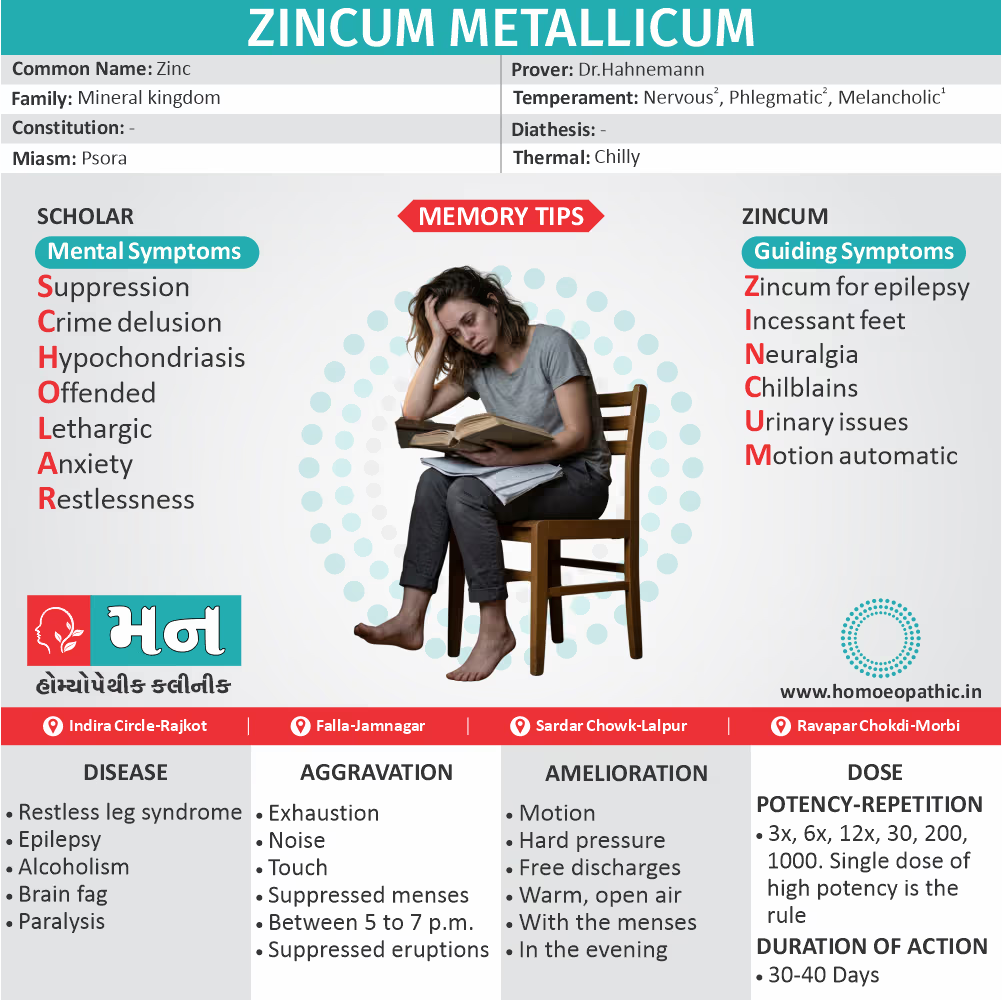
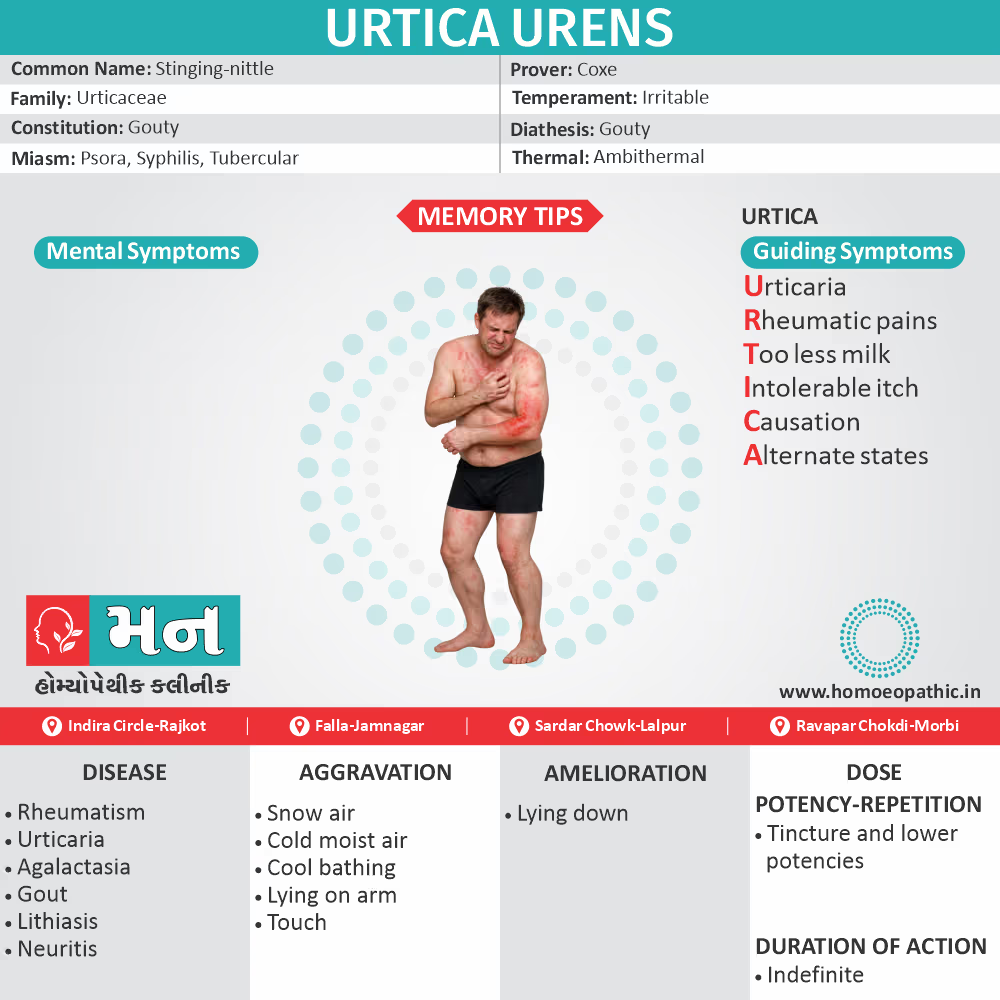
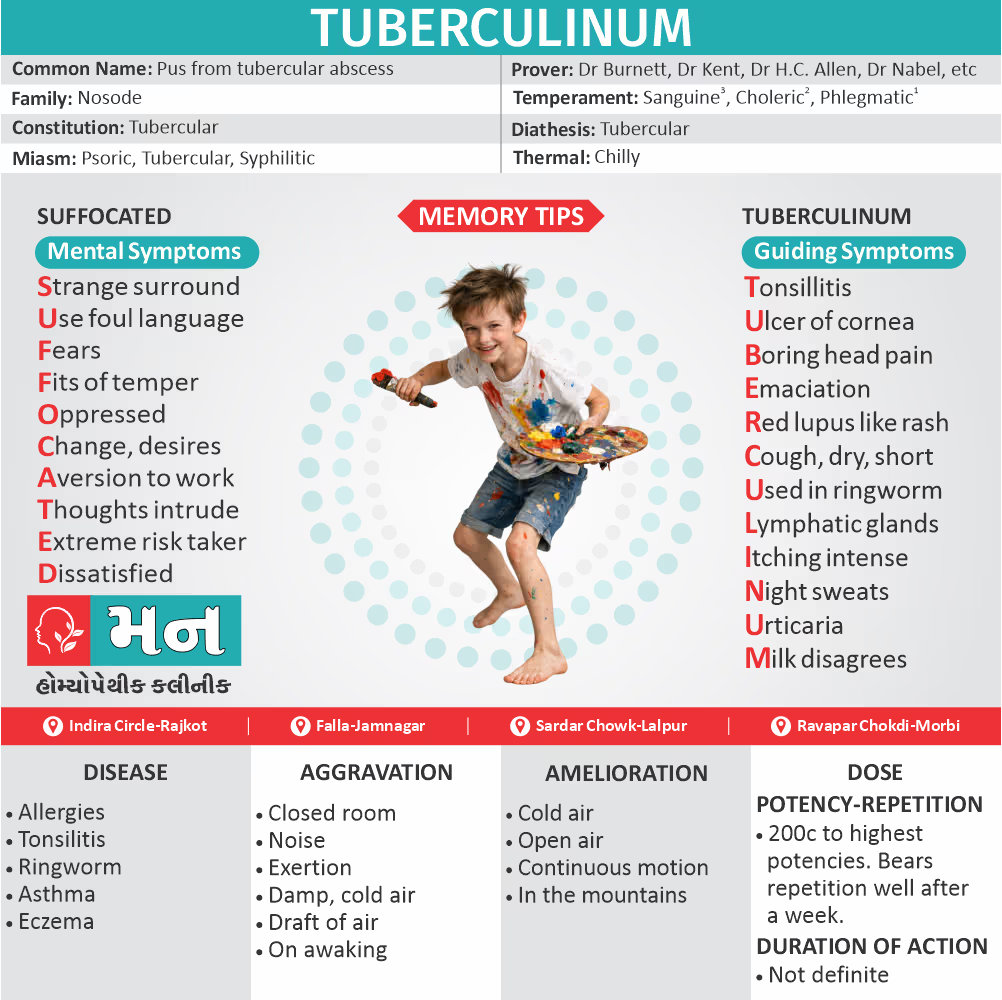
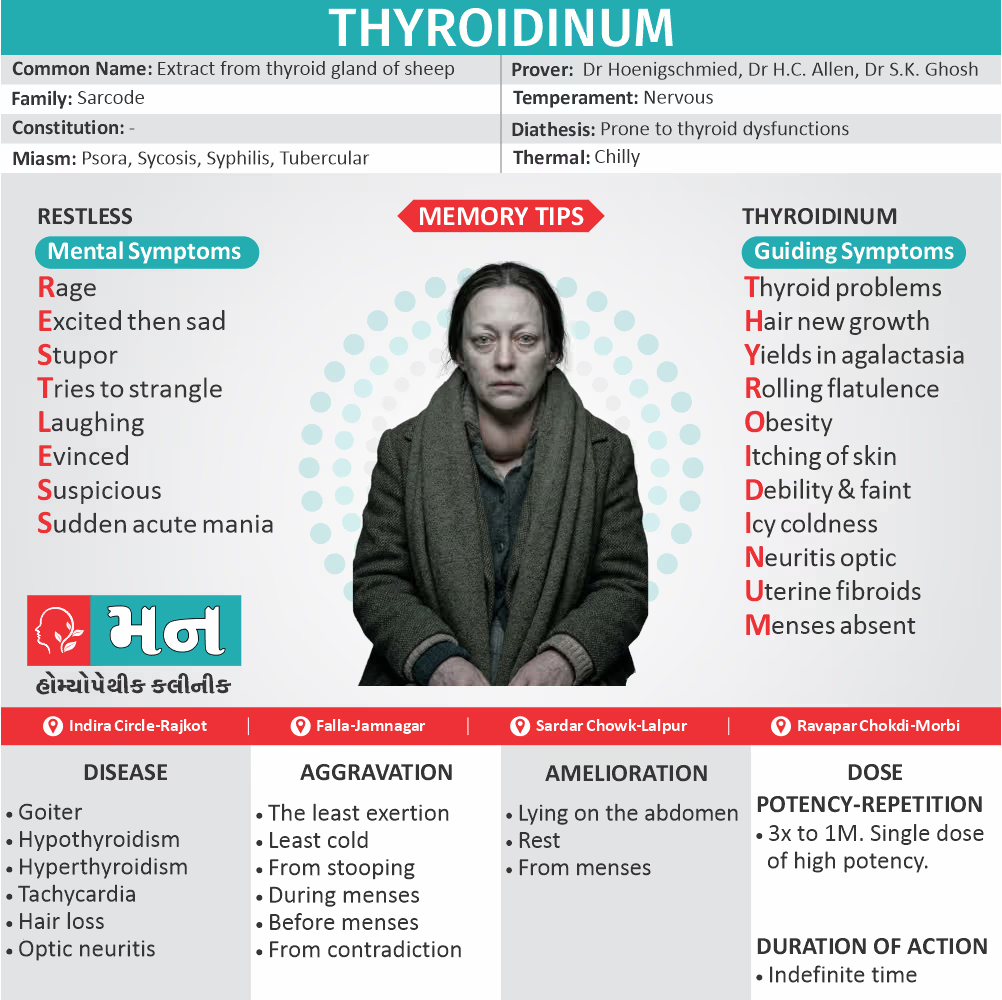
Hi Friends Let’s memorize guiding symptoms of Coccus Cacti through name of Medicine ‘COCCUSCACTI’.
C
O
C
C
U
S
C
A
C
T
I
C
C – Cough violent
Description : The cough is a hallmark symptom, often presenting as violent, racking fits, especially worse upon waking in the morning around 6-7 AM or from the warmth of the bed/room .
Reference : [Boericke W., Pocket Manual of Homoeopathic Materia Medica]
O
O – Oppression chest
Description : During the coughing fits, there is a marked sensation of chest constriction and suffocation. Breathing becomes difficult, and the patient may feel an urgent need for fresh, cool air. This respiratory distress is a key component of the characteristic cough paroxysm.
Reference : [Clarke J.H., A Dictionary of Practical Materia Medica]
C
C – Clear, ropy mucus
Description : One of the most distinctive features is the nature of the mucus expectorated or hawked from the throat/larynx. It is exceedingly tenacious, thick, stringy, difficult to dislodge, and remarkably clear, often compared to egg-white or albumin. This mucus can hang in long strands from the mouth. This characteristic applies to respiratory, nasal, and sometimes vaginal discharges.
Reference : [Clarke J.H., A Dictionary of Practical Materia Medica]
C
C – Calculi
Description : Symptoms of the passage of small calculi.
Reference : [Nature’s Materia Medica By Robin Murphy, Md]
U
U – Urinary urging
Description : There is frequent, sometimes constant, and often ineffectual urging to urinate. Urination itself (dysuria) can be painful, accompanied by burning or stitching sensations. This symptom is prominent in cases of cystitis, urethritis, or renal colic associated with the remedy. Spasmodic bladder pains (tenesmus) can occur.
Reference : [Kent J.T., Lectures on Homoeopathic Materia Medica]
S
S – Spasmodic
Description : Many of the remedy’s symptoms manifest with a spasmodic nature. This is most evident in the violent, convulsive cough but also applies to the sharp, cramping pains of renal colic and dysmenorrhea. Spasms reflect the remedy’s action on nerve reflexes.
Reference : [The Guiding Symptoms Of Our Materia Medica (All 10 Vols.) By Hering C.]
C
C – Clots in menses
Description : In female complaints, menstruation is often too early, very profuse, prolonged, and consists of dark, thick, clotted blood. A particular keynote is the passage of large, black clots, especially when standing up or attempting to urinate. The flow might be intermittent.
Reference : [The Guiding Symptoms Of Our Materia Medica (All 10 Vols.) By Hering C.]
A
A – Agg from warmth
Description : A key modality is the significant worsening of symptoms, especially the cough and respiratory irritation, from warmth. This includes warm rooms, warm drinks, getting warm in bed, or warm weather. Conversely, cold applications provide relief.
Reference : [Hering C., The Guiding Symptoms of Our Materia Medica]
C
C – Cough amel by cold
Description : Alongside the general aggravation from warmth, there is a distinct amelioration (improvement) of the cough and throat irritation from drinking cold water or ingesting cold things. Exposure to cool, open air can also lessen the intensity of coughing fits.
Reference : [Phatak S.R., Concise Materia Medica of Homoeopathic Remedies]
T
T – Tickling larynx
Description : The violent cough is often provoked by an incessant tickling sensation located deep in the larynx or throat pit. This irritation feels like a hair or a crumb is lodged there, leading to a constant need to clear the throat or cough explosively. Brushing teeth can also trigger this tickling and cough.
Reference : [Kent J.T., Lectures on Homoeopathic Materia Medica]
I
I – Irritation vulva
Description : There can be significant sensitivity and irritation of the female genitalia. The vulva may be so sensitive that touch is unbearable, and walking or sitting can be difficult. This can be associated with inflammation or leucorrhoea (which may also be albuminous and stringy).
Reference : [Clarke J.H., A Dictionary of Practical Materia Medica]
Memory Tips for Mental Symptoms
Hi Friends Let’s memorize mental symptoms of Coccus Cacti through name of Medicine ‘FRET’.
F
R
E
T
F
F – Fretful
Description: Apprehensive, irritable, fretful.
Reference book: [Nature’s materia medica by Robin murphy]
R
R – Relief from excitement by walking
Description: Excitement after beer, (>) walking, with heat and sensation as if pulses beat violently. Reference: [Handbook Of Materia Medica And Homoeopathic Therapeutics By Allen T.F.]
E
E – Enlarged delusions
Description: Delusions of being enlarged.
Reference book: [Nature’s materia medica by Robin murphy]
T
T – Talkative
Description: Talkative Reference: [Handbook Of Materia Medica And Homoeopathic Therapeutics By Allen T.F.]
Introduction of Coccus Cacti
Constitution
Clinical
Mental Symptoms
Guiding Symptoms
Characteristic
Therapeutic Value
Modality
Remedy Relationship
Dose
Terminologies
Reference
Also Search As
Introduction of Coccus Cacti
Introduction
Common name:
Cochineal[1]
Family / Group / Class / Order
Animal kingdom
Habit and habitat / Description
Mexico[2]
Name of prover
Dr.Kurtz
Introduction and history
Coccus cacti is a homeopathic remedy derived from the Cochineal insect (Dactylopius coccus), a scale insect native to tropical and subtropical South America and Mexico. These insects live on cacti, feeding on the plant’s moisture and nutrients. 1 Historically, the dried, pulverized bodies of the female insects have been a primary source of carmine dye, producing vibrant red and scarlet hues used for centuries in textiles, food coloring, and cosmetics. 2 In homeopathy, however, this substance, belonging to the Animal Kingdom, is prepared according to specific pharmaceutical processes (potentization) to be used as a medicine based on its ability to elicit certain symptoms in healthy individuals.
Parts used
Whole dried insects
Preparation
Homoeo., Mother tincture of the dried insects; and dilutions. U. S. P., Coccus.
Constitution
Constitution of Coccus Cacti
Temperament
Nervous
Diathesis
Lithic acid
Relation with heat & cold
Hot
Miasm
Psora,Sycosis,Tubercular[3]
Clinical
Clinical conditions of Coccus Cacti
Asthma. Backache. Catarrh. Gonorrhoea. Gravel. Haemorrhages. Heart, affections of. Impotence. Irritation. Labia, inflammation of. Menorrhagia. Nephritis.Phthisis. Spasms. Tinnitus. Uric acid diathesis. Whooping-cough.[4]
Sites of action / Pharmacodynamics
mucus membranes of respiratory and genito-urinary system [5]
Causation (Causes / Ailments from)
Cold exposure,beer drinking
Physiological action
This agent produces irritation and congestion of the mucous membranes of the fauces, larynx and urinary tract.
Patho-physiological changes / Pathogenesis
The respiratory organs.
The larynx and trachea, and possibly the larger bronchi are irritated. Extra mucus is secreted which is tough, tenacious and stringy. Hoarseness and a violent tickling paroxysmal cough come on, causing retching or vomiting and choking. The cough is partly reflex from the irritated throat (q.v.); the breathing is oppressed, but is relieved by getting up ropy phlegm. Palpitation results, with irregular pulse, worse after eating.
The urinary organs
Next in degree, experience the effect of the poison. Burning and shooting in the urethra are felt, especially during micturition. There is great and frequent urging to micturate, and much clear, pale urine is passed; or a deposit of urates is noticed after the urine is cool.
The genital organs
Are stimulated, desire and erections are increased and nocturnal emissions occur. Women experience heat and swelling of the labia, and menstruation is profuse and prolonged. Haemorrhages are usually in black clots.[6]
Mental Symptoms
Characteristic Mental Symptoms (psychology)
Confusion, better open air. Apprehensive, irritable, fretful. Anxiety after eating. Anxiety from irregular action of heart. Lively, talkative mood. Excitement after beer. Delusions of being enlarged. Sadness, early morning on waking. Sadness afternoon 2 p.m. to 3 p.m.[7]
Guiding Symptoms
Guiding symptoms of Coccus Cacti
Generalities
The clinical application of the symptoms of this remedy, place it among the medicines for spasmodic and whooping coughs, and catarrhal conditions of the bladder; spasmodic pains in kidneys, with visceral tenesmus. Anuria, anasarca, ascites.
Head
Suboccipital soreness; worse after sleep and exertion. Headache, worse from lying on back, better with the head high. Dull pain over right eye in morning. SENSATION OF A FOREIGN BODY BETWEEN UPPER LID AND EYEBALL. Distress from cinders lodged in eye.
Ears
Roaring in the ears, evening and night. Impaired hearing.
Nose
Catarrhal symptoms. A discharge of thick, yellow mucus.
Mouth
The whole mouth and fauces sensitive, so that even rinsing the mouth causes cough and vomiting of thick mucus. Taste metallic, with salivation.
Throat
The palate irritable, so that even brushing the teeth causes vomiting and choking. Scraping, with expectoration of mucus; also causing paroxysms of cough, with expectoration of tough mucus. The uvula feels elongated, which causes constant hawking. Secretion of much tough mucus in the throat, with constant efforts to expectorate. This mucus seems to cause the cough, which continues until thick, viscid masses of mucus are expectorated, with relief.
Stomach
Nausea, retching and vomiting, apparently caused by thick, tough mucus in the throat, and by a spasmodic cough.
Abdomen
Pain in the left hypochondrium, as from incarcerated flatus, extending to left side of back and lumbar vertebrae. Burning drawing in region of spleen. Waking at night, (>) holding with a warm hand.
Urinary Organ
Urging to urinate; BRICK-RED SEDIMENT. URINARY CALCULI, HAEMATURIA, URATES, and uric acid; lancinating pains from kidney to bladder. Deep-colored, thick urine. Dysuria.
Sexual Organ
Menses too early, profuse, BLACK and thick; DARK CLOTS, with dysuria. Intermittent menstruation; flow only in evening and at night. LARGE CLOTS escape when passing water. LABIA inflamed.
Respiratory System
Constant hawking from enlarged uvula; coryza, with inflamed fauces; ACCUMULATION OF THICK VISCID MUCUS, which is expectorated with great difficulty. TICKLING IN LARYNX. Sensation of a crumb behind larynx, must swallow continually; brushing teeth causes cough. Fauces very sensitive. Suffocative cough; worse, first waking, with tough, white mucus, which strangles. Spasmodic morning cough. WHOOPING COUGH ATTACKS END WITH VOMITING OF THIS TOUGH MUCUS. Chronic bronchitis complicated with gravel; large quantities of albuminous, tenacious mucus, are expectorated. Walking against wind takes breath away.
Heart & Pulse
Sensation as if everything were pressed toward the heart.
Neck & Back
Aching through the small of the back. The region of the kidneys painful to pressure. Pain across the loins as if broken.
Extremities
Sensation as if a fine glass splinter were sticking in the tips of the fingers, under the nails.Violent stitches in the right hip-joint. Hot swelling of the knees. Pain in the right patella when walking.
Skin
Sleep
Irresistible desire to sleep. Great sleepiness (after dinner). Vivid dreams. Uneasy, restless sleep, interrupted by vivid dreams. Frequent awaking during the night, with excitement, as if he had taken too much coffee.
Fever
Chilliness all day, cold feet in the morning, with perspiration of the whole body. Chilliness all over the body, especially in the afternoon and evening. Increased warmth of body. Greatly overpowered by moderate heat. Chilliness in the evening, with heat in the head, followed by general heat, and then perspiration all night, which relieves. Perspiration when walking, on the lower extremities, in the morning.
Characteristic
Important characteristic features
Keynotes / Redline
1. Sensation of foreign body between upper eyelid and eyeball.
2. Constant urging to urinate >after passing blood clots from vagina in females.
Guiding
-Sensation of heat and pulsation in various organs.
-Sensation of irritation in eyes, throat, larynx, respiratory organs, urinary organs, genitals.
-Intolerable internal itching, burning like pepper in nostrils, tip of tongue [Lach].
-Sensation of a foreign body between upper lid and eyeball (after removal of foreign body, when sensation as if something is left behind in the eye remains).
-Respiratory system-Sensation of hair in eyes and nostrils.
-Swelling of nose, frequent sneezing [Synoptic Key].
-Constant hawking from enlarged uvula, coryza with inflamed fauces.
PQRS
Cough triggered specifically by brushing the teeth
Sensation of a hair, thread, or crumb lodged in the larynx or behind the upper sternum, provoking a constant tickling cough
Expectoration (or vomiting after cough) of large quantities of thick, tenacious mucus which is remarkably clear and can be drawn into long strings (ropy/stringy/albuminous)
Passing large, dark clots during menstruation, especially when urinating
Cough significantly ameliorated (made better) by drinking cold water
Confirmatory
1. Sensation of heat.
2. Sensation of irritation in eyes, throat, larynx, respiratory organs, urinary organs, genitals.
3. Constant hawking from enlarged uvula. Coryza with inflamed fauces. Accumulation of thick viscid mucus which is expectorated with great difficulty.
4. Regular paroxysms of violent, tickling, racking cough, ending in vomiting, or raising much clear ropy mucus hanging from mouth, with purple red face and internal heat.
5. Urinary calculi, haematuria, urates and uric acid, brick red sediment, lancinating pains from kidney to bladder.
Nucleus symptoms
-Spasmodic whooping cough.
-Catarrhal inflammation of throat, respiratory and genitourinary organs.
-Regular paroxysms of violent, ticking, racking cough, ending in vomiting or raising much clear, ropy mucous.
-Uric acid, gouty rheumatic diathesis.
Therapeutic Value
Therapeutic Value of Coccus Cacti
-Bronchitis, Cough, Croup, Pertussis, Renal colic, Whooping cough.
-An insect in the eye or any small foreign body will be immediately expelled or conjunctival reaction will be relived by Coccus cacti – Dr. Pierre Schmidt.
Modality
Modality of Coccus Cacti
Aggravation
*Periodically. *Heat. *Lying. *Cold exposure. Awakening. Touch. Pressure of clothing. Brushing teeth. Slightest exertion ***IRRITATION OF THROAT. Rinsing mouth.
Amelioration
Washing in cold water. Walking. Cold drinks.
Remedy Relationship
Remedy Relationship of Coccus Cacti
Comparison
Cact, Canth, Oci
Dose
Dose of Coccus Cacti
Lower triturations.
Potency
6C,30C
Duration of Action
7-10 days
Terminologies
Terminologies
Main terms
Homoeopathy (Homeopathy):
A system of alternative medicine based on the principle of “like cures like” (Similia Similibus Curentur), where highly diluted substances are used to stimulate the body’s self-healing mechanisms, chosen based on their ability to produce symptoms similar to those the patient is experiencing.
Remedy:
The term used for a homeopathic medicine prepared through a specific process of serial dilution and succussion (vigorous shaking). In this case, Coccus cacti is the remedy derived from the cochineal insect.
Materia Medica:
A reference book or collection detailing the symptoms and characteristics associated with each homeopathic remedy, gathered primarily from ‘provings’ (see below) and clinical experience. Examples include works by Boericke, Clarke, Kent, Allen, Phatak, etc.
Proving:
A systematic process in homeopathy where healthy individuals take repeated doses of a substance (in potentized form) and record the symptoms they experience. These recorded symptoms form the basis of the remedy’s profile in the Materia Medica.
Symptom:
Any evidence of disease or change from a state of health as experienced by the patient (subjective) or observed by others (objective). Homeopathy pays close attention to the totality of symptoms, including mental, emotional, and physical aspects, as well as their unique characteristics.
Keynote Symptom:
A peculiar, characteristic, or strongly marked symptom that is highly indicative of a specific remedy, even if other symptoms are common. For Coccus cacti, the clear, ropy, tenacious mucus is a strong keynote.
Guiding Symptom:
A reliable and characteristic symptom that helps differentiate between remedies with similar general pictures and guides the prescriber to the most suitable choice.
Modalities:
The circumstances or factors that modify a symptom, making it noticeably better or worse. These are crucial for remedy selection. Modalities include time of day, temperature, position, motion, eating/drinking, environment, etc.
Other terminologies
Aggravation (<):
Worsening of symptoms. For Coccus cacti, key aggravations include warmth (room, bed, drinks), morning on waking, touch, brushing teeth.
Amelioration (>):
Improvement of symptoms. For Coccus cacti, key ameliorations include cold drinks, cold air, walking (for excitement).
Paroxysmal:
Occurring in sudden, intense attacks or fits with relatively symptom-free periods in between. The cough of Coccus cacti is typically paroxysmal.
Spasmodic:
Relating to or characterized by spasms (sudden, involuntary muscle contractions). This describes the nature of the Coccus cacti cough and sometimes pains (like renal colic).
Tenacious / Ropy / Stringy / Albuminous:
Terms used to describe the characteristic thick, sticky, clear or whitish mucus/expectoration associated with Coccus cacti that can be drawn into long threads, resembling egg-white.
Calculi:
Medical term for stones, often referring to kidney stones or bladder stones when discussing Coccus cacti‘s action on the urinary system.
Renal Colic:
Intense, spasmodic pain originating in the kidney area (flank) and often radiating downwards, typically caused by the passage of a kidney stone.
Dysuria:
Painful or difficult urination.
Tenesmus:
A persistent feeling of needing to evacuate the bladder or bowels, without necessarily being able to do so, often accompanied by straining and pain.
Like Cures Like (Similia Similibus Curentur):
The foundational principle of homeopathy. It means that a substance capable of producing a set of symptoms in a healthy person can be used in diluted form (as a remedy) to treat similar symptoms in a sick person.
Reference
Reference of Coccus Cacti
[1] Materia Medica By Boericke W.
[2] A Manual Of Materia Medica, Therapeutics And Pharmacology By Blackwood, Alexander Leslie
[3] Zomeo
[4] Dictionary Of Practical Materia Medica (All 3 Vol.) By Clarke J. H.
[5] Concise Materia Medica Of Hom. Remedies By S.R. Phatak
[6] A Manual Of Homoeopathic Therapeutics By Neatby E.
[7] Nature’s Materia Medica By Robin Murphy, Md
[8] A Primer Of Materia Medica By T. F. Allen.
Also Search As
Also search as of Coccus Cacti
1.Consult a Qualified Homeopathic Practitioner:
One of the most direct ways to learn about Coccus cacti, especially in a clinical context, is to consult with an experienced homeopath. They can share insights from their knowledge and practical experience regarding its application, key symptoms, and comparisons with other remedies.
2.Searching Specific Homeopathic Websites:
Look for reputable homeopathic resources online. Many offer detailed Materia Medica sections or articles. Websites dedicated to classical Materia Medica (like online versions or summaries of works by Boericke, Kent, Clarke, Allen, Phatak). Try searching Boericke materia medica Coccus cacti or Kent repertory Coccus cacti.
Websites of established homeopathic organizations (like the National Center for Homeopathy (USA), Faculty of Homeopathy (UK), or the Central Council for Research in Homoeopathy (CCRH) in India).
Educational websites from homeopathic colleges or training centers.
Online homeopathic journals often have searchable archives (e.g., Indian Journal of Research in Homoeopathy – IJRH, American Journal of Homeopathic Medicine). Search terms like Coccus cacti journal article homeopathy.
3.Using Academic Databases: For more research-oriented articles:
Google Scholar: Use combinations like Coccus cacti homeopathy research or Coccus cacti clinical trial.
PubMed: While heavily focused on conventional medicine, some homeopathic research, especially clinical studies or reviews, might be indexed. Use specific search terms.
4.Searching Online Booksellers and Libraries:
Platforms like Google Books allow searching within the text of many classic Materia Medica books, which can yield detailed descriptions of Coccus cacti.
5.Homeopathic Software and Repertories:
Professionals and dedicated students often use specialized software (like RadarOpus, MacRepertory, Vithoulkas Compass, etc.). These programs contain vast digital Materia Medicas and repertories, allowing detailed searches for Coccus cacti’s symptoms, related remedies, and source texts. While often subscription-based, they offer in-depth information.
6.Online Homeopathic Forums and Study Groups:
Engaging with online communities dedicated to homeopathy can be useful. Websites and forums (like Hpathy Community, or specific groups on platforms like Facebook or Telegram, potentially including local Indian groups like the Hahnemannian Homoeo Forum mentioned in search results) often feature discussions about remedies, case studies, and shared articles. Note: Always critically evaluate the information shared in forums and prioritize contributions from experienced practitioners.
7.Homeopathic Conferences, Seminars, and Webinars:
Attending events (in-person or online) hosted by homeopathic organizations or colleges often includes lectures and presentations on specific remedies or case studies where Coccus cacti might be discussed. Proceedings or recordings might be available afterward.
Frequently Asked Questions (FAQ)
What is Coccus cacti in homeopathy?
Coccus cacti
is a homeopathic remedy derived from the cochineal insect. Following the principle of “like cures like,” it’s used in homeopathy to address specific symptom patterns identified through provings and clinical practice.
What conditions is Coccus cacti typically used for in homeopathy?
Conditions
Homeopathically, Coccus cacti is often indicated for conditions presenting with violent, spasmodic coughs (similar to whooping cough), certain urinary tract issues like renal colic or painful urging, and specific types of menstrual complaints. It addresses the person with the matching symptom complex, not just the disease name.
What are the most characteristic symptoms pointing to Coccus cacti?
Key indicators
include paroxysmal cough ending with vomiting of thick, clear, stringy mucus; a persistent tickle in the larynx triggering the cough; urinary urgency with possible stitching pains; profuse, dark, clotted menses, especially passing clots when urinating; and distinct worsening from warmth and improvement from cold drinks or air.
What kind of urinary problems might indicate Coccus cacti?
Symptoms suggesting Coccus cacti include frequent and intense urging to urinate, painful urination (dysuria), stitching pains traveling from the kidney area downwards (renal colic), potential kidney/bladder stones (calculi), and sometimes dark or thick urine.
What is the unique mucus associated with Coccus cacti?
The mucus
or expectoration linked to Coccus cacti is highly characteristic: it’s thick, sticky (tenacious), can be drawn into long strings (ropy), and is typically clear like raw egg white (albuminous).
What factors typically make Coccus cacti symptoms better or worse?
Modalities
A key modality is aggravation (<) from warmth (warm rooms, warm bed), upon waking in the morning. Amelioration (>) often comes from drinking cold water or being in cool, open air.
Is the homeopathic remedy Coccus cacti safe?
Safety
Prepared according to homeopathic pharmacopoeia standards involving high dilution, Coccus cacti is generally considered safe and unlikely to cause direct side effects. As with any homeopathic remedy, it’s best taken under the guidance of a qualified practitioner to ensure correct selection.
Coccus cacti
is a homeopathic remedy derived from the cochineal insect. Following the principle of “like cures like,” it’s used in homeopathy to address specific symptom patterns identified through provings and clinical practice.
Conditions
Homeopathically, Coccus cacti is often indicated for conditions presenting with violent, spasmodic coughs (similar to whooping cough), certain urinary tract issues like renal colic or painful urging, and specific types of menstrual complaints. It addresses the person with the matching symptom complex, not just the disease name.
Key indicators
include paroxysmal cough ending with vomiting of thick, clear, stringy mucus; a persistent tickle in the larynx triggering the cough; urinary urgency with possible stitching pains; profuse, dark, clotted menses, especially passing clots when urinating; and distinct worsening from warmth and improvement from cold drinks or air.
Symptoms suggesting Coccus cacti include frequent and intense urging to urinate, painful urination (dysuria), stitching pains traveling from the kidney area downwards (renal colic), potential kidney/bladder stones (calculi), and sometimes dark or thick urine.
The mucus
or expectoration linked to Coccus cacti is highly characteristic: it’s thick, sticky (tenacious), can be drawn into long strings (ropy), and is typically clear like raw egg white (albuminous).
Modalities
A key modality is aggravation (<) from warmth (warm rooms, warm bed), upon waking in the morning. Amelioration (>) often comes from drinking cold water or being in cool, open air.
Safety
Prepared according to homeopathic pharmacopoeia standards involving high dilution, Coccus cacti is generally considered safe and unlikely to cause direct side effects. As with any homeopathic remedy, it’s best taken under the guidance of a qualified practitioner to ensure correct selection.