Natrum Phosphoricum
Overview:
Natrum Phosphoricum comes from Sodium Phosphate. It is a key remedy for excess acidity. It primarily treats digestion issues . A creamy, yellow coating on the tongue confirms it. It also neutralizes uric acid. Sugar intake often worsens these symptoms. The remedy also treats children’s diseases . This includes worms and colic. Their stools may smell sour.
Memory Tips for Guiding Symptoms
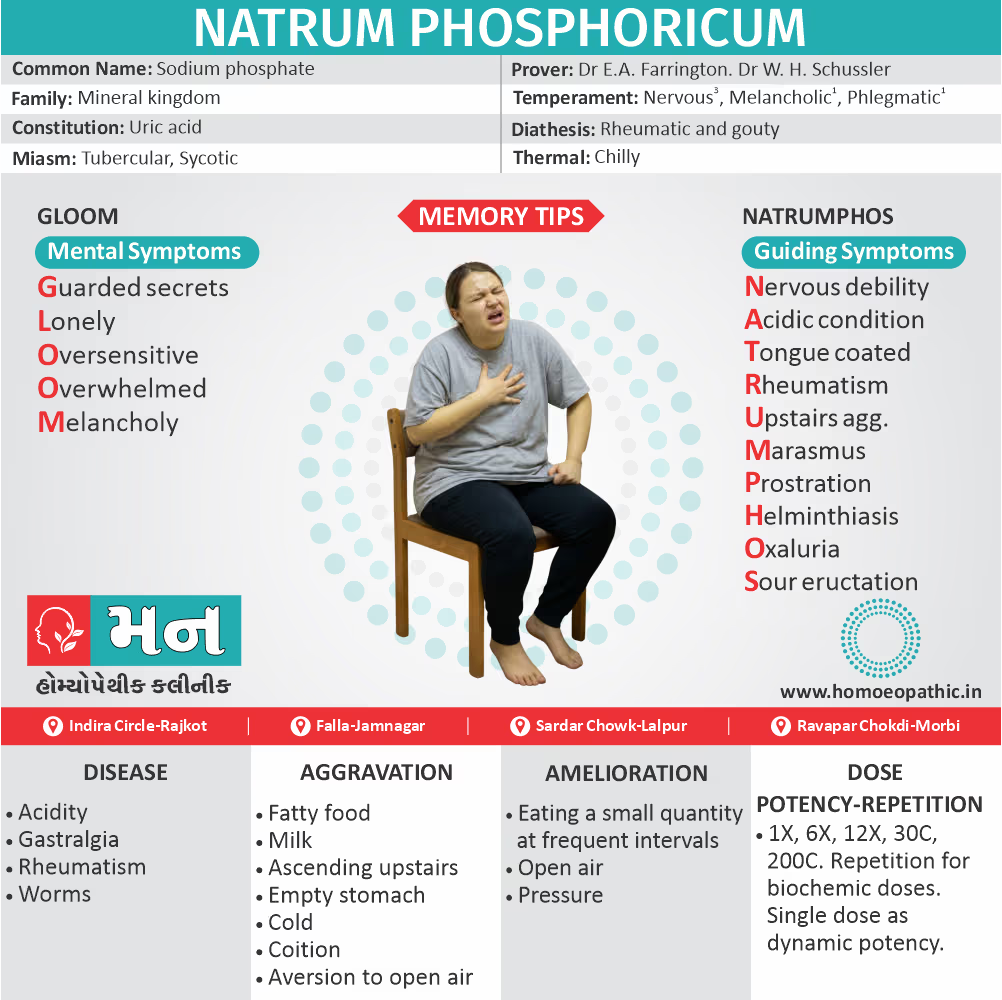
Hi Friends Let’s memorize guiding symptoms of Natrum Phosphoricum through name of Medicine ‘NATRUMPHOS’.
N
A
T
R
U
M
P
H
O
S
N
N – Nervous Debility
Description: Marked nervous weakness and prostration. The patient is easily startled, anxious, and fearful, especially during thunderstorms or in the evening. There is a notable dread of impending disease or misfortune. This nervous exhaustion is often accompanied by trembling and irritability.
Reference: A Dictionary of Practical Materia Medica by J.H. Clarke, M.D.
A
A – Acidic Condition
Description: This remedy is a cornerstone for conditions arising from an excess of lactic acid. It addresses symptoms of sourness throughout the body, including sour eructations, sour vomiting, and sour-smelling stools. It is indicated for dyspepsia with a constant sour taste.
Reference: Pocket Manual of Homoeopathic Materia Medica & Repertory by William Boericke, M.D.
T
T – Tongue, Coated
Description: The tongue has a characteristic moist, creamy, or golden-yellow coating, especially at the back part. This coating is a primary indicator for this remedy, often seen in gastric and bilious derangements. The palate may also share this yellowish, creamy appearance.
Reference: Leaders in Homoeopathic Therapeutics by E.B. Nash, M.D.
R
R- Rheumatism
Description: Indicated for acute and chronic articular rheumatism. The pains are characteristically worse with motion and during a thunderstorm. Swelling and pain are prominent in the finger joints, knees, and ankles, often with a sour perspiration.
Reference: The Encyclopedia of Pure Materia Medica by Timothy F. Allen, M.D.
U
U – Upstairs agg
Description : Ascending upstairs aggravates main complaints.
Reference : [The Encyclopedia of Pure Materia Medica by Timothy F. Allen]
M
M – Marasmus
Description: Progressive emaciation and wasting in children who, despite having a good appetite, fail to thrive. The child is often pot-bellied, with a shrunken neck, and passes sour, green, or curdled stools. The condition stems from an inability to properly assimilate food.
Reference: Lectures on Homoeopathic Materia Medica by J.T. Kent, A.M., M.D.
P
P – Prostration
Description: A profound state of exhaustion and weakness is present, both mentally and physically. The debility is often associated with seminal emissions or sexual excesses. The legs feel weak and tired, as if they would give way.
Reference: Materia Medica of Homoeopathic Medicines by S.R. Phatak, M.D.
H
H – Helminthiasis
Description: An effective remedy for intestinal worms, particularly threadworms. Symptoms include itching of the anus, picking at the nose, grinding of teeth during sleep (bruxism), and a variable appetite. The child may be irritable and cross.
Reference: Practical Homoeopathic Therapeutics by W.A. Dewey, M.D.
O
O – Oxaluria
Description: This remedy is indicated for the presence of calcium oxalate crystals in the urine, a condition known as oxaluria. The urine may contain a sandy or gritty sediment. This symptom points to a disturbed metabolic state, often associated with the gouty or lithic diathesis. It can be linked to symptoms like back pain and general fatigue.
Reference: A Synoptic Key to the Materia Medica by Cyrus Maxwell Boger, M.D.
S
S – Sour Eructations
Description: This is a hallmark symptom. The patient suffers from constant and distressing sour belching and regurgitation of sour fluid. The entire digestive tract seems to be filled with acidity, leading to heartburn and indigestion.
Reference: Homoeopathic Therapeutics by S. Lilienthal, M.D.
Memory Tips for Mental Symptoms
Hi Friends Let’s memorize mental symptoms of Natrum Phosphoricum through name of Medicine ‘GLOOM’.
G
L
O
O
M
G
G – Guarded Secrets
Description: This theme centers on the idea that communication is forbidden. They can walk around with a secret for years, carrying the heavy burden of it with them. They have the feeling that there is something they are not allowed to share with others, often believing their conscience forbids them to talk about their ideas or problems. This can lead to a fear of the telephone, as they are afraid they will say something wrong or reveal too much.
Reference: [Minerals Of Homoeopathy By Jan Scholten]
L
L – Lonely
Description: They feel lonely and depressed and tend to go their own way. This feeling is often rooted in a situation where they have no friends or brothers, such as being an only child or losing a friend after moving. This loneliness is compounded by the conviction that they must sort out every problem on their own and that they are alone with their learning difficulties, making them slow learners.
Reference: [Minerals Of Homoeopathy By Jan Scholten]
O
O- Oversensitive
Description: They are rather refined people, very sensitive to rudeness and coarse conversation. Because they feel very vulnerable, they treat others with subtlety and expect the same in return. This sensitivity also makes them easily touched by cultural beauty, and they might enjoy writing poems. At times, they prefer to be alone so they don’t have to engage in conversations that are not delicate or refined.
Reference: [Minerals Of Homoeopathy By Jan Scholten]
O
O – Overwhelmed
Description: This symptom describes a state of being nervous, irritable, and vexed at trifles. The individual is anxious and apprehensive, often waking with nervous fears or being easily startled. This mental agitation is frequently accompanied by a mental dullness which makes it difficult to remember things or to study effectively.
Reference: [The Guiding Symptoms Of Our Materia Medica (All 10 Vols.) By Hering C.] and [Dictionary Of Practical Materia Medica (All 3 Vol.) By Clarke J. H.]
M
M – Melancholy
Description: The person suffers from a deep melancholy and despondency, which is notably pronounced after seminal emissions. In this state, they feel they cannot study and are filled with anxious fears, imagining they will get bad news or suffer from a severe illness like typhoid fever. This profound sadness is a key feature of their depressive state.
Reference: [Dictionary Of Practical Materia Medica (All 3 Vol.) By Clarke J. H.]
Introduction
Constitution
Clinical
Mental Symptoms
Guiding Symptoms
Characteristic
Therapeutic Value
Modality
Remedy Relationship
Dose
Terminologies
Reference
Also Search As
Introduction
Introduction of Natrum Phosphoricum
Common name:
Sodium phosphate[1]
Synonyms
Phosphate of soda
Family / Group / Class / Order
Mineral kingdom
Habit and habitat / Description
Phosphate of soda, known chemically as Sodium Phosphate, is a saline salt that serves diverse functions. Medically, it’s widely used as a saline laxative to treat occasional constipation by drawing water into the intestines. In the food industry, it functions as a common additive, acting as an emulsifier, thickener, and pH regulator in many processed foods. Furthermore, in homeopathy, it is prepared as Natrum Phosphoricum, where practitioners use it as a key remedy to neutralize excess bodily acid, thereby addressing conditions like acid reflux, rheumatism, and gout.[2]
Formula / Symbols
Na2HPO4.12H2O
Name of prover
Dr E.A. Farrington. Dr W. H.
Schussler
Introduction and history
This is one of the most important of Schussler’s
twelve tissue remedies. It is a very important constitutional remedy. This inorganic salt is found in the intercellular fluids of humans. It’s function in the
human economy is to regulate water in blood and other fluids of the body. It keeps learnt from the natives of Antilles.blood, bile, pancreatic juices at normal consistency. The deficiency of this salt prevents the elimination of water from the tissues as is produced by oxydation of
organic matter.
Doctrine of signature
–
Parts used
–
Active principles
–
Preparation
Pure sodium phosphate is triturated with sugar of milk and higher potencies are prepared from 3c according to the directions given in homeopathic
pharmacopoeias.
Constitution
Constitution of Natrum Phosphoricum
Physical make up
It is best suited to tall, thin people with yellowish discolouration of the skin and sclera.
Temperament
Nervous3 , Melancholic1 , Phlegmatic 1
Diathesis
Rheumatic
Relation with heat & cold
Chilly
Miasm
Sycotic
Clinical
Clinical conditions of Natrum Phosphoricum
Acidity (infants). Conjunctivitis. Diabetes. Dyspepsia. Enteralgia. Erysipelas. Gastralgia. Glands, scrofulous swelling of. Goitre. Gout. Intertrigo. Leucocytosis. Leucorrhoea. Morphinomania. Phthisis. Post-nasal catarrh. Rheumatism. Scrofula. Sighing. Sterility. Threadworms. Urticaria. Worms.[3]
Sites of action / Pharmacodynamics
Nerves, liver, pancreas, left lower chest, left side, intestines, respiration, meninges, mind, head, conjunctiva, genital
organs, gastrointestinal tract, etc.
Causation (Causes / Ailments from)
Physical exertion, bitter food, fatty food, sugar, thunderstorm,
emotional disturbance, disappointment, tension, shock.
Physiological action
This agent is a mild saline cathartic and hepatic stimulant.[4]
Patho-physiological changes / Pathogenesis
Natrium phosphoricum, as per Schussler, counters acid-related diseases by establishing catalytic action in molecular doses, stimulating intestinal, liver, and pancreatic secretions, and acting as an ‘H’ ion blocker in body fluids. Its deficiency disrupts the phosphate buffer, increasing acidity in gastric juice, cerebrospinal fluid, and bile, leading to uric acid precipitation (causing rheumatic and gouty pains), hyperacidity, gallstone formation, corrosive vaginal discharges, infertility, worm growth due to protein putrefaction, and lactic acid accumulation causing burning and pricking pains.
Mental Symptoms
Characteristic Mental Symptoms (psychology) of Natrum Phosphoricum
1. Fear of poverty, feels as if some misfortune will happen.
2. Weeping tendency, easily startled, nervousness.
3. Hears foot steps in the next room, sensitive to noise.
4. Concentration difficult, carelessness.
5. Fearful, easily excited.
6. Indifference, irritable temperament.
7. Sensation of a hair on the tip of the tongue.
8. Sensation of a lump in the throat.
Guiding Symptoms
Guiding Symptoms of Natrum Phosphoricum
Generalities
This remedy is useful for conditions arising from excess of lactic acid, as a result of too much sugar. It affects duodenum; bile ducts, mesenteric glands and genitals. ***SOURNESS; *eructations, vomiting, stomach, stools, leucorrhoea; expectoration, sweats etc. Ailments with *excess of acidity. *Infants who have been fed to excess, *with milk and sugar. *Deep yellow, creamy; *discharges. *Debility. Pricking sensation. Tightness of muscles and tendons. Jaundice (1x Trit.). Oxaluria. Worms. Swelling of lymphatic glands. Ill effects of mental exertion or sexual vices or both. Marasmus of bottle fed babies. Trembling and palpitation from thunderstorms. Cracking in joints. Nervousness; tired feeling. [5]
Head
Feels dull in the morning. Cutting pain in temples (right) while studying. Pressure and heat on top of head as if it would open.
Eye
Golden yellow creamy matter from the eyes. Whites of the eyes dirty yellow. Eyes weak worse gas light. Squinting, with worms. One pupil dilated.
Ears
One ear red, hot, itching, scratches until it bleeds; with gastric affections and acidity. As if water falling in, from a height.
Nose
*Itching. Offensive odour before nose. Yellow thick offensive mucus. *Child picks nose. Pricking; with lachrymation.
Face
Itching about mouth. *Pale, or red on alternate sides. Florid.
Mouth
Blisters on tip of tongue. ***YELLOW CREAMY COATING AT THE BASE OF TONGUE; on tonsils, or roof of mouth. Thin moist coating on the tongue. As of a hair on tongue. Grinding of teeth; children. Pricking, numbness of whole mouth.
Stomach
Sour eructations. Vomiting of sour cheesy masses. Desire for strong tasting things; eggs, fried fish, beer which better . Aversion to bread and butter.
Abdomen
While at stool, sensation as if a marble dropped down descending colon. Noisy flatulence. Fullness in abdomen worse standing or eating a little. Gastro-duodenal catarrh. Jaundice. Urging to stool and urination after coitus (men). Stools hacked. Greenish diarrhoea. Itching at anus. Afraid to pass flatus lest the stool escape. Sclerosis of liver and hepatic form of diabetes esp. when there is a succession of boils. Round or thread worms.
Urinary Organ
Urging to urinate and burning and itching at meatus after coition. Must wait for urine to start.
Respiratory System
Respiration difficult. Cough worse sitting. Chest feels empty after eating. Pain in chest worse deep breathing and pressure.
Heart & Pulse
Trembling about heart worse going upstairs; after menses. Feeling as if a bubble started from heart and was forced through arteries. Heart pains are better when big toe pains. Heart pains alternating with rheumatic pains. Anxious palpitation, after a thunderstorm.
Neck & Back
Weakness after coition. Heavy dragging in the back. Swelling of glands of neck extending to chest. Goitre with feeling of pressure.
Extremities
Aching in wrists and finger joints. Trembling of limbs after coition. Rheumatism. Feet icy cold during day, burn at night. Synovial crepitation. Cramps in hands while writing. Legs give way while walking.
Fever
Feet icy cold in day time, burn at night.
Characteristic
Important characteristic features of Natrum Phosphoricum
Keynotes / Redline
1. Golden yellow coating of tongue.
2. Discharges golden yellow, acid.
3. Feeling as if a bubble started from the heart and were forced through arteries.[6]
Guiding
Golden-yellow, creamy coating at the back of the tongue.
Sourness in all manifestations (eructations, vomiting, stools, body odor).
Aggravation of complaints from sugar consumption.
Itching of the anus and nose from intestinal worms.
Rheumatic pains of the small joints.
PQRS
Sensation of a hair on the tip of the tongue.
Imagines, on waking at night, that pieces of furniture are people.
Fearfulness as if something would happen, especially during a thunderstorm.
Seminal emissions at night without dreams.
Craving for strong-tasting things like beer, salt, and seasoned food.
Nucleus symptoms
-Schussler’s remedy for excess of lactic acid in the body resulting in dyspepsia, gastralgia with flatulence, sour eructations and sour vomiting.
Therapeutic Value
Therapeutic Value of Natrum Phosphoricum
Abdominal disorders, Asthma, Biliousness, Bleeding
piles, Condyloma, Constipation, Cough, Debility, Delirium, Diabetes, Diarrhoea,
Dropsy, Epilepsy, Fever, Flatulence, Gonorrhoea, Headache, Hyperacidity,
Infertility, Leucorrhoea, Liver affections, Meningitis, Oedema of feet, Pneumonia,
Polyuria, Psoriasis of palms, Warts, Worms, etc
Modality
Modality of Natrum Phosphoricum
Aggravation
Fatty food
Milk
Ascending upstairs
Empty stomach
Cold
Coition
Thunderstorm
Mental labour
Aversion to open air
Amelioration
Eating a small quantity at frequent intervals
Open air
Pressure
Remedy Relationship
Remedy Relationship of Natrum Phosphoricum
Antidoted by
Apis, Sep
Compare
Nat-lac, Nat-s, Ferr-p.
Dose
Dose of Natrum Phosphoricum
Biochemic : 6X , Dr.Kent recommends 30 C
Potency
–
Duration of Action
Indefinite
Terminologies
Terminologies of Natrum Phosphoricum
Foundational Concepts
Materia Medica:
A comprehensive collection of information on homeopathic remedies. It details the symptoms a substance produces in healthy individuals, which then become the indications for its use in treating the sick. Think of it as an encyclopedia of medicines.
Remedy:
The homeopathic term for a medicine, which is a substance prepared through a specific process of serial dilution and succussion (vigorous shaking).
Synoptic Key:
A condensed summary of the most prominent and characteristic symptoms of a remedy. It’s designed for quick reference, often arranging symptoms mnemonically (like the “STAMMER” key we created) to aid memory.
Symptom Classification
Guiding Symptoms:
These are the most reliable and characteristic symptoms of a remedy that strongly point to its selection for a patient. For Spigelia, violent palpitations and left-sided neuralgia are key guiding symptoms.
PQRS Symptoms:
An acronym for Peculiar, Queer, Rare, and Strange symptoms. These are unusual and individualizing symptoms of a case that are highly valued in homeopathy because they often lead directly to the correct remedy. Spigelia’s fear of pointed things is a classic PQRS symptom.
Keynote:
A single, very characteristic symptom or feature of a remedy that serves as a primary indicator for its use. The famous “sun headache” of Spigelia is a perfect example of a keynote.
Modalities:
These are the factors or circumstances that modify a symptom, making it either better or worse. They are crucial for differentiating between remedies.
Amelioration (Amel.):
Factors that improve or provide relief from a symptom (e.g., “better from lying on the right side”).
Aggravation (Agg.):
Factors that worsen or trigger a symptom (e.g., “worse from the slightest touch or jar”).
Clinical & Descriptive Terms
Helminthiasis:
The medical term for an infestation with parasitic worms, such as intestinal worms or pinworms.
Leucorrhea:
A whitish, yellowish, or milky-white discharge from the vagina.
Marasmus:
A form of severe malnutrition characterized by energy deficiency and extreme wasting of body tissues, especially in children.
Ophthalmia:
Severe inflammation of the eye, particularly involving the conjunctiva (the membrane lining the eyelid and eyeball).
Oxaluria:
The presence of an excess of oxalate crystals in the urine, which can lead to the formation of a sandy sediment or kidney stones.
Pharyngitis:
Inflammation of the pharynx, which is the part of the throat behind the mouth and nasal cavity.
Seborrhea:
A skin condition caused by the excessive production of sebum (oil) from the sebaceous glands, resulting in oily skin and sometimes greasy scales.
Ulceration:
The formation of a break or open sore on the skin or a mucous membrane (like the stomach lining) that fails to heal properly.
Reference
Reference of Natrum Phosphoricum
[1] Allen’s keynotes
[2] Gems textbook of materia medica by Dr.Patil
[3] Dictionary Of Practical Materia Medica (All 3 Vol.) By Clarke J. H.
[4] A Manual Of Materia Medica, Therapeutics And Pharmacology By Blackwood, Alexander Leslie
[5] Concise Materia Medica Of Hom. Remedies By S.R. Phatak
[6] Zomeo
Also Search As
Also Search As of Natrum Phosphoricum
1. Searching by Ailment or Symptom
This is the most common method for patients or beginners. They search for a solution to a specific health problem and want to know if Natrum phos can help.
Format: [Ailment/Symptom] + homoeopathy
Examples:
“Acidity and heartburn homeopathic medicine”
“Homeopathic remedy for sour burps”
“Natrum phos for joint pain”
“Children’s worms treatment in homeopathy”
“Remedy for oily skin and acne”
2. Searching for In-Depth Remedy Profiles
This method is used by students, practitioners, and those wanting a comprehensive understanding of the medicine. They search for its complete profile, known as a Materia Medica.
Format: Natrum phosphoricum + [Materia Medica/Profile Keyword]
Examples:
“Natrum phosphoricum materia medica”
“Natrum phos keynote symptoms”
“Boericke materia medica Natrum phosphoricum”
“Natrum phosphoricum Kent lectures”
“Drug picture of Natrum phos”
3. Searching for Clinical Use and Research
Practitioners and researchers look for clinical evidence, case studies, and comparative articles. These searches are more technical.
Format: Natrum phosphoricum + [Clinical/Research Keyword]
Examples:
“Natrum phosphoricum clinical cases”
“Research on Natrum phosphoricum”
“Compare Natrum phos and Calcarea carb”
“Natrum phosphoricum in paediatric practice”
“Homeopathic journals Natrum phos”
4. Searching by Specific Homeopathic Terminology
Those familiar with homeopathic principles use specific terminology to refine their search for articles.
Format: Natrum phosphoricum + [Homeopathic Term]
Examples:
“Natrum phos uric acid diathesis”
“Natrum phosphoricum biochemic uses”
“Miasmatic background of Natrum phos”
“Natrum phosphoricum 6x benefits”
5. Searching for Beginner-Level Information
Newcomers to homeopathy look for simple, easy-to-understand articles that explain the remedy’s basic uses.
Format: Natrum phosphoricum + [Beginner Keyword]
Examples:
“Natrum phosphoricum for beginners”
“Benefits of Natrum phos”
“How to use Natrum phosphoricum”
“Natrum phos uses and side effects”
Frequently Asked Questions (FAQ)
What are the key identifying symptoms for Natrum Phos?
The most characteristic symptom indicating a need for Natrum Phos is a thick, moist, creamy or golden-yellow coating on the back of the tongue. Other key symptoms include acidic or sour-smelling perspiration and discharges.
Can Natrum Phos help with joint pain?
Joint complaint
Yes, it is a key remedy for rheumatic and gouty conditions, particularly when the joint pains are associated with a high-acid state (Uric Acid Diathesis). It is often indicated for pain in the finger joints, knees, and ankles.
Is Natrum Phosphoricum safe for children?
Safety
In homeopathy, Natrum Phos is considered safe for children, especially for conditions like colic with sour vomiting, intestinal worms (causing teeth grinding and anal itching), and marasmus (failure to thrive despite a good appetite).
What is Natrum Phosphoricum made from?
Source
Natrum Phosphoricum is a homeopathic remedy prepared from the chemical salt, Sodium Phosphate. In homeopathy, it is prepared through a process of serial dilution and succussion (potentization).
How does Natrum Phos differ from other antacid remedies?
Differentiation
Unlike conventional antacids that neutralize stomach acid directly, Natrum Phos works on a constitutional level to regulate the body’s acid-alkaline balance, addressing the root cause of hyperacidity according to homeopathic principles.
How do practitioners differentiate Natrum Phos from other acid-remedies like Robinia?
Comparison
While both remedies target acidity, practitioners differentiate them by their unique keynotes. Natrum Phos presents a characteristic creamy, yellow-coated tongue and addresses a chronic, constitutional acidic state. Conversely, Robinia produces intensely acrid, sour eructations that cause burning from the stomach to the throat, often without the typical tongue symptom of Natrum Phos.
Why is there a strong connection between craving sugar and the need for Natrum Phos?
The link is biochemical. Natrum Phosphoricum plays a crucial role in metabolizing lactic acid, a byproduct of sugar breakdown. Consequently, when there is a deficiency or imbalance that Natrum Phos can correct, the body’s ability to process sugars falters, leading to an increase in acidity and a subsequent aggravation of symptoms after consuming sweets.
The most characteristic symptom indicating a need for Natrum Phos is a thick, moist, creamy or golden-yellow coating on the back of the tongue. Other key symptoms include acidic or sour-smelling perspiration and discharges.
Joint complaint
Yes, it is a key remedy for rheumatic and gouty conditions, particularly when the joint pains are associated with a high-acid state (Uric Acid Diathesis). It is often indicated for pain in the finger joints, knees, and ankles.
Safety
In homeopathy, Natrum Phos is considered safe for children, especially for conditions like colic with sour vomiting, intestinal worms (causing teeth grinding and anal itching), and marasmus (failure to thrive despite a good appetite).
Source
Natrum Phosphoricum is a homeopathic remedy prepared from the chemical salt, Sodium Phosphate. In homeopathy, it is prepared through a process of serial dilution and succussion (potentization).
Differentiation
Unlike conventional antacids that neutralize stomach acid directly, Natrum Phos works on a constitutional level to regulate the body’s acid-alkaline balance, addressing the root cause of hyperacidity according to homeopathic principles.
Comparison
While both remedies target acidity, practitioners differentiate them by their unique keynotes. Natrum Phos presents a characteristic creamy, yellow-coated tongue and addresses a chronic, constitutional acidic state. Conversely, Robinia produces intensely acrid, sour eructations that cause burning from the stomach to the throat, often without the typical tongue symptom of Natrum Phos.
The link is biochemical. Natrum Phosphoricum plays a crucial role in metabolizing lactic acid, a byproduct of sugar breakdown. Consequently, when there is a deficiency or imbalance that Natrum Phos can correct, the body’s ability to process sugars falters, leading to an increase in acidity and a subsequent aggravation of symptoms after consuming sweets.