Nux Moschata
Overview:
Nux Moschata, derived from nutmeg, is a profound homeopathic remedy primarily acting on the mind and nervous system. Its most striking feature is an overwhelming, stupefying drowsiness that permeates all aspects of the patient’s life, often accompanied by a dream-like state of confusion and a vanishing of thoughts. Physically, it is marked by tremendous bloating after eating and an intense dryness of the mouth without any desire for water. Emotionally, the picture is one of extreme changeability, with moods rapidly shifting from laughter to tears. Overall, Nux Moschata is suited for over-sensitive individuals whose complaints are significantly worse from cold, damp conditions and better from warmth.
Memory Tips for Mental Symptoms
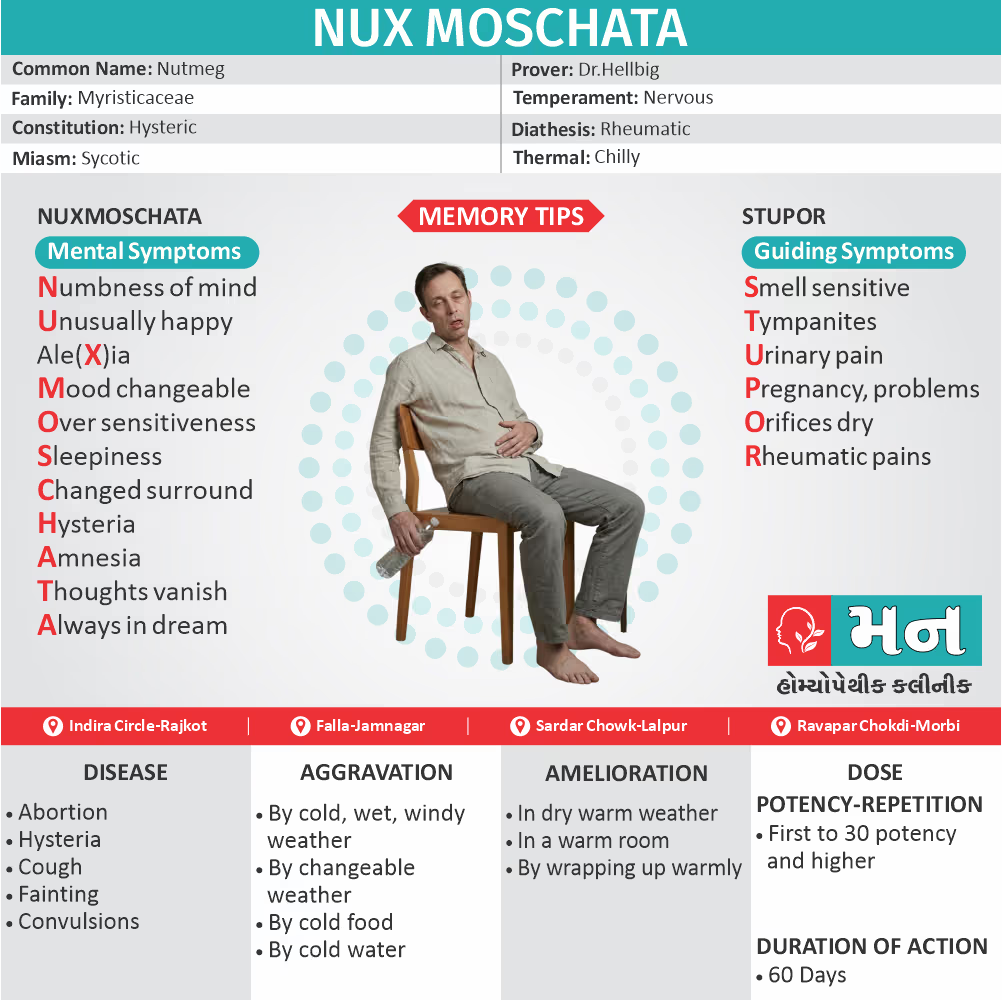
Hi Friends Let’s memorize mental symptoms of Nux Moschata through name of Medicine ‘NUXMOSCHATA’.
N
U
X
M
O
S
C
H
A
T
A
N
N – Numbness of Mind
Description: complaints cause sleepiness. Stupor and insensibility; unconquerable sleep. Absence of mind; cannot think; great indifference to everything.
Reference: Keynotes With Nosodes By Allen H.C.
U
U – Unusually happy
Description: Unusually lively, laughing and bright, in the forenoon. Felt foolishly happy, but could not talk; had no desire to talk (first evening). Everything provokes laughter, quite contrary to habit; this was especially noticeable on going into the open air. He stood still upon the street, made foolish gestures; between the attacks he sank into absence of mind, and on collecting himself everything about him seemed ludicrous. During this he looked foolish and childish, like an idiot.
Reference: “The Encyclopedia of Pure Materia Medica” by Dr. T.F. Allen.
X
X – Ale(X)ia
Description: This represents a peculiar form of mental confusion where the patient is unable to read, despite seeing the words clearly. They look at the text but cannot comprehend its meaning, as if the connection between the visual symbol and its mental concept is broken. This symptom highlights the profound disorganization of the thought process and cognitive function.
Reference: “Leaders in Homoeopathic Therapeutics” by Dr. E.B. Nash.
M
M – Mood, Changeable
Description: The emotional state is extremely unstable and unpredictable. The patient may rapidly switch from laughter to tears, or from placid calmness to intense seriousness without any apparent cause. This reflects an utter lack of emotional control and a profound internal imbalance. One moment they are jesting, the next they are plunged into despair.
Reference: “Lectures on Homoeopathic Materia Medica” by Dr. J.T. Kent.
O
O – Over sensitiveness
Description: All senses, particularly smell and hearing, are exquisitely sensitive. The slightest odor can be overpowering and may even lead to fainting. Similarly, ordinary sounds are perceived as excessively loud and jarring. This heightened sensory state makes the patient extremely reactive to their environment, indicating a hypersensitive nervous system.
Reference: “A Manual of Pharmacodynamics” by Dr. Richard Hughes.
S
S – Sleepiness
Description: An overwhelming and irresistible sleepiness is a hallmark of this remedy. The patient feels constantly drowsy and may fall asleep in the middle of a sentence or activity. This is not a refreshing sleep but a heavy, stupefying state, often described as a “drunken sleep,” from which they are difficult to arouse. The drowsiness is profound and invades all aspects of daily life.
Reference: “Pocket Manual of Homoeopathic Materia Medica & Repertory” by Dr. William Boericke.
C
C – Changed surround
Description: Surroundings seems changed, fanciful, dreamy images, does not recognize well-known streets.
Reference: “A Dictionary of Practical Materia Medica” by Dr. J.H. Clarke.
H
H – Hysteria
Description: The remedy is suited for marked hysterical manifestations. This includes sudden and loud laughter, alternating with crying, a sensation of a lump in the throat (globus hystericus), and various spasmodic affections. These emotional outbursts are dramatic and appear to be beyond the patient’s voluntary control, often triggered by slight emotional disturbances.
Reference: “Lectures on Homoeopathic Materia Medica” by Dr. J.T. Kent.
A
A – Amnesia
Description: Entire loss of memory of his past life.
Reference: Concise Materia Medica Of Hom. Remedies By S.R. Phatak
T
T – Thoughts Vanish
Description: A sudden and complete vanishing of thoughts is a characteristic symptom. While speaking, reading, or trying to think, the mind suddenly becomes a blank slate. The patient loses their train of thought entirely and must make a significant effort to recall what they were thinking or saying just a moment before. This indicates a severe weakness of memory and concentration.
Reference: “The Encyclopedia of Pure Materia Medica” by Dr. T.F. Allen.
A
A – Always in dream
Description: Bewildered sense, as in a dream. Thinks she has two heads.
Reference: Materia Medica By Boericke W.
Memory Tips for Guiding Symptoms
Hi Friends Let’s memorize guiding symptoms of Nux Moschata through name of Medicine ‘STUPOR’.
S
T
U
P
O
R
S
S – Smell sensitive
Description: Oversensitive to smell; nosebleed, dark blood; dry, stopped up.
Reference: “Pocket Manual of Homoeopathic Materia Medica & Repertory” by Dr. William Boericke.
T
T – Tympanites
Description: The abdomen becomes enormously distended with gas, almost to the point of bursting. This bloating is often seen after every meal and is not relieved by passing flatus. The patient feels as if all the food they eat turns into gas. This symptom is particularly prominent and can cause significant discomfort and respiratory difficulty due to the upward pressure on the diaphragm.
Reference: Concise Materia Medica Of Hom. Remedies By S.R. Phatak
U
U – Urinary pain
Description: Burning and incisive pains when urinating. Renal colic and discharge of calculi Painful strangury. Urine with a violet-like smell. Renal colic.
Reference: Dictionary Of Practical Materia Medica (All 3 Vol.) By Clarke J. H.
P
P – Pregnancy, Problems of
Description: Nux Moschata is frequently indicated for various complaints arising during pregnancy. These include hysteria, uncontrollable laughter or crying, fainting at the slightest cause, and severe toothaches that are worse from cold air or drinks. The changeable mood and extreme drowsiness are often key indicators during this period.
Reference: “A Dictionary of Practical Materia Medica” by Dr. J.H. Clarke.
O
O – Orifices, Dry
Description: A peculiar and intense dryness affects all mucous membranes, especially the mouth, tongue, and throat. The tongue feels so dry it sticks to the roof of the mouth, yet there is a notable absence of thirst. This dryness can also extend to the eyes and nose, creating a sensation of constant parchiness without the corresponding desire to drink water.
Reference: “A Manual of Pharmacodynamics” by Dr. Richard Hughes.
R
R – Rheumatic Pains
Description: The patient suffers from rheumatic pains that are characteristically worse from exposure to cold, damp weather and drafts. The pains are often felt in the joints and muscles, and the person feels chilled to the bone. Conversely, all pains and complaints are significantly ameliorated by warmth, warm applications, and dry weather, making the patient constantly seek a warm environment.
Reference: “The Encyclopedia of Pure Materia Medica” by Dr. T.F. Allen.
Introduction
Constitution
Clinical
Mental Symptoms
Guiding Symptoms
Characteristic
Therapeutic Value
Modality
Remedy Relationship
Dose
Terminologies
Reference
Also Search As
Introduction
Introduction of Nux Moschata
Common name:
Nutmeg[1]
Synonyms
Myrista fragrans[2]
Family / Group / Class / Order
Myristicaceae
Habit and habitat / Description
The nutmeg plant (Myristica fragrans) is a large, tropical evergreen tree that produces a unique, apricot-like fruit. When this fruit fully matures, it splits open to reveal two distinct spices. The first is the mace, a brilliant crimson, web-like covering that envelops a hard, dark shell. Inside this shell lies the second spice: the actual nutmeg, an oval-shaped kernel that is dried and used for its warm, aromatic flavor.
Name of prover
Dr.Hellbig
Introduction and history
Nux moschata is one of the best examples of a
powerfully poisonous substance used as a common article of food. The use of
nutmeg as a condiment doubtlessly has its origin in the fact that it is especially
related to weak digestion. It is indicated in conditions of excessive flatulence and
when the smallest excess while eating or drinking sets up indigestion. It is the use
of ground nutmeg for these purposes that has led to many cases of poisoning and
has supplied a large number of symptoms.
Parts used
Tincture is prepared from the fresh plant and its nut. Higher potencies are prepared from the mother tincture.
Preparation
HOMEO., Mother tincture of the dried seeds; and dilutions. U. S. P., Myristica, Oleum Myristicae.[3]
Constitution
Constitution of Nux Moschata
Hysteric
Physical make up
People with a cool, dry skin who do not perspire easily
Temperament
Nervous
Diathesis
Rheumatic
Relation with heat & cold
Chilly
Miasm
Sycotic[4]
Clinical
Clinical conditions of Nux Moschata
Abortion, Apoplexy. Asthma, hysteric. Brain, softening of, infantile affections of. Catalepsy. Chilblains. Cholerine. Clairaudience. Clairvoyance. Convulsions. Cough. Debility. Deltoid rheumatism. Dysmenia. Dyspepsia. Eructations. Eyes, sight weak. Fainting. Flatulence. Freckles. Frost-bite. Gastralgia. Haemorrhage. Headache. Head, convulsive movement of. Hiccough. Hoarseness. Hysteria. Intermittent fever. Locomotor ataxy. Lumbago. Marasmus. Menopause.Menorrhagia. Menses, suppressed Metrorrhagia. Mind, affections of. Pelvis, congestion of. Perspiration, bloody, Pregnancy, complaints of. Ptosis, Puerperal convulsions. Renal colic. Rheumatism Sleep, overpowering. Speech, defective. Stammering. Strangury. Toothache. Turpentine, effects of. Typhoid, haemorrhage in. Uterus, prolapse, of. Worms. [5]
Sites of action / Pharmacodynamics
It mainly acts on the mind,
cerebrospinal nervous system, ovario-uterine organs and digestive organs.
Causation (Causes / Ailments from)
Ill-effects of fright, mental exertion, suppressed eruptions,
bathing, suppressed menses, milk, bad beer, over eating and alcohol.
Physiological action
This agent produces a disturbance of a nervous character of the digestive tract, uterus, and ovaries.
Patho-physiological changes / Pathogenesis
1. Through the cerebrospinal nervous system, Nux moschata has three special
centres of action:
i. It acts on the cerebrospinal system producing insomnia, hyperaesthesia
and paralysis.
ii. Nux Moschata also acts on the ovario-uterine organs producing a hysteria.
iii. It acts on the digestive organs causing great dryness of mouth and indigestion.
Mental Symptoms
Characteristic Mental Symptoms (psychology) of Nux Moschata
1. Confused mind and impaired memory.
2. Dreamy and bewildered, as if in a dream.
3. Objects seem changed or grow larger.
4. Talks loudly to herself.
5. Sense of duality; thinks she has two heads, seems to be two individuals.
6. Fickle and wavering in her undertaking.
7. Sense of impending dissolution
8. Mania with odd speeches and ridiculous gestures.
9. Mockery, laughing and jesting.
10. A short time seems very long. Sense of levitation.
11. Does her household duties automatically, does not recollect what she has
done.
Guiding Symptoms
Guiding Symptoms of Nux Moschata
Generalities
Marked tendency to FAINTING FITS, with heart failure. Cold extremities, EXTREME DRYNESS OF MUCOUS MEMBRANES and skin. Strange feeling, with irresistible DROWSINESS. Indicanuria. General inclination to become unconscious during acute attacks. Lypothymia. [IGNATIA.] Staggers on trying to walk.[6]
Head
Vertigo when walking in open air; aches from eating a little too much. Feeling of expansion, WITH SLEEPINESS. Pulsating in head. Cracking sensation in head. Sensitive to slightest touch in a draught of air. Bursting headache; BETTER HARD PRESSURE.
Eye
Objects look larger, very distant, or vanish. Motes before eyes. Mydriasis.
Nose
Oversensitive to smell; nosebleed, dark blood; dry, stopped up.
Mouth
Very dry. Tongue adheres to roof of mouth; but no desire for water. Saliva like cotton. [BERB.] Toothache in pregnancy. Tongue numb, paralyzed. DRYNESS of throat.
Throat
*Dry. Difficult swallowing; from paralysis of muscles.
Stomach
EXCESSIVELY BLOATED. FLATULENT DYSPEPSIA. Hiccough, and craving for highly-seasoned food. Retrocession of gout to stomach.
Abdomen
Paralytic weakness of intestines. ENORMOUSLY DISTENDED. Stool is soft, and yet is UNABLE TO EXPEL IT, even with long straining. [ALUM.] FAINTNESS DURING OR AFTER STOOL. Protruding piles.
Stool
Faintness during or after stools. Summer diarrhoea; from cold drinks; boiled milk. Inactive rectum.[7]
Urinary Organ
Dysuria; from beer or wine; in hysteria; with dysmenorrhea; after eating; from uterine complaints. Urine smells like violet.
Sexual Organ
Uterine haemorrhage. Menses too long, dark, thick. Leucorrhoea muddy and bloody. Suppression, with persistent fainting attacks and sleepiness. [KALI C.] VARIABLENESS OF MENSTRUATION, IRREGULARITY OF TIME AND QUANTITY.
Respiratory System
Loss of voice from walking against the wind. [HEP.] Cough when getting warm in bed.
Heart & Pulse
Trembling, fluttering. Sensation as if something grasped heart. Palpitation; pulse intermits.
Neck & Back
Neck so weak, head drops forward on chest. Pain in back, now in sacrum now in lumbar region. Pain along spine. Backache and neuralgia of sacrum and coccyx worse riding in a carriage. As if a piece of wood stretched across sacrum; worse before menses.
Extremities
Pain in right hip to knee; worse, motion, especially going upstairs. Rheumatism from getting feet wet, from exposure to draughts. Rheumatism relieved by dry, warm clothes. Fatigue on slight exertion.
Skin
Sleep
Great drowsiness. (INDOL.) COMPLAINTS CAUSE SLEEPINESS. Coma.
Fever
Chill begins in left hand. (Carbo.) Chilliness and heat without thirst; WANT OF PERSPIRATION. DRY SKIN and of inner parts, also of eyes, nose, lips, mouth, tongue, throat, etc.
Characteristic
Important characteristic features of Nux Moschata
Keynotes / Redline
1. Drowsiness and sleepiness accompany all complaints.
2. Great dryness of skin mucous membrane. Mouth is so dry that saliva seems like cotton, tongue adheres to palate.
3. Thirstlessness inspite of great dryness of mouth.
4. Fainting fits – at stool or menses, from standing long, from sight of blood, with slight pain.
5. Rectum inactive; stool, yet unable to expel it.
6. Cough is loose after eating, dry after drinking.
Guiding
Irresistible, Overpowering Drowsiness
Tremendous Bloating After Eating
Extreme Dryness of Mouth Without Thirst
Changeable Mood (Laughing to Crying)
Fainting from Slight Provocation
PQRS
Vanishing of Thoughts While Speaking or Reading
Sensation as if Head is Enormously Large
Sensation that All Food Turns into Wind
Objects Appear Much Larger Than They Are
Sensation of a Lump of Wood in the Stomach
Confirmatory
1. Great dryness with thirstlessness.
2. Drowsiness accompanies all complaints.
Nucleus symptoms
– Drowsiness.
– Chilliness.
– Dryness.
– Thirstlessness.
– Forgetful.
– Changing moods.
Therapeutic Value
Therapeutic Value of Nux Moschata
Dysmenorrhoea, Fainting, Gastralgia, Hiccough,
Hoarseness, Hysteria, Menopausal affections, Menorrhagia, Miscarriage,
Narcolepsy, Overpowering sleep, Prolapse of uterus, Puerperal convulsions.
Modality
Modality of Nux Moschata
Aggravation
- By cold, wet, windy weather
- By changeable weather
- By cold food
- By cold water
- By washing
- By carriage riding
- By lying on the painful side
Amelioration
In dry warm weather
In a warm room
By wrapping up warmly
Remedy Relationship
Remedy Relationship of Nux Moschata
Follows Well
Ant-t, Bell, Lyc, Nux-v, Phos, Puls, Rhus-t, Sil, Stram, Sulph.
Antidoted By
Camph, Laur, Gels, Nux-v, Op, Zinc, Valer
It Antidotes
Ars, Laur, Rhod, lead colic, turpentine, alcohol, bad yeast beer
Comparison
Aesc, Agar, Anac, Ant-t, Apis, Arn, Ars, Bapt, Bar-c, Bell, Bor, Bruc, Bry, Cact, Calc, Cann-i, Cinch, Cocc, Colch, Con, Croto-t, Dulc, Euphr, Ferr, Gins, Hep, Ign, Kali-bi, Lac-c, Lach, Lil-t, Lyc, Mag-c, Mosch, Murx, Myris, Nat-m, Nat-s, Nux- v, Op, Ox-ac, Petr, Physo, Plat, Podo, Puls, Rhod, Rhus-t, Sars, Sep, Spig, Staph, Sulph, Verat.
Dose
Dose of Nux Moschata
First to 30 potency and higher.
Duration of Action
60 Days.
Terminologies
Terminologies of Nux Moschata
Materia Medica:
A reference book in homeopathy that lists remedies and describes the symptoms they are known to cause and cure. The descriptions you’ve seen for Nux Moschata are from various Materia Medicas.
Guiding Symptom:
A peculiar, unique, or strongly characteristic symptom that clearly points to a specific remedy. For Nux Moschata, “irresistible drowsiness” or “extreme dryness of mouth without thirst” are classic guiding symptoms.
Synoptic Key:
A condensed summary of a remedy’s most important symptoms, often arranged mnemonically (like using “STUPOR”) to make them easier to remember for prescribing.
Proving:
The process of testing a substance on healthy volunteers to see what symptoms it produces. These recorded symptoms form the basis of that substance’s profile in the Materia Medica.
Modality:
The factors or circumstances that make a patient’s symptoms better (amelioration) or worse (aggravation). For Nux Moschata, a key modality is amelioration from warmth and aggravation from cold, damp weather.
Tympanites:
An extreme, drum-like bloating of the abdomen with gas, a very prominent symptom of Nux Moschata.
Somnolence:
An overwhelming state of sleepiness or drowsiness. In Nux Moschata, this is described as stupefying and irresistible.
Repertory:
An index of symptoms. A homeopath uses a repertory to look up a patient’s symptoms and find a list of remedies known to cover those symptoms, which helps in selecting the correct medicine.
Reference
Reference of Nux Moschata
[1] Allen’s keynotes
[2] Gems textbook of homoeopathic materia medica by Dr.Patil
[3] A Manual Of Materia Medica, Therapeutics And Pharmacology By Blackwood, Alexander Leslie
[4] Gemini
[5] Dictionary Of Practical Materia Medica (All 3 Vol.) By Clarke J. H.
[6] Materia Medica By Boericke W.
[7] Concise Materia Medica Of Hom. Remedies By S.R. Phatak
[7]
Also Search As
Also Search As of Nux Moschata
1. The Direct Searcher: The Person Who Knows the Name
The most straightforward searches come from individuals who have already been introduced to the name “Nux Moschata.” This group includes patients who have been recommended the remedy, students of homeopathy, or individuals who have previously read about it. Their search queries are typically direct and name-focused. They will type phrases such as “homeopathic medicine Nux Moschata,” seeking a general overview. To gain deeper knowledge, they might search for “Nux Moschata materia medica” to read a detailed profile of the remedy, or more practically, “uses and benefits of Nux Moschata” to understand its therapeutic applications. This type of search is foundational, aiming to gather comprehensive information about the remedy itself.
2. The Symptom-Driven Searcher: The Person with a Problem
A very large group of people do not search by remedy name but by the problems they are experiencing. They are looking for a solution and may not have ever heard of Nux Moschata. Their search queries are framed around their specific physical or emotional symptoms.
For instance, someone experiencing the classic mental state of Nux Moschata might search for “homeopathic remedy for feeling dreamy and confused” or “natural treatment for brain fog and drowsiness.” The prominent digestive symptoms would lead to searches like “homeopathic medicine for extreme bloating after every meal” or “remedy for a very dry mouth but no thirst.” Someone experiencing the remedy’s characteristic fainting spells might search “homeopathy for fainting from slight pain.” These users are on a journey to match their unique set of symptoms to a potential remedy, and a well-written article will connect these specific complaints directly to Nux Moschata.
3. The Academic Searcher: The Student or Practitioner
This group consists of homeopathic students, practitioners, and serious researchers. Their searches are far more technical and specific. They use established homeopathic terminology in their queries. For example, they might search for “keynote symptoms of Nux Moschata” to quickly identify the remedy’s most defining features. They often seek information from specific, respected sources, leading to searches like “Nux Moschata in Kent’s Materia Medica” or “Boericke’s description of Nux Moschata.”
Furthermore, they engage in comparative analysis, using search terms like “differentiating Nux Moschata from Pulsatilla” or “Nux Moschata versus Opium for stupor.” Their goal is not just to learn about the remedy in isolation but to understand its precise place within the vast homeopathic Materia Medica and how it contrasts with other similar remedies.
4. The Conversational Searcher: The Person Asking a Question
With the rise of voice search and more sophisticated search engines, people increasingly phrase their queries as complete questions. Instead of using keyword fragments, they ask directly: “What is Nux Moschata used for in homeopathy?” or “Can homeopathy help with sudden memory loss while talking?” A person might also ask, “How do I know if I need the remedy Nux Moschata?” Articles that are structured to directly answer these kinds of questions, perhaps using them as headings or subheadings, are very effective at capturing this type of search traffic.
Frequently Asked Questions (FAQ)
What makes the drowsiness of Nux Moschata different from just being tired?
The drowsiness
of Nux Moschata is an overpowering, irresistible stupor. A person may fall asleep mid-sentence or while performing an activity, not just when resting. It’s a heavy, almost comatose-like sleepiness, often accompanied by mental confusion, rather than normal fatigue.
Is Nux Moschata useful for digestive issues like bloating?
Bloating
Yes, Nux Moschata is a primary remedy for tremendous bloating where the abdomen feels like a drum. A key indicator is when all food seems to turn into gas immediately after eating, causing enormous distention that isn’t relieved by passing gas.
Can Nux Moschata help with mental states like brain fog or confusion?
Brain Fag
Absolutely. It is indicated for a dreamy, “spaced-out” state of mind where thoughts vanish suddenly. Patients may seem absent-minded, lose their train of thought while speaking, and feel a profound sense of unreality or confusion, as if in a dream.
Why is “dry mouth without thirst” a key symptom for Nux Moschata?
Peculiarity
This symptom is a peculiar and strong characteristic (a “keynote”) that points specifically to Nux Moschata. The intense dryness of the mouth, where the tongue may stick to the palate, combined with a complete lack of desire for water, is a unique paradoxical state that helps homeopaths confirm the choice of this remedy.
How does emotional state factor into choosing Nux Moschata?
Nux Moschata is strongly associated with a changeable, hysteria. The person may switch rapidly from inappropriate laughter to sudden weeping without a clear cause. This emotional volatility, combined with fainting from slight emotional triggers, makes it a key remedy for such presentations.
How does Nux Moschata influence a person’s memory and concentration?
Concentration
Nux Moschata directly impacts cognitive function, leading to a state of profound mental fog. A person may suddenly find their thoughts have vanished, especially while reading or trying to hold a conversation. Consequently, their memory becomes unreliable, and they struggle to concentrate, often staring blankly as if lost in a dream. This makes it a crucial remedy for acute states of mental bewilderment.
In what situations would a homeopath consider Nux Moschata for fainting?
For fainting
A homeopath will think of Nux Moschata when fainting spells occur from even the slightest triggers. For example, the person might faint from minor pain, the sight of blood, or during an emotional moment. These episodes are often part of a larger picture of over-sensitivity and a generally low-energy, stuporous state, which distinguishes it from other remedies for fainting.
Does Nux Moschata have a role in treating headaches?
For headache
Yes, it certainly does. Nux Moschata is particularly useful for headaches that feel stupefying, as if the head is enormously large and full of cotton. These headaches often come with a sense of dizziness and unreality. Moreover, the pain typically worsens from motion and any mental effort, compelling the person to lie down and remain perfectly still.
Why is Nux Moschata often associated with hysteria?
Nux Moschata
earns its reputation as a remedy for hysteria because it produces a very unstable emotional state. A person may burst into loud, uncontrollable laughter which then quickly dissolves into tears for no apparent reason. This rapid, dramatic shift in mood, coupled with a feeling of a lump in the throat (globus hystericus), points directly to Nux Moschata.
The drowsiness
of Nux Moschata is an overpowering, irresistible stupor. A person may fall asleep mid-sentence or while performing an activity, not just when resting. It’s a heavy, almost comatose-like sleepiness, often accompanied by mental confusion, rather than normal fatigue.
Bloating
Yes, Nux Moschata is a primary remedy for tremendous bloating where the abdomen feels like a drum. A key indicator is when all food seems to turn into gas immediately after eating, causing enormous distention that isn’t relieved by passing gas.
Brain Fag
Absolutely. It is indicated for a dreamy, “spaced-out” state of mind where thoughts vanish suddenly. Patients may seem absent-minded, lose their train of thought while speaking, and feel a profound sense of unreality or confusion, as if in a dream.
Peculiarity
This symptom is a peculiar and strong characteristic (a “keynote”) that points specifically to Nux Moschata. The intense dryness of the mouth, where the tongue may stick to the palate, combined with a complete lack of desire for water, is a unique paradoxical state that helps homeopaths confirm the choice of this remedy.
Nux Moschata is strongly associated with a changeable, hysteria. The person may switch rapidly from inappropriate laughter to sudden weeping without a clear cause. This emotional volatility, combined with fainting from slight emotional triggers, makes it a key remedy for such presentations.
Concentration
Nux Moschata directly impacts cognitive function, leading to a state of profound mental fog. A person may suddenly find their thoughts have vanished, especially while reading or trying to hold a conversation. Consequently, their memory becomes unreliable, and they struggle to concentrate, often staring blankly as if lost in a dream. This makes it a crucial remedy for acute states of mental bewilderment.
For fainting
A homeopath will think of Nux Moschata when fainting spells occur from even the slightest triggers. For example, the person might faint from minor pain, the sight of blood, or during an emotional moment. These episodes are often part of a larger picture of over-sensitivity and a generally low-energy, stuporous state, which distinguishes it from other remedies for fainting.
For headache
Yes, it certainly does. Nux Moschata is particularly useful for headaches that feel stupefying, as if the head is enormously large and full of cotton. These headaches often come with a sense of dizziness and unreality. Moreover, the pain typically worsens from motion and any mental effort, compelling the person to lie down and remain perfectly still.
Nux Moschata
earns its reputation as a remedy for hysteria because it produces a very unstable emotional state. A person may burst into loud, uncontrollable laughter which then quickly dissolves into tears for no apparent reason. This rapid, dramatic shift in mood, coupled with a feeling of a lump in the throat (globus hystericus), points directly to Nux Moschata.