Phytolacca Decandra
Overview:
Memory Tips for Guiding Symptoms
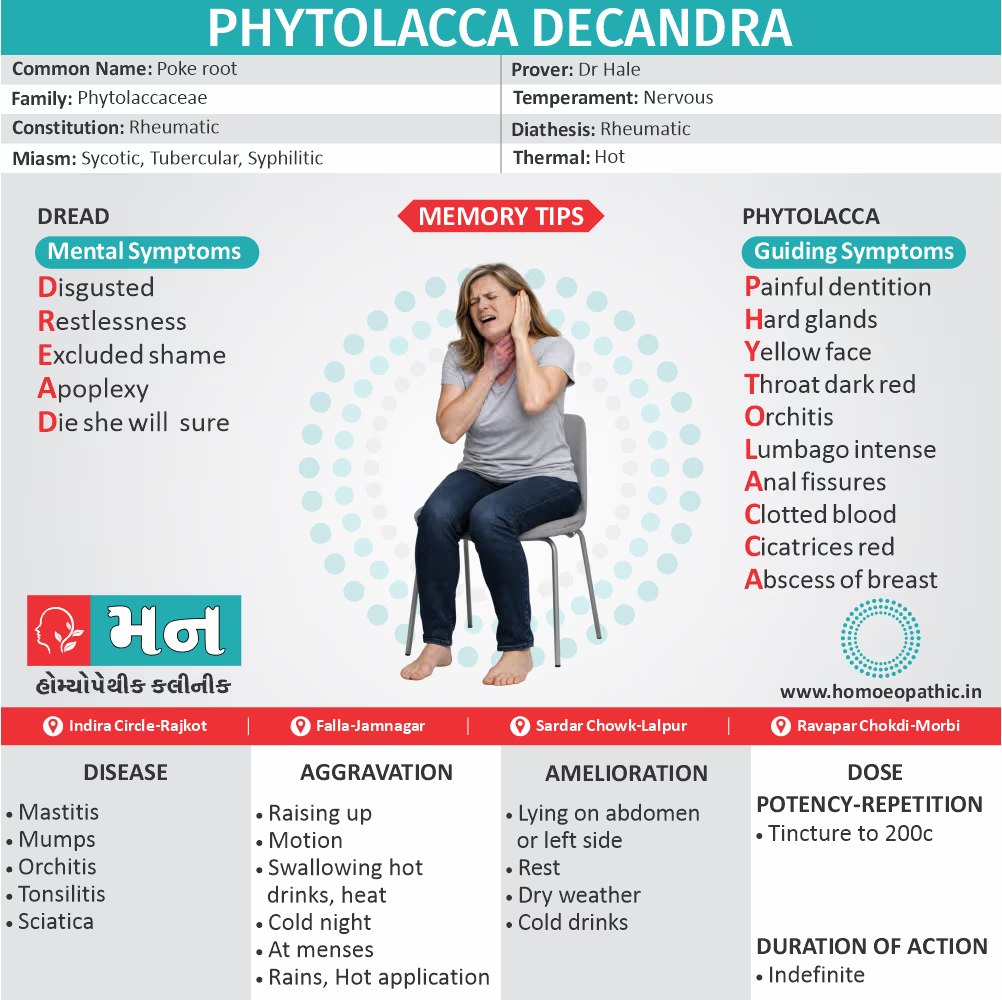
Hi Friends Let’s memorize guiding symptoms of Phytolacca Decandra through name of Medicine ‘PHYTOLACCA’.
P
H
Y
T
O
L
A
C
C
A
P
P – Painful Dentition
Description: Phytolacca is indicated for difficult teething in children. A key symptom is an irresistible compulsion for the child to press their gums firmly together or bite down on anything offered. This intense biting provides temporary relief from the gnawing pain in the gums. This phase is often accompanied by significant irritability and crying.
Reference: [The Guiding Symptoms of Our Materia Medica by C. Hering, M.D.]
H
H – Hard Glands
Description: This remedy has a profound effect on the glandular system, causing glands to become swollen, hard as stone, and intensely painful. This applies to the tonsils, parotids, submaxillary glands, and especially the mammary glands. The affected glands feel like hard, tender knots under the skin, a hallmark indication for this medicine in cases of glandular inflammation. Reference: [Lectures on Homoeopathic Materia Medica by J.T. Kent, A.M., M.D.]
Y
Y – Yellow Face
Description: The patient’s face often appears pale, sunken, and sallow, with a distinct yellowish or earthy complexion. This appearance reflects a state of deep-seated illness or a toxic condition. The facial expression is one of suffering and exhaustion, often seen during febrile diseases or states of prostration.
Reference: [Materia Medica of Homoeopathic Medicines by S.R. Phatak, M.D.]
T
T – Throat, Dark Red
Description: The throat, fauces, and tonsils take on a dark red, purplish, or bluish-red appearance. A characteristic sensation is that of a hot ball or a lump in the throat, creating a constant desire to swallow. Swallowing is extremely painful, with burning pains that often shoot up to the ears. The condition is notably worse from hot drinks.
Reference:[Materia Medica of Homoeopathic Medicines by S.R. Phatak, M.D.]
O
O – Orchitis
Description: Sharp pains (and hard, grinding pain) running up each spermatic cord, later continued soreness in place of the pains.
Reference: [A Dictionary of Practical Materia Medica by J.H. Clarke, M.D.]
L
L – Lumbago, Intense
Description: The patient suffers from a constant, dull, aching pain in the lumbar and sacral regions. This low back pain is particularly severe in the morning upon waking and is intensely aggravated by movement. The simple act of rising from a sitting or lying position is a significant struggle due to the intensity of the pain.
Reference: [A Dictionary of Practical Materia Medica by J.H. Clarke, M.D.]
A
A – Anal Fissures
Description: Continuous urging to stools, even in sleep. Constipation of those with weak heart.Stools thin, dark brown. Bloody discharges with heat in rectum. Bleeding from rectum. Bleeding hemorrhoids. Fissures of anus. Cancer of rectum.
Reference: [Nature’s Materia Medica By Robin Murphy, Md]
C
C – Clotted blood
Description: Dread of movement, falls asleep after a paroxysm of cramping pain has ceased, pain in forehead worse after eating, vomiting of clotted blood and slime, copious discharge of blood and mucus which looked like scrapings of intestines, involuntary stools from straining, which occurred even in sleep. Reference: [Dictionary Of Practical Materia Medica (All 3 Vol.) By Clarke J. H.]
C
C – Cicatrices red
Description: A peculiar and unique symptom of Phytolacca is its tendency to affect old scars or the sites of previous injuries. These cicatrices can become inflamed, turn red or purple, and become painful, indicating the remedy’s deep action on fibrous and scar tissue.
Reference: [A Clinical Materia Medica by E.A. Farrington, M.D.]
A
A – Abscess of Breast
Description: Phytolacca is a premier remedy for mastitis and breast abscesses. The mammary glands become exceedingly hard, very sensitive, and swollen, often with a purplish hue. A defining symptom is that when the infant nurses, pain radiates from the nipple to all parts of the body, causing the mother intense agony.
Reference: [Text Book of Materia Medica by A. Lippe, M.D.]
Memory Tips for Mental Symptoms
Hi Friends Let’s memorize memory symptoms of Phytolacca Decandra through name of Medicine ‘DREAD’.
D
R
E
A
D
D
D – Disgusted
Description: “Disgust for business of day, on waking early in morning.”
Reference: [Condensed Materia Medica By Hering C.]
R
R – Restlessness
- Description: “Irritability, restlessness.”
- Reference: [Dictionary Of Practical Materia Medica (All 3 Vol.) By Clarke J. H.]
E
E – Excluded Shame
Loss of personal delicacy, complete shamelessness and indifference to exposure of her person.
Reference: [Nature’s Materia Medica By Robin Murphy, Md.]
A
A – Apoplexy
Description: Feels faint on rising. Stupefaction with vertigo and dimness of vision.
Reference: [Nature’s Materia Medica By Robin Murphy, Md.]
D
D – she will Die sure
Description: “Great fear, is sure she will die.”
Reference: [Dictionary Of Practical Materia Medica (All 3 Vol.) By Clarke J. H.]
Introduction
Constitution
Clinical
Mental Symptoms
Guiding Symptoms
Characteristic
Therapeutic Value
Modality
Remedy Relationship
Dose
Terminologies
Reference
Also Search As
Introduction
Introduction
Common name:
Poke root[1]
Family / Group / Class / Order
Phytolaccaceae
Habit and habitat / Description
It is indigenous to USA.[2]
Name of prover
Dr.Hale
Introduction and history
We can get the most useful data on this drug from Dr Hale’s New Remedies. Phytolacca comes to us from America by observation
of the domestic or native places, but they have been rendered very useful as therapeutic tools on precise indications, obtained by proving on healthy human
beings. According to Kent, Phytolacca can be called ‘VEGETABLE MERCURY’
like Podophyllum and Mezereum
Preparation
For preparation, sugar of milk is used with antimony sulphide and trituration is performed.
Constitution
Constitution
Rheumatic
Physical make up
The Phytolacca individual is often stout or fleshy, with a strong rheumatic and glandular tendency. They are highly susceptible to cold, damp weather, which aggravates their characteristic widespread soreness, aching, and stiffness in muscles and joints.Temperament: Peevish
Temperament
Peevish
Diathesis
Rheumatic
Relation with heat & cold
Hot
Miasm
Sycotic, Tubercular, Syphilitic [3]
Clinical
Clinical conditions
• Mastitis
• Tonsillitis & Pharyngitis
• Rheumatism & Arthritis
• Sciatica
• Obesity
• Mumps
• Painful Teething
• Boils & Abscesses
Sites of action / Pharmacodynamics
Glands,Bones,Ears,Testes,GI Tract.
Causation (Causes / Ailments from)
Exposure to COLD AND DAMP
Abuse of mercury
Syphilitic affections
Physiological action
This agent in toxic doses produces paralysis of the roots of the motor cerebral nerves and the motor area of the spinal cord and as a result paralysis of the muscles of the body. This is followed by a cutaneous anaesthesia. Convulsions in animals and at times in man. The breathing is rendered slower and shallower due to depression and ultimately paralysis of the respiratory center. The heart’s action is reduced, the pulse is lowered. The temperature is reduced. Through its action on the third cranial nerve, mydriasis and ptosis results. The sixth never may be affected when a convergent strabismus may result with diplopia and dimness if vision. There is extreme muscular weakness and prostration while the patient is drowsy, but the mind is not affected till carbonic acid narcosis takes place.
Mental Symptoms
Characteristic Mental Symptoms (psychology)
Loss of personal delicacy; complete shamelessness and indifference to exposure of her person.
Melancholy, gloom, indifference to life; is sure she will die.
Desires death in the morning on waking.
Disgust for business.
Guiding Symptoms
Guiding Symptoms
Generalities
Aching, soreness, restlessness, prostration, are general symptoms guiding to Phytolacca. Pre-eminently a glandular remedy. Glandular swellings with heat and inflammation. Has a powerful effect on fibrous and osseous tissues; fasciae and muscle sheaths; acts on scar tissue. Syphilitic bone pains; chronic rheumatism. Sore throat, quinsy, and diphtheria. Tetanus and opisthotonos. Decrease of weight. [4]
Head
Vertigo on rising. Brain feels sore. Pain from frontal region backward. Pressure in temples and over eyes. Rheumatism of scalp; pains come on every time it rains. Scaly eruption on scalp.
Eye
SMARTING. Feeling of sand under lids. Tarsal edges feel hot. Fistula lachrymalis. [FLUOR. AC.] ABUNDANT LACHRYMATION, HOT.
Nose
Coryza; flow of mucus from ONE NOSTRIL AND FROM POSTERIOR NARES.
Mouth
Teething children with irresistible desire to BITE THE TEETH TOGETHER. Teeth clenched; low lip drawn down; lips everted; jaws firmly set; chin drawn down on sternum. Tongue RED TIP, feels rough and scalded; bleeding from mouth; blisters on side. Mapped, indented, fissured, with yellow patch down center. Much stringy saliva.
Throat
DARK RED OR BLUISH RED. Much pain at root of tongue; soft palate and tonsils swollen. Sensation of a lump in throat. [BELL.; LACH.] THROAT FEELS ROUGH, NARROW, HOT. TONSILS SWOLLEN, especially right; dark-red appearance. SHOOTING PAIN INTO EARS ON SWALLOWING. Pseudo-membranous exudation, grayish- white; thick, tenacious yellowish mucus, difficult to dislodge. CANNOT SWALLOW ANYTHING HOT. [LACH.] Tension and pressure in parotid gland. Ulcerated sore throat and diphtheria; THROAT FEELS VERY HOT; PAIN AT ROOT OF TONGUE EXTENDING TO EAR. Uvula large, dropsical. QUINSY; TONSILS AND FAUCES SWOLLEN, with burning pain; cannot swallow even water. MUMPS. FOLLICULAR PHARYNGITIS.
Stomach
Sore spot in right hypochondrium. Rheumatism of abdominal muscles. Colic at navel. Burning griping pains. Bruised feeling through epigastrium and abdomen. . Bleeding from rectum.
Rectum & Anus
Haemorrhoids. Sore, as from an open ulcer, during stool. Itching. Discharge of mucus.
Urinary Organ
Scanty, suppressed, WITH PAIN IN KIDNEY REGION. Nephritis.
Sexual Organ
Painful induration of testicles. SHOOTING ALONG PERINEUM TO PENIS.Mastitis; MAMMAE HARD AND VERY SENSITIVE. Tumors of the breasts with enlarged axillary glands. Cancer of breast. Breast is hard, painful and of purple hue. Mammary abscess. When child nurses, PAIN GOES FROM NIPPLE ALL OVER BODY. Cracks and small ulcers about nipples. Irritable breasts, before and during menses. Galactorrhoea. [CALC.] Menses too copious and frequent. Ovarian neuralgia of right side.
Respiratory System
Aphonia. Difficult breathing; dry hacking, tickling cough; worse at night. [MENTHA; BELLAD.] Aching pains in chest, through mid-sternum; with cough. Rheumatism of lower intercostals.
Heart & Pulse
Feeling as if heart leaped into throat. [POD.] Shock of pain in cardiac region alternating with pain in right arm.
Neck & Back
Aching pains in lumbar region; pains streaking up and down spine into sacrum. Weakness and dull pain in region of kidneys. Back stiff, especially in morning on rising and during damp weather.
Extremities
Shooting pain in right shoulder, with stiffness and inability to raise arm. (SEE HEART.) Rheumatic pains; worse in morning. PAINS FLY LIKE ELECTRIC SHOCKS, shooting, lancinating, shifting rapidly. [PULS; KALI BICH.] Pain in under side of thighs. Syphilitic sciatica. ACHING OF HEELS; relieved by elevating feet. Pains like shocks. Pain in legs, patient dreads to get up. Feet puffed; pain in ankles and feet. Neuralgia in toes.
Skin
Itches, becomes dry, shrunken, pale. Papular and pustular lesions. Most useful in early stages of cutaneous diseases. DISPOSITION TO BOILS, and when sloughing occurs. Squamous eruptions. Syphilitic eruptions. Swelling and induration of glands. VENEREAL BUBOES. Scarlatina-like rash. Warts and moles.
Sleep
Sleepy and weary. Drowsy old people. Deep unrefreshing sleep.
Fever
High fever, alternating with chilliness and great prostration.
Characteristic
Important characteristic features
Keynotes / Redline
1. Glandular remedy. Glands hardened like stone. Mammary glands mainly affected, enlarged with sore feeling. Hard and painful nodosities.
2. Cannot drink hot fluids in sore throat.
3. Pains flying like electric shocks rapidly shifting, shooting, lancinating < motion, night.
4. Discharges are shreddy, stringy.
Guiding
Hard, painful, swollen glands (Mastitis/Tonsillitis)
Aching, soreness, and bruised feeling all over
Worse from damp, cold weather and at night
Dark red or purplish throat
Pain in throat shoots to ears on swallowing
PQRS
Pain radiates from nipple all over body
Irresistible desire to bite teeth together
Sensation of a hot ball in the throat
Old scars become red and painful
Pains fly like electric shocks, shifting rapidly
Confirmatory
1. Glands of body effected mainly mammary tissues also, fibrous osseous tissue, fasciae and muscle sheaths.
2. Hard and painful nodosities present in the mammae.
3. Breast sensitive, sore. Nipples fissured. Pains radiate from nipple to all over the body.
4. Burning in the throat, as from coal of fire, or red hot iron. Cannot drink hot liquids.
5. Pains fly like electric shocks, shooting, lancinating, shifting rapidly.
6. Sensitive to electrical charges in the atmosphere.
Nucleus symptoms
– Glandular remedy. Mainly the mammary glands, tonsils, etc. are affected. Also has a powerful affect on fibrous osseous tissue, fasciae and muscle sheaths.
– Hard and painful nodosities present in the mammary glands.
– Hardness, aching, soreness, restlessness, prostration.
Therapeutic Value
Therapeutic Value
Arthritis, Breast abscess, Bursitis, Diphtheria, Fibrocystic
breast disease, Iritis, Mastitis, Mumps, Obesity, Orchitis, Pharyngitis, Plantar
fascitis, Psoriasis, Sciatica, Sprains, Tendonitis, Tonsillitis
Modality
Modalities
Aggravation
Raising up
Motion
Swallowing hot drinks, heat
Cold night
At menses
Rains
Exposure to damp
Hot fluid
Hot application
Cold weather or changes of weather
Sensitive to electric charges
Stepping down from high step
Effects of getting wet
Right side
Morning (3, 4, 5 a.m.)
Night
Amelioration
Lying on abdomen or left side
Rest
Dry weather
Cold drinks
Remedy Relationship
Remedy Relationship
Complimentary
Sil.
Inimical
Merc.
Antidoted By
Bell, Ign, Merc, Mez, Nit-s-d, Op, Sulph
Comparison
Arn, Ars, Arum-t, Bor, Bry, Calc, Carb-v, Caust, Con, Croto-t, Dulc, Hep, Hyos, Kali-bi, Kali-i, Lac-c, Lach, Merc, Nit-ac, Nux-v, Peti, Phel, Phyt, Rhus-t, Sang
Dose
Dose
Potency
Tincture to 200c
Duration of Action
Indefinite
Terminologies
Terminologies
Materia Medica:
A collection of books detailing the symptoms and clinical uses of homeopathic remedies, derived from provings and clinical experience.
Proving:
The process of administering a substance to healthy volunteers to systematically record the symptoms it produces. This establishes the therapeutic profile of the remedy.
Constitution (Diathesis):
The overall physical makeup, temperament, and inherent susceptibility of a person to certain types of diseases.
Guiding Symptoms:
The most reliable and characteristic symptoms of a remedy that strongly point to its selection for a sick individual.
PQRS Symptoms:
An acronym for Peculiar, Queer, Rare, and Strange symptoms. These are unique, uncommon, and highly individualizing symptoms that are given the highest importance in finding the correct remedy.
Synoptic Key:
A concise summary of a remedy’s most essential symptoms, often arranged mnemonically to serve as a quick memory aid.
Aggravation:
Any circumstance, time, or condition that makes the patient’s symptoms worse.
Amelioration:
Any circumstance, time, or condition that makes the patient’s symptoms better or provides relief.
Suppuration:
The process of forming pus; a tendency for inflammations (like in glands or boils) to result in an abscess.
Cicatrices:
The medical term for scars. In homeopathy, it’s noted when remedies affect old scar tissue.
Reference
Reference
[1] Allen’s Keynotes
[2] Gems textbook of materia medica by Dr.Patil
[3] Zomeo
[4] Materia Medica By Boericke W.
Also Search As
Also Search As
1. By General and Broad Keywords
This is the most common starting point for patients or those new to homeopathy. The goal is to get a general overview of the remedy.
Search Terms:
Phytolacca decandra homeopathic uses
Phytolacca materia medica summary
Benefits of homeopathic Phytolacca
Description: These searches will yield introductory articles, remedy profiles, and basic descriptions of what Phytolacca is and the range of conditions it covers.
2. By Specific Clinical Conditions
This approach is used by individuals looking for a remedy for a particular health issue. It’s a very direct way to find relevant information.
Search Terms:
Homeopathic remedy for mastitis and breast pain
Phytolacca for tonsillitis with pain to ears
Treating rheumatic joint pain with Phytolacca
Phytolacca for glandular swellings and mumps
Description: This method helps users find articles and case studies specifically detailing how Phytolacca is applied for diagnosed conditions, often including key symptoms to look for.
3. By Specific Homeopathic Symptoms (Keynotes)
This is a more precise method used by students and practitioners to confirm a remedy choice based on its most characteristic symptoms.
Search Terms:
Remedy for pain shooting to ears when swallowing
Homeopathy for bruised, sore feeling all over
Remedy worse from cold damp weather
Irresistible desire to bite teeth together homeopathy
Description: Searching by a unique or guiding symptom often leads to high-quality materia medica excerpts and comparative articles that differentiate Phytolacca from other similar remedies.
4. For In-Depth Academic or Practitioner Study
This involves using specific homeopathic terminology to find scholarly articles, classical texts, and detailed analyses.
Search Terms:
Phytolacca decandra keynote symptoms
Phytolacca decandra constitution and diathesis
Comparison of Phytolacca, Mercurius, and Belladonna
Phytolacca decandra research papers
Description: These advanced queries are designed to access deeper knowledge, including remedy relationships, miasmatic background, and clinical research, often found in digital libraries and professional homeopathic websites.
Frequently Asked Questions (FAQ)
What is Phytolacca used for?
Phytolacca is a key homeopathic remedy used for a range of inflammatory conditions, especially those affecting the glands (like mastitis and tonsillitis) and fibrous tissues (rheumatism, joint pain). It is also used for certain skin ailments and is well-known for its role in weight management.
What are the main symptoms of a Phytolacca sore throat?
Main Symptoms
The classic Phytolacca sore throat is dark red or purplish, with a sensation of a hot ball in the throat. The most defining symptom is pain that shoots to the ears upon swallowing. The condition is typically worse from hot drinks but better from cold ones.
How does Phytolacca help with breast pain and mastitis?
For mastitis
Phytolacca is indicated when the breasts are extremely hard, swollen, lumpy, and painful. The keynote symptom that confirms its use is when the pain from the nipple radiates all over the body as the infant nurses.
What kind of joint pain is treated by Phytolacca?
Phytolacca addresses deep, aching, and sore pains in the muscles and joints, often with a bruised feeling. The pains can shift rapidly and are characteristically worse in cold, damp weather, at night, and from initial motion.
What are the key mental symptoms of Phytolacca?
Mind
A person needing Phytolacca may show a profound indifference to life and a complete disgust for daily business. This can be accompanied by great fear, restlessness, and a certainty that they are going to die.
What is the common name for Phytolacca decandra?
Common Name
The common name for Phytolacca decandra is “Pokeweed” or “Pokeroot.” In homeopathy, the remedy is prepared from the fresh root of this plant, which unlocks its medicinal properties.
How is Phytolacca used for teething in children?
For Child
Phytolacca is a key remedy for difficult teething when the child has an intense, irresistible desire to bite down hard on their gums, teeth, or anything offered to them. This biting provides temporary relief from the gnawing pain.
What is the difference between Phytolacca and Bryonia for joint pain?
Difference
While both remedies treat joint pain that is worse from motion, Phytolacca pain is more of a deep, sore, bruised ache that can shift locations, often in fleshy or fibrous parts. Bryonia pain is typically sharp, stitching, and located within the joint itself, with an extreme aggravation from the slightest movement and relief from firm pressure.
Is Phytolacca safe to use?
Use
When prepared by a homeopathic pharmacy, Phytolacca is potentized (serially diluted and succussed), making it safe and non-toxic. However, it is always recommended to consult a qualified homeopathic practitioner for the correct dosage and to ensure it matches your specific symptoms.
Phytolacca is a key homeopathic remedy used for a range of inflammatory conditions, especially those affecting the glands (like mastitis and tonsillitis) and fibrous tissues (rheumatism, joint pain). It is also used for certain skin ailments and is well-known for its role in weight management.
Main Symptoms
The classic Phytolacca sore throat is dark red or purplish, with a sensation of a hot ball in the throat. The most defining symptom is pain that shoots to the ears upon swallowing. The condition is typically worse from hot drinks but better from cold ones.
For mastitis
Phytolacca is indicated when the breasts are extremely hard, swollen, lumpy, and painful. The keynote symptom that confirms its use is when the pain from the nipple radiates all over the body as the infant nurses.
Phytolacca addresses deep, aching, and sore pains in the muscles and joints, often with a bruised feeling. The pains can shift rapidly and are characteristically worse in cold, damp weather, at night, and from initial motion.
Mind
A person needing Phytolacca may show a profound indifference to life and a complete disgust for daily business. This can be accompanied by great fear, restlessness, and a certainty that they are going to die.
Common Name
The common name for Phytolacca decandra is “Pokeweed” or “Pokeroot.” In homeopathy, the remedy is prepared from the fresh root of this plant, which unlocks its medicinal properties.
For Child
Phytolacca is a key remedy for difficult teething when the child has an intense, irresistible desire to bite down hard on their gums, teeth, or anything offered to them. This biting provides temporary relief from the gnawing pain.
Difference
While both remedies treat joint pain that is worse from motion, Phytolacca pain is more of a deep, sore, bruised ache that can shift locations, often in fleshy or fibrous parts. Bryonia pain is typically sharp, stitching, and located within the joint itself, with an extreme aggravation from the slightest movement and relief from firm pressure.
Use
When prepared by a homeopathic pharmacy, Phytolacca is potentized (serially diluted and succussed), making it safe and non-toxic. However, it is always recommended to consult a qualified homeopathic practitioner for the correct dosage and to ensure it matches your specific symptoms.