Ratanhia
Overview:
Ratanhia, sourced from the root of the Krameria triandra plant, is a prominent homeopathic remedy primarily focused on the rectum and anus. Its most characteristic indication is for conditions like anal fissures and hemorrhoids accompanied by excruciating pain that persists for hours after defecation. The pains are typically sharp, burning, and famously described as a sensation of “splinters of glass” in the rectum. Key symptoms also include intense anal itching, often due to pinworms, and severe constipation from rectal inactivity, requiring immense straining. Beyond the rectum, it has a notable peculiar symptom: a toothache that is uniquely relieved by lying down.
Memory Tips for Guiding Symptoms
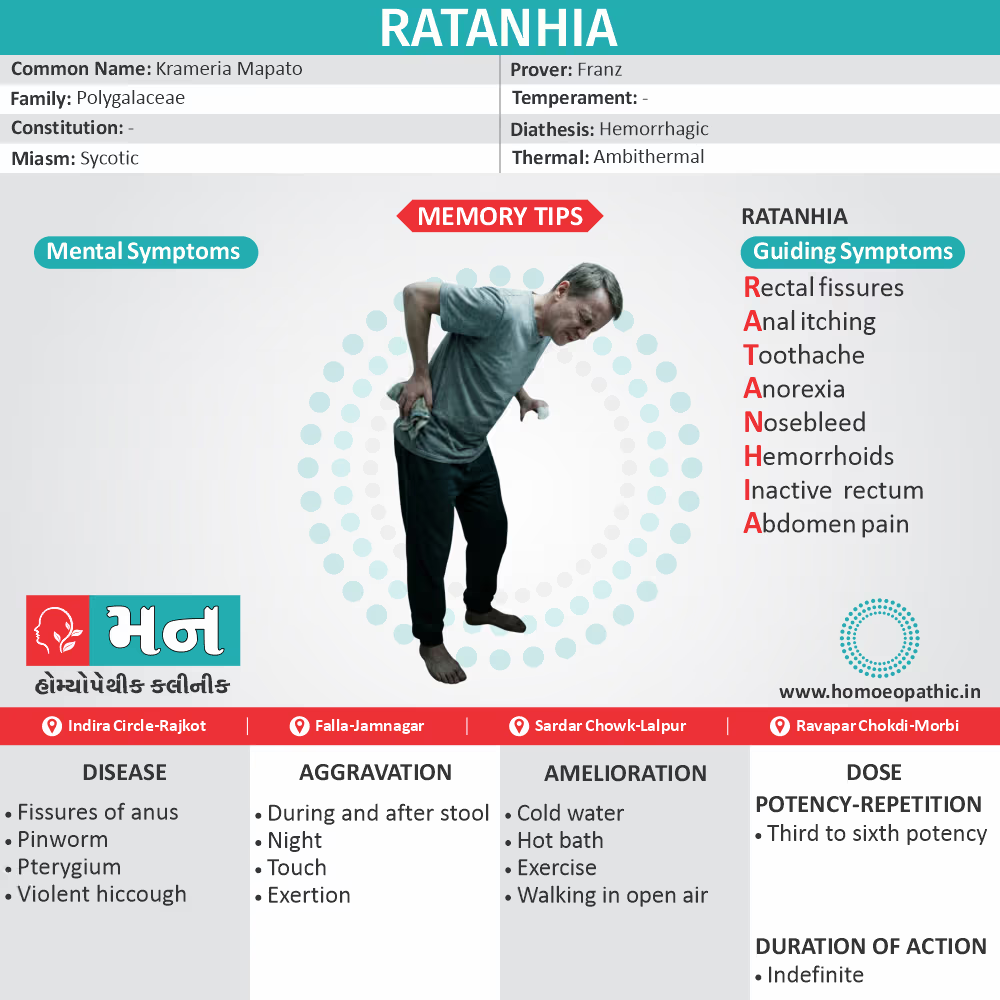
Hi Friends Let’s memorize guiding symptoms of Ratanhia through name of Medicine ‘RATANHIA’.
R
A
T
A
N
H
I
A
R
R – Rectal Fissures
Description: The most prominent feature of Ratanhia is its action on the rectum. It is indicated for fissures of the anus, where there are excruciating pains during and for hours after passing stool. The pain is often described as sharp, cutting, or as if the rectum is full of broken glass. These pains are so severe they can cause the patient to cry out. The stool itself is hard and requires great effort to expel.
Reference: Pocket Manual of Homoeopathic Materia Medica & Repertory by Dr. William Boericke.
A
A – Anal Itching
Description: Intense and persistent itching of the anus is a hallmark symptom. This may be due to pinworms (ascarides) or hemorrhoids. The patient often finds some temporary relief from the application of cold water. This symptom is often accompanied by burning sensations.
Reference: Dictionary Of Practical Materia Medica (All 3 Vol.) By Clarke J. H.
T
T – Toothache Relief
Description: Ratanhia presents a peculiar symptom related to toothache, particularly noted in pregnant women. The pain is severe but is characteristically relieved by lying down quietly and keeping the mouth firmly closed. This modality is a strong guiding symptom for its use in dental neuralgia.
Reference: Dictionary Of Practical Materia Medica (All 3 Vol.) By Clarke J. H.
A
A – Anorexia
Description: Anorexia, with dislike to food and drink. Constant desire to eat.
Reference: A Dictionary of Practical Materia Medica by Dr. J.H. Clarke.
N
N – Nosebleed
Description: Ratanhia can be useful for epistaxis (nosebleed), especially when it occurs in the morning. The bleeding may be associated with straining at stool or other rectal complaints. The blood is typically dark and does not coagulate easily.
Reference: The Guiding Symptoms of Our Materia Medica by Dr. C. Hering.
H
H – Hemorrhoids
Description: This remedy is indicated for hemorrhoids that protrude during stool and are extremely painful. The piles burn, feel swollen, and are often described as a bunch of grapes. The pain is severe, aching, and burning for hours after defecation, often making the patient unable to sit or walk comfortably.
Reference: A Manual of Pharmacodynamics by Dr. Richard Hughes.
I
I – Inactive Rectum
Description: Ratanhia is suited for constipation characterized by a marked inactivity of the rectum. There is a loss of expulsive power, requiring immense straining even for a soft stool. This leads to a sensation as if the rectum is constricted or paralyzed, contributing to the formation of hard, difficult stools and subsequent anal fissures.
Reference: Text Book of Materia Medica by Dr. Adolph von Lippe.
A
A – Abdomen pain
Description: Griping in lower abdomen, externally violent itching. Heat and burning sensation in epigastrium. Repeated violent sticking in hypochondrium. Pinchings in abdomen and sides of abdomen, sometimes with a burning sensation. Pullings and a sensation of coldness in umbilical region. As if abdomen had been cut to pieces, worse deep breathing. Movements in sides of abdomen as of something alive.
Reference: Nature’s Materia Medica By Robin Murphy, Md
Introduction
Constitution
Clinical
Mental Symptoms
Guiding Symptoms
Characteristic
Therapeutic Value
Modality
Remedy Relationship
Dose
Terminologies
Reference
Also Search As
Introduction
Introduction of Ratanhia
Common name:
Krameria Mapato [1]
Synonyms
Ratanhia[2]
Family / Group / Class / Order
Polygalaceae
Habit and habitat / Description
Peru and Bolivia.
Name of prover
Dr. Samuel Hahnemann
Introduction and history
Ratanhia was introduced into homeopathy by Dr. Samuel Hahnemann himself. Following the rigorous process of a “proving,” where he and his colleagues administered the substance to healthy individuals, they meticulously recorded the symptoms that emerged. This systematic investigation revealed Ratanhia’s profound and specific action on the rectum, establishing its primary role in treating conditions like fissures and hemorrhoids. The complete symptom picture was then published in his foundational work, the Materia Medica Pura, officially cementing its place as a key polychrest in the homeopathic pharmacopeia.
Doctrine of signature
The plant is a thorny, constricted shrub that grows in dry, hard soil. This is seen as a reflection of the remedy’s main symptoms: constrictive pains in the rectum and hard, dry stools that are difficult to pass.
Parts used
The root[3]
Preparation
HOMEO, Mother tincture of the dried root; and dilutions. U. S. P., Krameria, Extractum Krameriae, Fluidextractum Krameirae, Tinctura Krameirae.
Constitution
Constitution of Ratanhia
Physical make up
No specific physical make-up
Temperament
–
Diathesis
Hemorrhagic
Relation with heat & cold
Ambithermal
Miasm
Sycotic
Clinical
Clinical conditions of Ratanhia
Anus, fissure of. Breathe, offensive. Constipation. Diabetes. Dysentery. Dyspepsia, atonic. Epistaxis. Eyes, pterygium. Fissures. Gonorrhoea. Haemorrhages. Haemorrhoids. Hiccough Hydrothorax. Inframammary pain. Itching. Metrorrhagia. Miscarriage. Nipples, fissures of. Pimples. Pleurisy. Scurvy. Snoring. Speech, arrested. Stomach, distension of, ulceration of. Throat, contraction of. Tinnitus. Worms.[4]
Sites of action / Pharmacodynamics
Rectum-Anus , Teeth most prominantly affects
Causation (Causes / Ailments from)
–
Physiological action
This agent is an astringent; it produces constipation, dyspepsia and fissures of the skin and mucous surfaces.
Patho-physiological changes / Pathogenesis
–
Mental Symptoms
Characteristic Mental Symptoms (psychology) of Ratanhia
Irritable, peevish and quarrelsome humor. Changeable mind. Depression when alone, better in company. Desire for company. Fear something will happen when alone, better conversation. Anxiety at night on waking. Starting from sleep. Desire to die during pains.[5]
Guiding Symptoms
Guiding Symptoms of Ratanhia
Generalities
*Anal and rectal symptoms are very, marked; affects *teeth and nipples. Pains here and there. *Sense of constriction. *Haemorrhages; passive. Pin worms. Dark thin scrawny persons. Cracks; *fissures. Acts as a tonic for delicate and nervous women to prevent miscarriage, in those who have never been able to go to their full term.[6]
Head
Pains in middle of forehead as if brain would fall out. Bursting headache, when straining at stool, or after stools.
Eye
Lids feel stiff. Very rapid twitching of eyelids. Pterygium.
Nose
Itching in nose. Violent itching on tip of nose better by rubbing. Nostrils inflamed and scabby, with burning sensations. Epistaxis. Violent nose-bleed, three times a day, for five days in succession. Dryness of nose, with frequent sneezing. Dry coryza, with complete stoppage of nose.
Mouth
As if cool air came from teeth. Toothache worse at night; must walk about. As of a cobweb about the right side of the mouth.
Throat
Sore, throat, generally felt during empty deglutition. Painful spasmodic contraction in throat, which stops the voice (unable to speak a loud word).
Stomach
*Cutting or griping pain better eructations. Violent painful hiccough.
Abdomen
Repeated violent sticking in right (and l.) hypochondrium. Pullings, and a sensation of coldness, in umbilical region. Pinchings in abdomen, and sides of abdomen, sometimes with a burning sensation. Movements in sides of abdomen as of something alive. Shootings, pinchings, and contraction of groins. Pinching in both groins better by emission of flatus, morning on waking. Griping in lower abdomen, externally violent itching. Constrictive pain in small spot in groins, in right groin. Sticking in groins, in afternoon while sitting. Dragging downward in both groins, as before menses, with discharge of mucus from vagina.
Rectum & Anus
Aches, as if full of broken glass. Anus aches and burns for hours after stool. Feels constricted. Dry heat at anus, with sudden knife-like stitches. Stools must be forced with great effort; protrusion of haemorrhoids. FISSURE OF ANUS, WITH GREAT CONSTRICTION, BURNING LIKE FIRE, as do the haemorrhoids; temporarily relieved by cold water. Fetid, thin diarrhoea; stools burn; burning pains before and after stools. Oozing at anus. PIN-WORMS. [SANT.; TEUC.; SPIG.] Itching of anus.
Sexual Organ
Metrorrhagia. Cracks in nipples, in nursing women. Compelled to get up at night and walk about during pregnancy, with toothache.
Characteristic
Important characteristic features of Ratanhia
Keynotes / Redline
1. Sensation of constriction in all parts especially anus.
2. Rectum feels full of broken glass pieces with burning, haemorrhoids.
3. Teeth feel elongated with sensation as if cool air came from teeth.
Guiding
Pain as if Rectum is Full of Broken Glass
Pain Lasting for Hours After Stool
Intense Anal Itching
Constriction of Anus
Toothache Relieved by Lying Down
PQRS
Pain as if Rectum is Full of Broken Glass
Toothache Relieved by Lying Down
Pain in Rectum Lasting for Hours After Stool
Bursting Headache After Straining at Stool
Anal Itching Relieved by Cold Water Application
Confirmatory
1. Knife-like stitches, sensation of constriction, burning, sensation as if full of glass pieces in rectum.
2. Haemorrhoids > cold water temporarily otherwise > hot bath.
3. Bursting headache < during and after stool.
Nucleus symptoms
-This drug is of use in cases of fissures in anus and haemorrhoids, with great constriction, burning like fire > temporarily with cold water.
Therapeutic Value
Therapeutic Value of Ratanhia
Fissures of anus with great constriction, burning like fire, temporarily relieved by cold water.
Pinworms.
Pterygium.
Violent hiccough.
Modality
Modality of Ratanhia
Aggravation
During and after stool
Night
Touch
Exertion
Amelioration
Cold water
Hot bath
Exercise
Walking in open air
Remedy Relationship
Remedy Relationship of Ratanhia
Follows Well
Bov, Sep, Sulph
Comparison
Bar-c, Canth, Cham, Croc, Croto-t, Cycl, Dol, Graph, Iris, Mag-c, Nit-ac, Paeon, Puls, Ran-s, Raph, Sang, Sanguin-nit, Seneg, Sil, Sulph, Thuj [7]
Dose
Dose of Ratanhia
Potency
Third to sixth potency.
Duration of Action
Indefinite
Terminologies
Terminologies of Ratanhia
Homoeopathic Terminologies & Meanings
Remedy / Homoeopathic Medicine
Meaning: A substance, derived from natural sources (plant, animal, or mineral), that has been prepared according to a specific homeopathic process called “potentization” to be used for healing.
Materia Medica
Meaning: A reference book or collection of information detailing the therapeutic properties and symptom profiles of homeopathic remedies. It’s an encyclopedia of drugs.
Guiding Symptom
Meaning: A unique, peculiar, or very characteristic symptom of a remedy that strongly points to its selection for a patient, even if other symptoms are common.
Synoptic Key
Meaning: A condensed summary of the most important and characteristic symptoms of a remedy, often arranged mnemonically or thematically for quick reference and study.
Modality
Meaning: The circumstances or conditions that make a patient’s symptoms better (amelioration) or worse (aggravation). For example, “toothache relieved by lying down” is a modality for Ratanhia.
Repertory
Meaning: An index of symptoms. A repertory lists symptoms alphabetically and beneath each, lists the remedies known to cause or cure that symptom, along with their relative importance.
Pharmacodynamics
Meaning: In homeopathy, this refers to the study of the effects of a remedy on the healthy body and how it produces symptoms, which forms the basis of its curative action according to the law of similars.
Medical Terms Used
Epistaxis
Meaning: The medical term for a nosebleed.
Pterygium
Meaning: A fleshy, triangular growth of tissue on the white of the eye (sclera) that can extend onto the cornea.
Pruritus Ani
Meaning: The medical term for intense, chronic itching around the anus.
Reference
Reference of Ratanhia
[1] Materia Medica By Boericke W.
[2] A Manual Of Materia Medica, Therapeutics And Pharmacology By Blackwood, Alexander Leslie
[3] The Essentials Of Modern Materia Medica And Therapeutics By John William Fyfe
[4] Dictionary Of Practical Materia Medica (All 3 Vol.) By Clarke J. H.
[5] Nature’s Materia Medica By Robin Murphy, Md
[6] Concise Materia Medica Of Hom. Remedies By S.R. Phatak
[7] Zomeo
Also Search As
Also Search As of Ratanhia
1. Searching by Specific Ailment or Symptom:
Description: This is the most common method used by the general public. Individuals experiencing specific health issues will search for homeopathic solutions to their problems, often without knowing the name of the remedy beforehand. Their search terms are focused on their discomfort.
Example Searches: “homeopathic medicine for painful anal fissures,” “remedy for hemorrhoids that burn for hours,” or “homeopathy for rectal pain like splinters.”
2. Searching Directly by Remedy Name:
Description: People who have already been introduced to Ratanhia, perhaps through a recommendation or prior reading, will search for it by name. They are typically looking for a comprehensive profile, a list of its uses, or confirmation of its symptoms.
Example Searches: “Ratanhia materia medica,” “uses of homeopathic Ratanhia,” or “Ratanhia key symptoms.”
3. Academic or Professional Searches:
Description: Homeopathic students and practitioners use more technical and specific language. They often search for information within the context of well-known homeopathic literature or look for comparisons with other remedies to ensure they are choosing the correct one for a patient.
Example Searches: “Ratanhia in Boericke’s Materia Medica,” “Allen’s Keynotes for Ratanhia,” or “differentiate Ratanhia from Sulphur for anal itching.”
4. Searching for Dosage and Potency Information:
Description: Once a person decides to use Ratanhia, their search shifts to practical application. They look for guidance on the appropriate strength (potency) and form of the medicine to use for their specific condition.
Example Searches: “Ratanhia 30c uses,” “how to use Ratanhia 200,” or “Ratanhia mother tincture dosage for fissures.”
Other Ways
Ways to Search for Ratanhia
1. By Health Condition or Symptom:
This is the most common method for patients or the general public. People search for solutions to their specific ailments.
Example Searches:
“Homeopathic medicine for anal fissures”
“Remedy for hemorrhoids with burning pain”
“Anal itching homeopathy treatment”
“Pain like broken glass in rectum remedy”
2. By the Remedy Name Directly:
This method is used by those who already know the name of the medicine and want to learn more about its full range of uses.
Example Searches:
“Ratanhia homeopathy uses”
“Ratanhia materia medica”
“SBL Ratanhia Q”
3. By Professional Homeopathic Terminology:
This approach is typical for homeopathic students and practitioners who use technical terms to find detailed, academic information.
Example Searches:
“Ratanhia keynote symptoms”
“Ratanhia in Boericke’s repertory”
“Compare Ratanhia and Nitric Acid”
“Ratanhia drug picture”
4. By Brand and Potency:
Users often search for specific brands or potencies (strengths) when they are ready to purchase or use the remedy.
Example Searches:
“Dr. Reckeweg Ratanhia Q”
“SBL Ratanhia 200 CH”
“Boiron Ratanhia pellets”
“Ratanhia mother tincture”
Frequently Asked Questions (FAQ)
What is the main use of the homeopathic medicine Ratanhia?
Uses
Ratanhia is primarily used to treat severe rectal and anal conditions, most notably anal fissures and painful hemorrhoids.
How is Ratanhia’s rectal pain different from that of Paeonia?
Difference
Ratanhia’s pain is a burning ache that lasts for hours after stool. Paeonia is known for intense pain during and after stool as well, but it is often associated with oozing, moisture, and ulceration around the anus, making the area constantly sore and wet.
When would you choose Ratanhia over Sulphur for anal itching?
Choose Ratanhia when the itching is specifically due to pinworms and is accompanied by the classic burning rectal pains after stool. Sulphur is chosen for intense itching that is worse from heat, washing, and at night, often associated with a history of skin eruptions and a general untidy appearance.
What is the character of the headache that Ratanhia can cure?
Headache
Ratanhia is indicated for a peculiar bursting headache that occurs immediately after straining at stool, a reflex symptom from the intense rectal effort.
For which type of cough might Ratanhia be useful?
Cough
It is considered for a violent, dry cough that can be so severe it leads to a risk of pterygium (eye growth) or is associated with rectal complaints.
Is there a “Doctrine of Signatures” associated with the Ratanhia plant?
Doctrine Of Signature
Yes, some homeopaths note that the plant is a thorny, constricted shrub that grows in dry, hard soil. This is seen as a reflection of the remedy’s main symptoms: constrictive pains in the rectum and hard, dry stools that are difficult to pass.
Uses
Ratanhia is primarily used to treat severe rectal and anal conditions, most notably anal fissures and painful hemorrhoids.
Difference
Ratanhia’s pain is a burning ache that lasts for hours after stool. Paeonia is known for intense pain during and after stool as well, but it is often associated with oozing, moisture, and ulceration around the anus, making the area constantly sore and wet.
Choose Ratanhia when the itching is specifically due to pinworms and is accompanied by the classic burning rectal pains after stool. Sulphur is chosen for intense itching that is worse from heat, washing, and at night, often associated with a history of skin eruptions and a general untidy appearance.
Headache
Ratanhia is indicated for a peculiar bursting headache that occurs immediately after straining at stool, a reflex symptom from the intense rectal effort.
Cough
It is considered for a violent, dry cough that can be so severe it leads to a risk of pterygium (eye growth) or is associated with rectal complaints.
Doctrine Of Signature
Yes, some homeopaths note that the plant is a thorny, constricted shrub that grows in dry, hard soil. This is seen as a reflection of the remedy’s main symptoms: constrictive pains in the rectum and hard, dry stools that are difficult to pass.