Sabadilla
Overview:
Sabadilla is a prominent homeopathic remedy primarily addressing conditions of the nervous system and mucous membranes, making it a key medicine for severe allergic reactions. It is best known for treating hay fever characterized by violent, spasmodic fits of sneezing, a runny nose, and an intense itching of the palate. Another guiding symptom is a sore throat that characteristically begins on the left side and is relieved by warm drinks. Mentally, Sabadilla corresponds to anxious states and peculiar, imaginary illnesses, where individuals hold fixed, erroneous ideas about their bodies. The patient is generally chilly and feels significantly worse from cold air and the smell of flower.
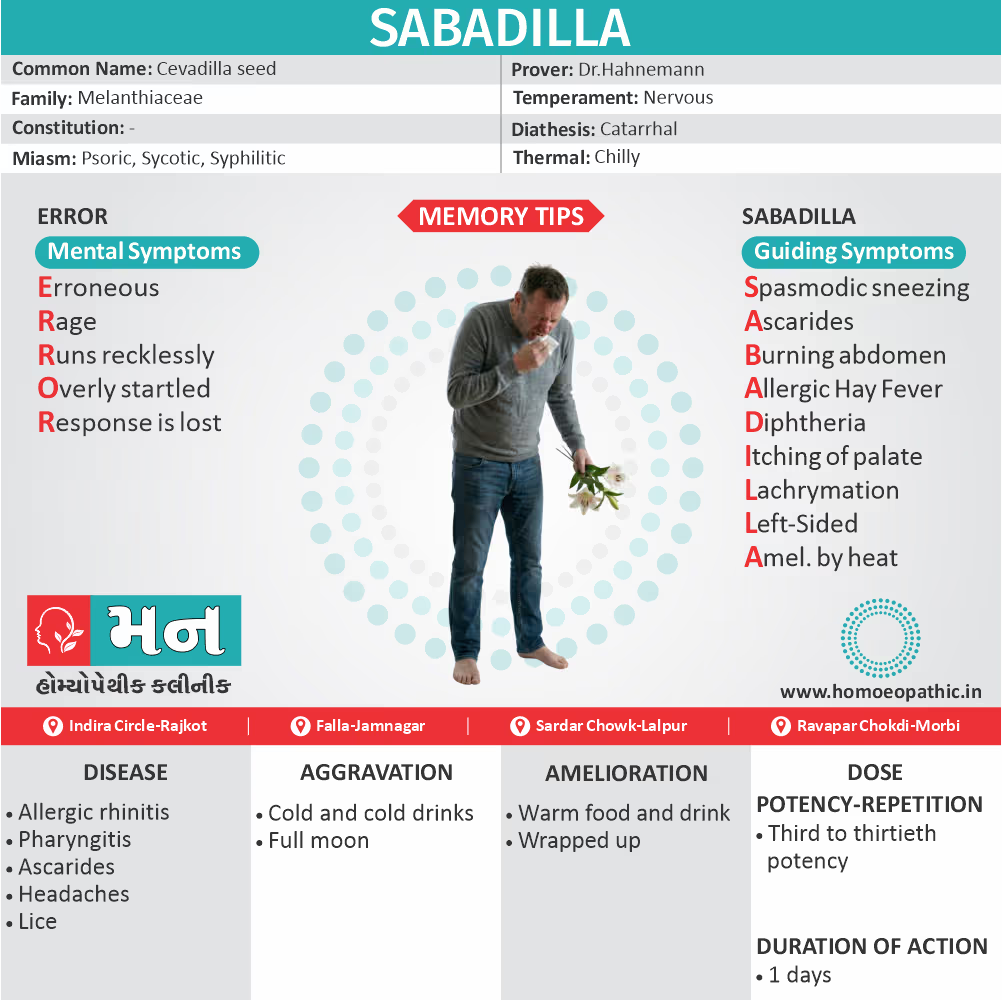
Memory Tips for Guiding Symptoms
Hi Friends Let’s memorize guiding symptoms of Sabadilla through name of Medicine ‘SABADILLA’.
S
A
B
A
D
I
L
L
A
S
S – Spasmodic Sneez
Description: The patient is seized by violent, exhausting fits of sneezing that can shake the entire body. The sneezing is often accompanied by a profuse, watery nasal discharge (coryza) and is triggered by the slightest irritation, such as the smell of flowers or being in a cold room.
Reference: [Pocket Manual of Homoeopathic Materia Medica by William Boericke, M.D.]
A
A – Ascarides
Description: Sabadilla is a leading remedy for conditions arising from roundworms or pinworms. It addresses the associated symptoms of intense itching of the nose and anus, nausea with a sensation of a lump in the throat, colicky pains, and teeth grinding.
Reference: [Leaders in Homoeopathic Therapeutics by E.B. Nash, M.D.]
B
B – Burning abdomen
Description: Very difficult stools with much burning in abdomen and sensation as if something alive in abdomen. Urgent want to evacuate, with scanty evacuation. Loose brown or fermented faeces, mixed with mucus and blood (floating on the water).
Reference: [Dictionary Of Practical Materia Medica (All 3 Vol.) By Clarke J. H..]
A
A – Allergic Hay Fever
Description: This remedy is indicated for severe hay fever where the primary symptoms are incessant sneezing, streaming watery discharge from the nose and eyes, and a notable, almost unbearable itching of the soft palate.
Reference: [A Concise Materia Medica of Homoeopathic Remedies by S.R. Phatak, M.D.]
D
D – Diphtheria
Description: Used for severe sore throats, like tonsillitis or diphtheria, where the inflammation characteristically begins on the left side and then may spread to the right. The patient feels a constant need to swallow to relieve the sense of constriction.
Reference: [The Guiding Symptoms of Our Materia Medica (Vol. 8) by C. Hering, M.D.]
I
I – Itching of Palate
Description: A highly specific and guiding symptom is an intense, maddening itching on the soft palate. This forces the patient to constantly rub their tongue against the roof of their mouth in an attempt to find relief.
Reference: [A Dictionary of Practical Materia Medica (Vol. 3) by John Henry Clarke, M.D.]
L
L – Lachrymation
Description: During episodes of sneezing or exposure to open air, the eyes produce a profuse stream of tears. This lachrymation is typically bland (non-irritating) and is a key component of the remedy’s coryza picture.
Reference: [Concise Materia Medica Of Hom. Remedies By S.R. Phatak]
L
L – Left-Sided Start
Description: Sabadilla has a strong affinity for the left side of the body. Complaints, especially sore throats, will characteristically begin on the left side before moving to the right. This modality is a crucial indicator for the remedy.
Reference: [Homoeopathic Drug Pictures by Margaret L. Tyler, M.D.]
A
A – Amel. by Heat
Description: A general modality where the patient’s overall condition and specific symptoms, particularly the chills and throat pain, are significantly better from warmth. They feel relief from being well wrapped up and from consuming warm food and drinks.
Reference: [Allen’s Keynotes by H.C. Allen, M.D.]
Memory Tips for Mental Symptoms
Hi Friends Let’s memorize Mental symptoms of Sabadilla through name of Medicine ‘ERROR’.
E
R
R
O
R
E
E – Erroneous
Description: Erroneous (fixed) ideas about himself; imagines he is very sick
Reference: [Concise Materia Medica Of Hom. Remedies By S.R. Phatak]
R
R – Rage
Description: Mania; rage, quieted only by washing head in cold water.
Reference: [The Guiding Symptoms Of Our Materia Medica (All 10 Vols.) By Hering C.]
R
R – Runs recklessly
Description: he jumps up and runs recklessly through the room.
Reference: [Concise Materia Medica Of Hom. Remedies By S.R. Phatak]
O
O – Overly startled
Description: Disposition to be frightened. Startled by noises.
Reference: [Dictionary Of Practical Materia Medica (All 3 Vol.) By Clarke J. H.]
R
R – Response is lost
Description: No response to questions, loss of consciousness
Reference: [Concise Materia Medica Of Hom. Remedies By S.R. Phatak]
Introduction
Constitution
Clinical
Mental Symptoms
Guiding Symptoms
Characteristic
Therapeutic Value
Modality
Remedy Relationship
Dose
Terminologies
Reference
Also Search As
Introduction
Introduction of Sabadilla
Common name:
Cevadilla seed. [1]
Synonyms
Asagrea officinalis.[1]
Family / Group / Class / Order
Melanthiaceae
Habit and habitat / Description
Mexico, west Indies and Venezuela.
Name of prover
Dr Hahnemann
Introduction and history
Sabadilla, derived from the seeds of Schoenocaulon officinale, is a plant native to Central America and has been used in traditional medicine for centuries. In homeopathy, it was introduced by Dr. Samuel Hahnemann, the founder of homeopathy, after being proven and documented in his seminal work Materia Medica Pura. Sabadilla is primarily known for treating symptoms resembling hay fever, such as sneezing, runny nose, and itching, particularly when symptoms are marked by spasmodic sneezing and sensitivity to cold air.
Parts used
Seeds
Preparation
Mother tincture of the seeds: and dilutions.
Constitution
Constitution of Sabadilla
Physical make up
Suited to persons of light hair, fair complexion with a weak, relaxed muscular system.
Temperament
Nervous
Diathesis
Catarrhal
Relation with heat & cold
Chilly
Miasm
Psoric, Sycotic, Syphilitic
Clinical
Clinical conditions of Sabadilla
Coryza. Debility. Diphtheria. Dyspepsia, of pregnancy. Earache. Epistaxis. Hay asthma. Headache. Head-lice. Imaginary diseases. Influenza. Intermittents. Mania. Melancholia. Neuralgia. Esophagus, stricture of. Rheumatism. Tapeworm. Throat, sore. Toothache. Uvula elongated. Vertigo. Worms.[2]
Sites of action / Pharmacodynamics
MUCOUS MEMBRANES: NOSE, ANUS, Digestive tract
NERVES
Lachrymal glands
Throat
Causation (Causes / Ailments from)
-Fright
-Mental exertion
-Thinking
-Worms
Mental Symptoms
Characteristic Mental Symptoms (psychology) of Sabadilla
She lay almost speechless and unconscious of else sprang up with anxious restlessness and ran about the room, pulling at the pit of stomach and at neck, face sunken, pale and anxious. He imagined strange things about his own body that it had shrunk like that of a dead person, that his stomach was corroded, that the scrotum was swollen, etc., but he knew that it was all fanciful. Mind excited, but disposition cold, afterwards understanding depressed, he comprehends with difficulty, but disposition is more easily excited. Rage. Vexed; and inclined to be vehement. Gloomy, as if he were the greatest criminal. Absorbed in reverie all day. Indisposed to work. Cheerful. Thought difficult and caused headache, otherwise inclined to laugh at everything, afterwards indifferent.
Guiding Symptoms
Guiding Symptoms of Sabadilla
Generalities
***MUCOUS MEMBRANES OF NOSE; *lachrymal glands; ***ANUS and digestive tract are affected by this remedy. ***NERVES are affected producing weakness, nervousness; startled easily. Nervous symptoms reflex from worms; twitching, convulsive trembling or catalepsy. *Formication. Alternate nervous and bodily symptoms. Hysteria, after fright. Ill effects of fright; mental exertion; thinking. Worms; causing convulsions, nymphomania etc. Imaginary diseases. Cutting pains in bones.
Head
Vertigo, with sensation as though all things were turning around each other; sudden on waking at night, or rising from stooping; with black vision and faintness, better resting head on table. Unilateral head pains; or alternating sides; worse thinking. better eating. Burning, itching, crawling on hair scalp better scratching. Headache in school girls.
Eye
Lids red, burning. *Lachrymation; worse during pain; sneezing, coughing, yawning; when walking in open air; during chill.
Ears
Difficulty of hearing, as if there were bands over ear.
Nose
*Persistent ***VIOLENT, or ***ABORTIVE SNEEZING. ***ITCHING; tickling in; rubs or picks at it. Nose dry. Tickling in nose spreads over the whole body then dyspnoea. Hay fever. Influenza. *Sensitive smell. One or the other nostril stuffed up. Fluent coryza; the discharge is worse from the odour of flowers, even thinking of flowers increases the discharge. Cannot tolerate the smell of garlic. Stubborn, lingering coryza. Hawks bright red blood from nasopharynx.
Face
Feels hot, fiery red. Lips hot burns as if scalded. Cracking of jaw joint on opening the mouth wide.
Mouth
And tongue as if they were burnt. Itching of the soft palate. Sweetish taste. Cannot bear anything hot or cold in mouth.
Throat
Cannot protrude tongue with sore throat. As of a *lump*, morsel, thread or skin hanging in throat, with constant inclination to swallow. Sore throat; left to right worse empty swallowing better hot drinks. Tonsillitis after coryza.
Stomach
Craves; hot things, sweets, milk. No relish for food until she takes first mouthful then she makes a good meal; during pregnancy. Canine hunger, for sweets and farinaceous food. Thirstless. Coldness or empty feeling in. Aversion to all food, meat, sour things, coffee, garlic.
Abdomen
Bowels feel knotted. As of a lump or thread moving rapidly in. Burning, frothy, loose brown, floating stools. *Crawling, *itching, *at anus; alternating with itching in nose or ears. Pin worms.
Sexual Organ
Nymphomania from worms. Menses; too late, come by fits and starts; intermit; sometimes stronger, sometimes weaker.
Respiratory System
Violent coughing attacks; muffled, worse anger; with lachrymation. Asthmatic breathing with itching skin, nose and anus. Red spots on chest. Pleurisy with great paralytic debility.
Heart & Pulse
Palpitation, with pulsations through whole body.
Neck & Back
Aching pains in lumbar region; pains streaking up and down spine into sacrum. Weakness and dull pain in region of kidneys. Back stiff, especially in morning on rising and during damp weather.
Extremities
Upward jerking of arms. Cracks between and under toes. Cutting pains in bones. Thick deformed horny nails. Red spots on arms and hands. Yellow spots on fingers. Swelling of feet, with painful soles.
Sleep
Comes on when thinking, meditating, reading.
Fever
Shivering as a concomitant. Thirst after chill only. Chill from below upwards. Lachrymation with chill.
Characteristic
Important characteristic features of Sabadilla
Keynotes / Redline
1.Erroneous impressions as to state of the body- imagines himself sick, pregnant or suffering from a fatal disease (URT.).
2.Respiratory and anal affections. Nervous symptoms from worms which alternate with bodily symptoms.
3.Complaints starting from left go to right, with persistent, violent sneezing in spasmodic paroxysms, followed by watery coryza and lachrymation. Hay fever.
4.Diphtheria or left sided tonsillitis, with great dryness of fauces, thirstless with desire for warm food or drink which > and < by empty swallowing.
5. Pin worms causing itching of anus and burning.
6.Itching skin of nose and anus with asthmatic breathing, and shivers as a concomitant.
Guiding
Spasmodic sneezing
Coryza with copious watery discharge
Itching and tingling in the nose
Sensation of a lump in the throat (globus hystericus)
Aversion to cold air
PQRS
• Sneezing worse from the smell of flowers
• Feels as if a thread is hanging down the throat
• Heat only on the face, not on the body
• Tickling in the nose causing violent sneezing
• Symptoms better from warm drinks and warm room
Confirmatory
1. Throat complaints > warm food or drinks.
2. Worm affections causing complaints.
Nucleus symptoms
– Upper Respiratory tract affected with dryness and burning, violent sneezing, coryza and lachrymation with itching of nose.
– Left throat complaints > warm drinks.
– Worms causing nerve affections.
Therapeutic Value
Therapeutic Value of Sabadilla
Allergies. Ascarides. Chilliness. Colds. Coryza. Coughs. Debility. Diarrhea. Diphtheria. Dyspepsia, pregnancy. Earache. Esophagus, stricture. Hay fever. Headaches. Imaginary diseases. Influenza. Intermittents. Lice. Mania. Melancholia. Neuralgia. Nosebleeds. Pinworms. Rheumatism. Tapeworm. Throat, sore. Toothache. Uvula, elongated. Vertigo. Worms.
Modality
Modality of Sabadilla
Aggravation:
Cold and cold drinks
Full moon
Amelioration:
warm food and drink
Wrapped up. [6]
Remedy Relationship
Remedy Relationship of Sabadilla
Follows Well
Bry
Antidoted By
Camph, Con, Puls
Comparison
Agar, All-c, Ant-c, Ars, Asar, Bapt, Borx, Calc, Carb-an, Cedr, Cina, Cinch, Colch, Coloc, Con, Croc, Helon, Lac-c, Lach, Lyc, Mur- ac, Nit-ac, Nux-v, Pic-ac, Psor, Puls, Ran-b, Rhus-t, Sil, Spig, Thuj, Verat, Verat-v, Zinc
Dose
Dose of Sabadilla
Potency
Third to thirtieth potency.
Duration of Action
1 day
Terminologies
Terminologies of Sabadilla
Sabadilla
A homeopathic medicine made from the seeds of a plant; used mainly for sneezing, allergies, and worm problems.
Remedy
A medicine used in homeopathy.
Materia Medica
A book or collection that lists homeopathic medicines and their uses.
Indications
The symptoms or conditions that a medicine is used for.
Modalities
Things that make the symptoms better or worse (like cold air, heat, movement, etc.).
Symptoms
The signs of illness a person shows (like sneezing, itching, headache, etc.).
Characteristic Symptoms
Special or unique symptoms that help choose the right medicine.
Paroxysmal Sneezing
Sudden and repeated sneezing in short bursts.
Nasal Catarrh
Runny or stuffy nose due to swelling inside the nose.
Worm Infestation
Having worms in the intestines, which can cause itching, stomach pain, etc.
Dilution / Potency (like 30C, 200C)
Shows how many times the original substance has been diluted to make the medicine.
Proving
A test where healthy people take a substance to see what symptoms it causes. These symptoms help decide what the medicine can treat.
Delusion
False beliefs, like thinking you are sick when you are not (a mental symptom seen in Sabadilla cases).
Reference
Reference of Sabadilla
[1] Zomeo
[2] Dictionary Of Practical Materia Medica (All 3 Vol.) By Clarke J. H.
[3] Handbook Of Materia Medica And Homoeopathic Therapeutics By Allen T.F.
[4] Concise Materia Medica Of Hom. Remedies By S.R. Phatak
[5] Nature’s Materia Medica By Robin Murphy, Md
[6] Materia Medica By Boericke W.
Also Search As
Also Search As of Sabadilla
1.General Online Search
This is the fastest method for a quick overview. Use specific search terms for better results.
For Basic Information:
Use phrases like Sabadilla homeopathic medicine or Sabadilla keynotes.
Specific Symptoms:
Search for Sabadilla for sneezing and hay fever or Sabadilla for left-sided sore throat.
For Deeper Content:
Add filetype:pdf to your search (e.g., Sabadilla clinical case filetype:pdf) to find research papers and book excerpts.
2.Dedicated Homeopathic Websites
These sites offer more reliable and curated content than a general web search.
Hpathy.com: A large community site with numerous articles, case studies, and forum discussions on Sabadilla.
Similima.com: An extensive digital library of classic and modern materia medica texts.
Homeopathic Research Institute (HRI): A primary source for finding formal scientific research and clinical trials.
3. Classic Homeopathic Books
To understand the remedy in-depth, consult the original texts from homeopathic masters.
Where to Find: Search on free digital libraries like Internet Archive (archive.org) and Google Books.
Key Authors to Search: Look for Sabadilla in the works of foundational authors such as J.T. Kent, William Boericke, C. Hering, E.B. Nash, and S.R. Phatak.
4.Scientific & Academic Databases
For modern, peer-reviewed studies and evidence-based articles.
PubMed & Google Scholar: Use search terms like (“homeopathy” OR “homeopathic”) AND “allergic rhinitis” to find relevant studies.
Specialty Journals: Check the Indian Journal of Research in Homoeopathy (IJRH) for research, which is a key resource in India.
5.Professional Homeopathic Software
These are powerful, paid tools used by practitioners and serious students.
Function: Programs like RadarOpus or MacRepertory contain vast, searchable libraries of materia medicas and repertories.
Advantage: They provide the most comprehensive and fastest way to cross-reference symptoms and compare remedy information for Sabadilla.
Frequently Asked Questions (FAQ)
What is Sabadilla primarily used for in homeopathy?
Uses
Sabadilla is primarily used to treat conditions involving the mucous membranes, especially allergic reactions. It’s a leading remedy for hay fever (allergic rhinitis) with violent, spasmodic sneezing, a runny nose, and itching of the palate.
What are the main keynote symptoms of Sabadilla?
Characteristic keynotes
The most characteristic keynotes of Sabadilla are: violent, exhausting sneezing fits; sore throats that start on the left side and move to the right; a sensation of a lump in the throat that requires constant swallowing; and imaginary illnesses or erroneous ideas about one’s body.
Is Sabadilla an effective remedy for allergies?
Allergy
Yes, Sabadilla is one of the most effective homeopathic remedies for seasonal allergies and hay fever. It is indicated when the main symptoms include incessant sneezing, profuse watery discharge from the eyes and nose, and a severe, tickling itch in the nose and on the roof of the mouth.
How does Sabadilla help with a sore throat?
Throat Complaint
Sabadilla is indicated for a specific type of sore throat that begins on the left side and may then move to the right. The patient feels a constant need to swallow to relieve a sensation of a lump, and the pain is uniquely better from warm drinks and food.
What are the mental symptoms associated with Sabadilla?
Mind
The mental picture of Sabadilla includes a timid, easily startled nature and, most notably, fixed, erroneous ideas about the self. The person may suffer from imaginary illnesses, believing they have a fatal disease or that their body parts are shrunken or deformed.
Can Sabadilla be used for worm complaints?
Yes, traditionally Sabadilla is a well-known remedy for intestinal issues arising from worms (ascarides or pinworms). It is indicated when symptoms like itching of the nose or anus, nausea, and colicky abdominal pains are present.
What are the main triggers for Sabadilla symptoms?
Triggers
Certain factors strongly aggravate a patient’s Sabadilla symptoms. For instance, the smell of flowers, exposure to cold air, and even the simple act of thinking about one’s ailments can trigger intense bouts of sneezing and other complaints. For this reason, avoiding these triggers is often difficult for the patient.
How does Sabadilla differ from Allium cepa for allergies?
Difference
Sabadilla and Allium cepa both address allergy symptoms, yet they present key differences. Specifically, Sabadilla produces intense itching deep inside the nose and on the soft palate, leading to spasmodic sneezing. In contrast, Allium cepa causes a profuse, acrid (burning) nasal discharge that irritates the skin of the upper lip and nostrils.
What is the characteristic chill and fever pattern of Sabadilla?
Chill
The Sabadilla patient experiences a distinct chill that often begins in the extremities and runs up the back. Following this, a heat phase may occur. Characteristically, the patient feels thirsty only during the chill, not during the fever, which is a strong guiding symptom for this remedy.
What are the main sensations a Sabadilla patient feels?
A person needing Sabadilla often reports very specific sensations. Most notably, they feel a lump in the throat that they must constantly try to swallow over. Furthermore, they may experience a maddening crawling or itching in various orifices, particularly the nose and anus, which often points to associated worm complaints.
Uses
Sabadilla is primarily used to treat conditions involving the mucous membranes, especially allergic reactions. It’s a leading remedy for hay fever (allergic rhinitis) with violent, spasmodic sneezing, a runny nose, and itching of the palate.
Characteristic keynotes
The most characteristic keynotes of Sabadilla are: violent, exhausting sneezing fits; sore throats that start on the left side and move to the right; a sensation of a lump in the throat that requires constant swallowing; and imaginary illnesses or erroneous ideas about one’s body.
Allergy
Yes, Sabadilla is one of the most effective homeopathic remedies for seasonal allergies and hay fever. It is indicated when the main symptoms include incessant sneezing, profuse watery discharge from the eyes and nose, and a severe, tickling itch in the nose and on the roof of the mouth.
Throat Complaint
Sabadilla is indicated for a specific type of sore throat that begins on the left side and may then move to the right. The patient feels a constant need to swallow to relieve a sensation of a lump, and the pain is uniquely better from warm drinks and food.
Mind
The mental picture of Sabadilla includes a timid, easily startled nature and, most notably, fixed, erroneous ideas about the self. The person may suffer from imaginary illnesses, believing they have a fatal disease or that their body parts are shrunken or deformed.
Yes, traditionally Sabadilla is a well-known remedy for intestinal issues arising from worms (ascarides or pinworms). It is indicated when symptoms like itching of the nose or anus, nausea, and colicky abdominal pains are present.
Triggers
Certain factors strongly aggravate a patient’s Sabadilla symptoms. For instance, the smell of flowers, exposure to cold air, and even the simple act of thinking about one’s ailments can trigger intense bouts of sneezing and other complaints. For this reason, avoiding these triggers is often difficult for the patient.
Difference
Sabadilla and Allium cepa both address allergy symptoms, yet they present key differences. Specifically, Sabadilla produces intense itching deep inside the nose and on the soft palate, leading to spasmodic sneezing. In contrast, Allium cepa causes a profuse, acrid (burning) nasal discharge that irritates the skin of the upper lip and nostrils.
Chill
The Sabadilla patient experiences a distinct chill that often begins in the extremities and runs up the back. Following this, a heat phase may occur. Characteristically, the patient feels thirsty only during the chill, not during the fever, which is a strong guiding symptom for this remedy.
A person needing Sabadilla often reports very specific sensations. Most notably, they feel a lump in the throat that they must constantly try to swallow over. Furthermore, they may experience a maddening crawling or itching in various orifices, particularly the nose and anus, which often points to associated worm complaints.