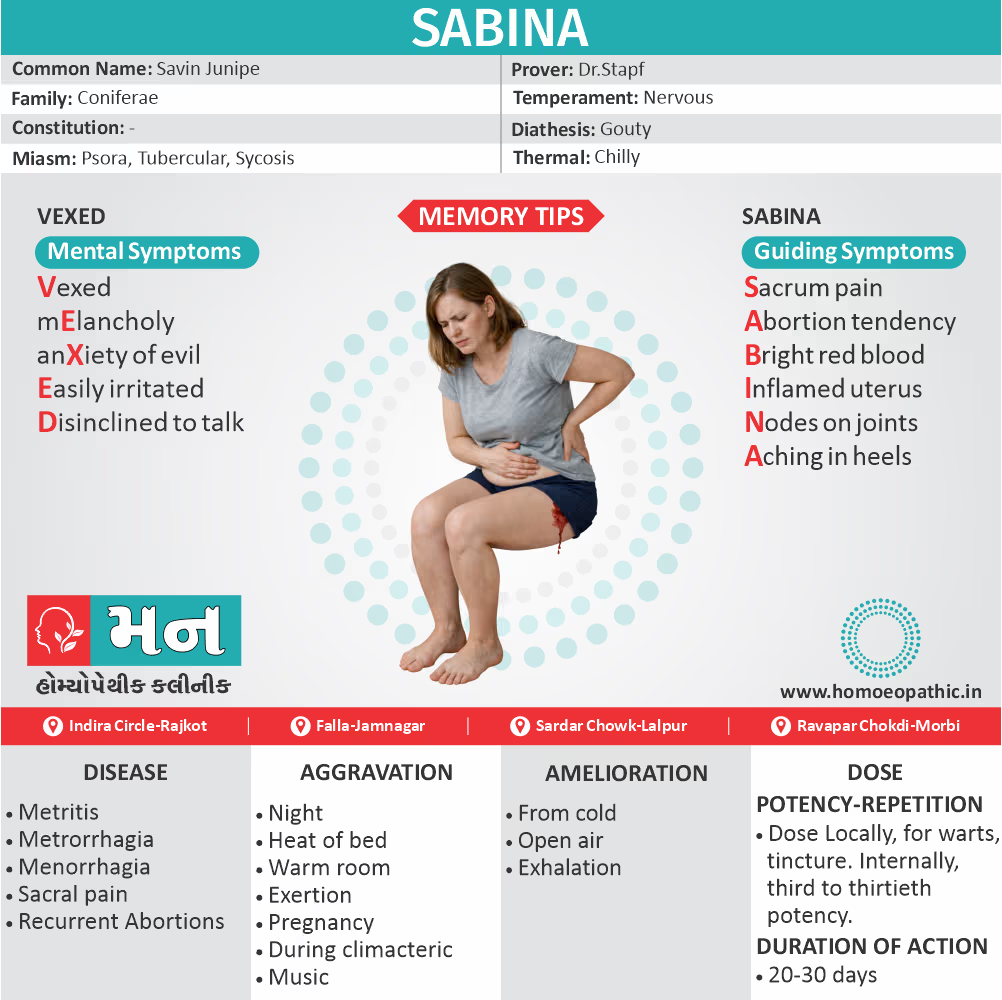
Sabina
Overview:
Sabina, derived from the Savin Juniper plant, is a prominent homoeopathic remedy primarily for conditions of the female reproductive system. It is best known for treating uterine haemorrhages where the blood is bright red and mixed with dark clots. Its most characteristic keynote symptom is a sharp, shooting pain that extends from the sacrum (lower back) to the pubis (front pelvis). Beyond bleeding, Sabina is also indicated for preventing threatened miscarriages, treating gouty joint pains, and addressing certain types of genital warts (condylomata). Symptoms are typically worse from the slightest motion and from heat
Memory Tips for Guiding Symptoms
Hi Friends Let’s memorize guiding symptoms of Sabina through name of Medicine ‘SABINA’.
S
A
B
I
N
A
S
S – Sacrum pain
Description: A highly characteristic symptom of Sabina is the presence of pains that shoot from the posterior pelvis to the anterior. These drawing, dragging, or labor-like pains extend from the sacrum or lower back directly through to the pubic bone. This specific pain pathway is a guiding symptom, especially when it occurs with uterine complaints like threatened miscarriage or heavy menses.
Reference: [Lectures on Homoeopathic Materia Medica by J.T. Kent]
A
A – Abortion tendency
Description: Sabina is a foremost remedy for threatened or habitual miscarriage, particularly around the third month of pregnancy. The condition is marked by the characteristic sacrum-to-pubis pains and a flow of bright red, fluid blood, which may contain dark clots. The slightest motion aggravates the bleeding and pain, forcing the patient to remain perfectly still.
Reference: [Leaders in Homoeopathic Therapeutics by E.B. Nash]
B
B – Bright red blood
Description: The nature of the hemorrhage is a key indicator for Sabina. The blood is almost always bright red and fluid, signifying arterial bleeding. This applies to hemorrhages from any orifice—the uterus, nose, or lungs. In uterine bleeding, this bright blood is often intermingled with dark, stringy clots. The flow is typically profuse and exacerbated by movement.
Reference: [A Dictionary of Practical Materia Medica by J.H. Clarke]
I
I – Inflamed uterus
Description: Sabina is indicated for inflammatory conditions of the uterus (metritis), especially after childbirth or abortion. The uterus is sore, and there are intense, burning, or shooting pains. This is often accompanied by a foul-smelling, corrosive leucorrhoea and the characteristic profuse, bright red bleeding.
Reference: [The Guiding Symptoms Of Our Materia Medica (All 10 Vols.) By Hering C.]
N
N – Nodes on joints
Description: The remedy has a pronounced effect on fibrous tissues and joints, making it useful in cases of chronic gout and arthritis. It is known for gouty nodosities or chalk-stone-like deposits in the joints, particularly the wrists and toes. The affected joints are swollen, shiny, and reddish, with stinging, tearing pains that are intolerable to heat and touch.
Reference: [The Guiding Symptoms of Our Materia Medica by C. Hering]
A
A – Aching in heels
Description: Beyond the larger joints, Sabina also produces pain in the smaller ones. A specific symptom is a bruised, aching, or ulcerative pain in the heels and the bones of the feet (tarsals). This arthritic pain is often worse when at rest and from the warmth of a bed, yet can also be aggravated by standing or walking.
Reference: [The Encyclopedia of Pure Materia Medica by T.F. Allen]
Memory Tips for Mental Symptoms
Hi Friends Let’s memorize mental symptoms of Sabina through name of Medicine ‘VEXED’.
V
E
X
E
D
V
V – Vexed
Description: “Vexed she weeps aloud.”
Reference: [Encyclopedia Of Pure Materia Medica, Vol.8 By Allen T.F.]
E
E – Evil, anxiety of
Description: “Great anxiety, as if he apprehended some evil.”
Reference: [Encyclopedia Of Pure Materia Medica, Vol.8 By Allen T.F.]
X
X – ‘X’ercise relieves
Description: “…these symptoms disappeared in half an hour, when taking continuous exercise in the open air…”
Reference: [Encyclopedia Of Pure Materia Medica, Vol.8 By Allen T.F.]
E
E – Easily irritated
Description: “Much irritability of temper.”
Reference: [Nature’s Materia Medica By Robin Murphy, Md]
D
D – Disinclined to talk
Description: “Disinclined to talk, in the morning, while walking.”
Reference: [Encyclopedia Of Pure Materia Medica, Vol.8 By Allen T.F.]
Introduction
Constitution
Clinical
Mental Symptoms
Guiding Symptoms
Characteristic
Therapeutic Value
Modality
Remedy Relationship
Dose
Terminologies
Reference
Also Search As
Introduction
Introduction of Sabina
Common name:
Savin Junipe
Synonyms
Savin [1]
Family / Group / Class / Order
Coniferae
Habit and habitat / Description
Europe, Asia and north America.
Name of prover
Dr Stapf
Introduction and history
Stapf made the first collection of the symptoms
of Sabina; Hahnemann and his son were among the provers. A number of
observations on women who had taken the drug to bring on the menses or procure
abortion have also been added, and some cases of fatal poisoning are on record.
Parts used
Fresh stems and leaves
Preparation
Of the mother tincture, 1 to 20 drops: of the Fluidextract, m v-xv. HOMEO., 3x to 6x.
Constitution
Constitution of Sabina
Physical make up
No particular physical make up
Temperament
Nervous
Diathesis
Gouty
Relation with heat & cold
Chilly
Miasm
Psoric, Sycotic, Tubercular
Clinical
Clinical conditions of Sabina
Abortion, after-effects of. After-pains. Boils. Condylomata. Cystitis. Dysmenorrhoea. Gonorrhoea, Govt. Inter-menstrual flow. Leucorrhoea. Menstruation, excessive. Miscarriage. Moles, promotes expulsion of. Nephritis. Nymphomania. Ovaries, affections of. Penis, cartilaginous swelling on. Phimosis. Retained placenta. Rheumatic gout. Strangury. Sycosis. Toothache. Uterus, bleeding from.[2]
Sites of action / Pharmacodynamics
FEMALE PELVIC ORGANS: UTERUS, Rectum, Nerves
Fibrous and serous tissues: Small joints, Heels
Causation (Causes / Ailments from)
-Abortion
-Premature labour
-Haemorrhages from uterus
–Retained placenta
Physiological action
This agent when applied locally produce rubefaction and vesication. Internally it acts as a stimulant to the digestive organs, accelerates the heart’s action, and stimulates the cutaneous, bronchial and renal secretions. It produces hyperaemia of kidneys, ovaries and uterus. In large doses it excites strangury, hematuria, severe vomiting and purging, and gastroenteritis; the subject becomes unconscious and convulsions and death result. It induces hyperaemia of the uterus and ovaries; and contractions of the pregnant uterus that may result in abortion. It is eliminated by the lungs, skin and kidneys. [3]
Mental Symptoms
Characteristic Mental Symptoms (psychology) of Sabina
Dejection, discouragement and sadness. Feeling of deep-seated trouble, which makes him melancholy and sad. Sadness with great tiredness and laziness. Melancholy. Moroseness with dislike to conversation, especially when exercising in open air. Weeping aloud. Desires repose and tranquility. Reserved while walking in open air. Taciturn while waking in morning.
Nervous . Great anxiety, fear and apprehension. Irritable nerves. Much irritability of temper. Irascibility with tears and sobs. Listlessness. Weakness of memory. Hypochondriacal mood. Sensitive to slightest noise. Starting from noise. Music goes through bone and marrow. Music is intolerable, it produces nervousness. Distraction from sound of piano.[4]
Guiding Symptoms
Guiding symptoms of Sabina
Generalities
***FEMALE PELVIC ORGANS; *uterus are mostly affected by this remedy. In addition it affects the *fibrous tissue; *of small joints;* serous membranes and heels. It is suitable to hot blooded women with gouty rheumatic diathesis; and *haemorrhagic tendency; epistaxis, haematuria etc. Tendency to abortion esp. at the third month. Violent pulsations; wants windows open. Heaviness and indolence of body, wants to lie down. Red shiny swelling of affected parts. Acutely inflamed arthritic nodes. Sense of fullness. Wart like growths. Pain increases suddenly and decreases slowly.[5]
Head
*Bursting headache; appears suddenly, diminishes slowly and returns frequently. Vertigo with suppressed menses.
Mouth
Toothache worse only when chewing. Drawing pain in the muscles of jaws. Bitter taste; to food esp. milk or coffee.
Stomach
Desire for lemonade. Heartburn. Pain from epigastrium to back.
Abdomen
Plethoric. Quivering as if something were alive, resembling foetal movements. Haemorrhoids with discharge of bright red blood causing pain from sacrum to pubes. Piles alternate with pain in limbs.
Sexual Organ
Male
Sexual desire increased, with violent continuous erections. Sycotic excrescences; with burning soreness. Hard swelling on dorsum of penis. *Itching genitals; almost insatiable desire for coition.
Female
Menses; too profuse, too early; *gushing of hot, *bright, *watery blood;* mixed with dark clots, worse least motion but often better by walking; with pain in joints; ***WITH PAIN FROM SACRUM TO PUBES or *Reverse; or *shooting up vagina. Bleeding between periods; with sexual excitement. Leucorrhoea; foul, acrid, thick, yellow, from suppressed menses, or copious menses; with itching of pudenda; during , pregnancy. Pruritus of pregnancy. Retained placenta. Severe after pains. Promotes expulsion of moles. Crawling in nipples. Haemorrhages after abortion. Ovaritis and Metritis after abortion; premature labour. Dysmenorrhoea better lying flat on the back, with limbs extended. Voluptuous itching in nipples.
Heart & Pulse
Violent pulsation in blood vessels in whole body.
Neck & Back
Pain from lumbar region to pubis or reverse.
Extremities
Swelling, redness and stitches in right big toe. Shooting in heels. Diminishes knots, and enlargements and varices in veins. Intermittent aching in the solar part of the heels.
Fever
Intolerable burning heat of whole body, with great restlessness.
Characteristic
Important characteristic features of Sabina
Keynotes / Redline
1. Menses-early, profuse, bright, partly fluid, partly clotted with pain from sacrum to pubis.
2. Tendency to abortion at 3rd month.
3. Music is intolerable, goes through bone and marrow.
Guiding
Pains shooting from sacrum to pubis.
Hemorrhage of bright red, fluid blood.
Tendency to miscarriage in the third month.
Music is intolerable.
Arthritic pains with gouty nodosities.
PQRS
Bleeding worse from the slightest motion.
Labor-like pains extending into the thighs.
Aching in heels and tarsal bones.
Symptoms relieved by continuous exercise in open air.
Warts with itching and burning.
Confirmatory
1. Haemorrhages-partly fluid, partly clotted with pain from sacrum to pubis.
2. Tendency to miscarriage at 3rd month.
Therapeutic Value
Therapeutic Value of Sabina
Abortion, effects. After-pains. Boils. Condylomata. Cystitis. Dysmenorrhea. Fibroids. Gonorrhea. Hemorrhages. Inter-menstrual, flow. Leucorrhea. Menstruation, excessive. Miscarriages. Moles. Nephritis. Nymphomania. Ovary, disorders. Penis, swelling. Phimosis. Retained, placenta. Rheumatic, gout. Strangury. Sycosis. Toothache. Uterus, bleeding. Warts.
Modality
Modality of Sabina
Aggravation
• Night
• Heat of bed
• Warm room
• Exertion
• Pregnancy
• During climacteric
• In foggy weather
• Stooping
• Letting limbs hang down
• Taking a deep breath
• Music
Amelioration
Open air
Exhalation
Remedy Relationship
Remedy Relationship of Sabina
Complimentary
Thuja
Follows Well
Ars, Bell, Rhus-t, Spong
Antidoted By
Puls
Comparison
All-c, Ambr, Am-m, Ant-c, Bry, Cann-i, Canth, Caul, Caust, Cham, Croc, Ferr, Graph, Ham, Hyper, Kreos, Led, Mang, Merc, Mil, Nat-c, Nit-ac, Plat, Puls, Rhus-t, Sec, Sep, Sulph, Ter, Thuj
Dose
Dose of Sabina
Potency
Locally, for warts, tincture. Internally, third to thirtieth potency.
Duration of Action
20-30 Days
Terminologies
Terminologies of Sabina
General Homoeopathic Concepts
Materia Medica:
A collection of information on homoeopathic remedies. An article on Sabina is an entry in a Materia Medica, detailing its source, preparation, and the symptoms it can treat.
Proving:
A systematic process of administering a substance to healthy individuals (provers) to discover the symptoms it can produce. The symptoms observed during the proving of Sabina form the basis of its therapeutic indications.
Potency:
Refers to the strength or dilution of a homoeopathic remedy, such as Sabina 6C, 30C, or 200C. The process involves serial dilution and succussion (vigorous shaking).
Modalities:
The circumstances that make a patient’s symptoms better (Amelioration) or worse (Aggravation). For Sabina, a key modality is aggravation from the least motion and from heat, and amelioration in cool, open air.
Keynote Symptom:
A characteristic, peculiar, or unique symptom that strongly points to a specific remedy. For Sabina, a well-known keynote is pain extending from the sacrum to the pubis.
Clinical & Pathological Terms (in the context of Sabina)
Haemorrhage:
Bleeding. Sabina is primarily indicated for uterine haemorrhages.
Leucorrhoea:
White or yellowish vaginal discharge. In Sabina, it can be acrid and offensive, especially after menstruation.
Atony of Uterus:
Lack of normal muscle tone in the uterus. Sabina is used when this condition leads to postpartum haemorrhage or a tendency to miscarry.
Arthritic / Gouty Diathesis:
A constitutional predisposition to developing arthritis or gout. Sabina addresses joint pains, particularly in the wrists and toes, which are worse from heat and motion.
Reference
Reference of Sabina
[1] Zomeo
[2] Dictionary Of Practical Materia Medica (All 3 Vol.) By Clarke J. H.
[3] A Manual Of Materia Medica, Therapeutics And Pharmacology By Blackwood, Alexander Leslie
[4] Nature’s Materia Medica By Robin Murphy, Md
[5] Concise Materia Medica Of Hom. Remedies By S.R. Phatak
Also Search As
Also Search As of Sabina
1. Online Homoeopathic Databases & Journals
PubMed/Medline:
Search using terms like "Homeopathy" AND "Sabina" or "Juniperus sabina" AND "case report". This is best for finding peer-reviewed scientific studies.
Homoeopathic Journal Websites:
Access archives of journals such as:
Indian Journal of Research in Homoeopathy (IJRH)
Homoeopathic Links
American Journal of Homeopathic Medicine
ResearchGate & Academia.edu: Connect with researchers and access their published or unpublished articles on Sabina.
2. Digital Libraries & Classic Texts
Google Books:
A valuable resource for older, out-of-copyright homoeopathic texts. Search for “Sabina materia medica”.
Hpathy.com & https://www.google.com/search?q=Homeo-pedia.com:
These websites have extensive digital libraries of classic materia medicas by authors like:
(Kent’s Repertory & Materia Medica) Dr. J.T. Kent
(Boericke’s Materia Medica) Dr. William Boericke
(Phatak’s Materia Medica) Dr. S.R. Phatak
(Hering’s Guiding Symptoms) Dr. C. Hering
3. Professional & Educational Websites
Websites of Homoeopathic Colleges:
Many institutions publish articles and case studies by their faculty and students.
Practitioner Blogs & Websites:
Experienced homoeopaths often share detailed articles and case studies on their personal or clinic websites.
4. Using General Search Engines Effectively
Be Specific: Instead of just “Sabina,” use more detailed search queries.
"Sabina homoeopathy uses"
"Sabina materia medica"
"Case study of Sabina in metrorrhagia"
"Sabina keynote symptoms"
Use Filetype Search: To find presentations or documents, use queries like "Sabina homoeopathy filetype:pdf" or filetype:ppt.
Frequently Asked Questions (FAQ)
What is Sabina in homoeopathy?
Sabina
is a homoeopathic remedy prepared from the fresh leaves and twigs of the Savin Juniper plant (Juniperus sabina). It is renowned for its action on the uterus, joints, and skin.
What are the main uses of Sabina?
Uses
It is primarily used for female reproductive issues, especially heavy, bright red uterine haemorrhage (metrorrhagia), painful menstruation, and to prevent threatened miscarriage. It is also indicated for rheumatic and gouty pains, particularly in the wrists and toes, and for treating certain types of warts (condylomata).
What is the keynote symptom of Sabina?
Charecteristic
The most characteristic symptom pointing to Sabina is a sharp, shooting pain that travels from the lower back (sacrum) through to the front of the pelvis (pubis).
Are there any side effects of Sabina?
Safety
In its potentized homoeopathic form, Sabina is considered safe and does not have the toxic effects of the raw plant. However, it should always be taken under the guidance of a qualified homoeopathic practitioner.
How do homeopaths differentiate Sabina from other remedies for bleeding, like Secale?
Differentiation
Homeopaths distinguish between these remedies based on the nature of the bleeding and the patient’s temperature preference. Specifically, Sabina addresses bleeding of bright red, fluid blood mixed with dark clots. Furthermore, the person needing Sabina feels worse from heat and any motion. In contrast, a person needing Secale has continuous, dark, passive bleeding and, despite feeling cold to the touch, cannot tolerate being covered or in a warm room.
Beyond physical symptoms, what emotional state points to a need for Sabina?
The emotional profile for Sabina often involves significant irritability and impatience. For instance, the person may find music intolerable because it provokes nervousness and affects them deeply. This aversion to music, consequently, becomes a strong guiding symptom for practitioners when considering this remedy.
Why do practitioners connect Sabina with the Sycotic miasm?
Miasm
Practitioners connect Sabina to the Sycotic miasm because it effectively treats symptoms characteristic of this chronic predisposition. Primarily, these include the overgrowth of tissue, such as genital warts (fig-warts or condylomata) and uterine polyps. As a result, its ability to address these specific growths makes it a key anti-sycotic remedy.
Sabina
is a homoeopathic remedy prepared from the fresh leaves and twigs of the Savin Juniper plant (Juniperus sabina). It is renowned for its action on the uterus, joints, and skin.
Uses
It is primarily used for female reproductive issues, especially heavy, bright red uterine haemorrhage (metrorrhagia), painful menstruation, and to prevent threatened miscarriage. It is also indicated for rheumatic and gouty pains, particularly in the wrists and toes, and for treating certain types of warts (condylomata).
Charecteristic
The most characteristic symptom pointing to Sabina is a sharp, shooting pain that travels from the lower back (sacrum) through to the front of the pelvis (pubis).
Safety
In its potentized homoeopathic form, Sabina is considered safe and does not have the toxic effects of the raw plant. However, it should always be taken under the guidance of a qualified homoeopathic practitioner.
Differentiation
Homeopaths distinguish between these remedies based on the nature of the bleeding and the patient’s temperature preference. Specifically, Sabina addresses bleeding of bright red, fluid blood mixed with dark clots. Furthermore, the person needing Sabina feels worse from heat and any motion. In contrast, a person needing Secale has continuous, dark, passive bleeding and, despite feeling cold to the touch, cannot tolerate being covered or in a warm room.
The emotional profile for Sabina often involves significant irritability and impatience. For instance, the person may find music intolerable because it provokes nervousness and affects them deeply. This aversion to music, consequently, becomes a strong guiding symptom for practitioners when considering this remedy.
Miasm
Practitioners connect Sabina to the Sycotic miasm because it effectively treats symptoms characteristic of this chronic predisposition. Primarily, these include the overgrowth of tissue, such as genital warts (fig-warts or condylomata) and uterine polyps. As a result, its ability to address these specific growths makes it a key anti-sycotic remedy.