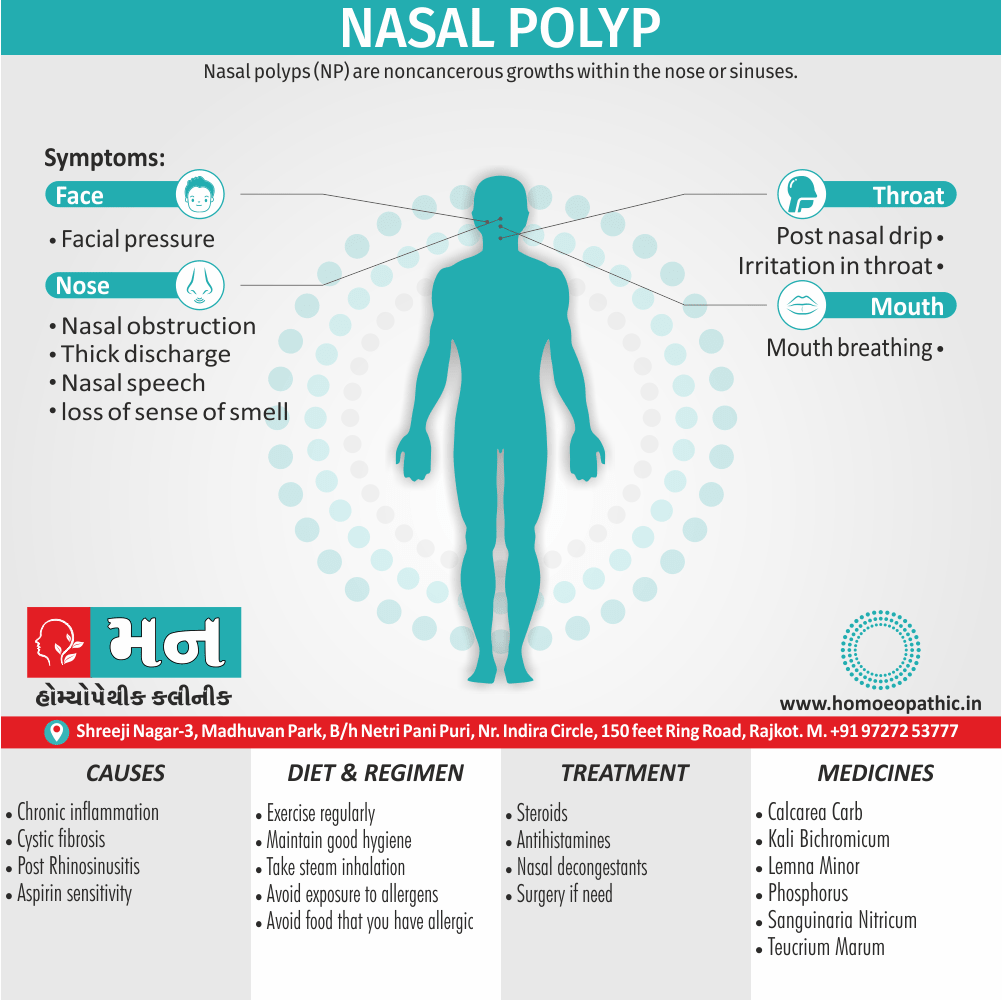
Nasal Polyp
Definition
Nasal Polyp (NP) are noncancerous growths within the nose or sinuses.[1]
There aren’t any true synonyms for nasal polyps in the general sense. However, within the medical field, here are some related terms you might encounter:
These terms provide more detail about the location of the polyps.
- Nasal mucosal polyp: This term describes the polyp based on its origin in the mucous membrane (mucosa) of the nose.
- Sinonasal polyp: This term refers specifically to polyps that form in both the nasal cavity and paranasal sinuses.
- Sinonasal polyposis: This refers to the condition of having multiple nasal polyps.
While not a direct synonym, it describes the polyp based on its anatomical location.
In some cases, depending on the context, you might also use descriptive phrases like:
- Noncancerous nasal growth
- Nasal cavity mass
It’s important to note that these are less specific terms and shouldn’t be used in a formal medical setting. “Nasal polyp” remains the most accurate and widely used term
Overview
Epidemiology
Causes
Types
Risk Factors
Pathogenesis
Pathophysiology
Clinical Features
Sign & Symptoms
Clinical Examination
Diagnosis
Differential Diagnosis
Complications
Investigations
Treatment
Prevention
Homeopathic Treatment
Diet & Regimen
Do’s and Don’ts
Terminology
References
Also Search As
Overview
Overview of Nasal Polyp
Basically, The exact cause is unclear. Additionally, They may be related to chronic inflammation of the lining of the sinuses. In detail, They occur more commonly among people who have allergies, cystic fibrosis, aspirin sensitivity, or certain infections. Besides this, About 4% of people currently have nasal polyps while up to 40% of people develop them at some point in their life. Lastly, So They most often occur after the age of 20 but more frequent in males than females.[1]
Epidemiology
Epidemiology of Nasal Polyp
Nasal polyps (NP) are a common chronic inflammatory disease affecting 1-4% of the adult population. Research on the epidemiology of NP in India has yielded the following insights:
Prevalence:
- A study conducted in a hilly region of India found that NP are more common in males and in the middle age group (Reference: Epidemiology of nasal polyps in hilly areas and its risk factors, IJORL, no year provided) [3]
- Another study observed a prevalence of 46.25% of nasal polyps among patients with chronic recurrent rhinosinusitis (Reference: A study to observe the prevalence of nasal polyposis among patients with chronic recurrent rhinosinusitis, EJMCM, no year provided). [4]
Causes
Causes of Nasal Polyp
The exact cause of nasal polyps is unclear. In detail, They are, however, commonly associated with conditions that cause long term inflammation of the sinuses. This includes chronic rhinosinusitis, asthma, aspirin sensitivity, also cystic fibrosis.
Various additional diseases associated with polyp formation i.e.:
- Allergic fungal sinusitis
- Kartagener’s syndrome
- Young’s syndrome
- Eosinophilic granulomatosis with polyangiitis
- Nasal mastocytosis
Chronic rhinosinusitis is a common medical condition characterized by symptoms of sinus inflammation lasting at least 12 weeks. The cause is unknown and the role of microorganisms remains unclear. It can be classified as either with or without nasal polyposis.[1][2]
Cystic fibrosis (CF) is the most common cause of nasal polyps in children. Therefore, any child under 12 to 20 years old with nasal polyps should test for CF. Half of people with CF will experience extensive polyps leading to nasal obstruction and requiring aggressive management.
Types
Types of Nasal Polyp
1. Firstly, Bilateral ethmoidal polypi
2. Secondly, Antrochoanal polyp [1]
Risk Factors
Risk Factors
“Nasal polyps are associated with chronic inflammation of the nasal lining and sinuses. Conditions that can increase your risk of nasal polyps include:
- Chronic sinusitis: Long-term inflammation of the sinuses.
- Asthma: A chronic respiratory disease that causes inflammation and narrowing of the airways.
- Aspirin sensitivity: A reaction to aspirin or other nonsteroidal anti-inflammatory drugs (NSAIDs) that can trigger asthma and nasal polyps.
- Cystic fibrosis: An inherited disorder that causes thick, sticky mucus to build up in the lungs and other organs, including the sinuses.
- Allergic fungal sinusitis: An allergic reaction to airborne fungi.
- Churg-Strauss syndrome: A rare disorder that causes inflammation of blood vessels.
- Vitamin D deficiency: Low levels of vitamin D may increase the risk of nasal polyps.”
Pathogenesis
Pathogenesis of Nasal Polyp
Nasal polyps are non-neoplastic, inflammatory lesions characterized by edematous nasal or sinus mucosa. The exact pathogenesis is not fully understood, but several factors contribute to their development:
Chronic Inflammation: Chronic inflammation of the nasal and sinus mucosa is a key factor in the development of polyps. This inflammation can be triggered by various factors, including:
- Allergies
- Infections (viral, bacterial, fungal)
- Environmental irritants
- Aspirin sensitivity (Samter’s triad)
Eosinophilic Inflammation: In many cases, nasal polyps are characterized by a type of inflammation called eosinophilic inflammation. Eosinophils are white blood cells that play a role in allergic reactions and immune responses. Elevated levels of eosinophils in nasal polyps contribute to tissue remodeling and polyp growth.
Dysregulated Immune Response: An imbalance in the immune system, particularly involving T helper cells (Th) and their cytokines, is thought to play a crucial role in the development and persistence of nasal polyps.
Epithelial Barrier Dysfunction: The epithelial lining of the nasal and sinus mucosa acts as a barrier against external irritants and pathogens. In individuals with nasal polyps, this barrier may be compromised, leading to increased exposure to allergens and microbes, further fueling inflammation.
Genetic Predisposition: There is evidence to suggest that a genetic predisposition may make some individuals more susceptible to developing nasal polyps. [6]
Pathophysiology
Pathophysiology of Nasal Polyp
Nasal mucosa, particularly in the region of middle meatus and turbinate, becomes oedematous due to collection of extracellular fluid causing polypoidal change. Polypi which are sessile in the beginning become pedunculate due to gravity and excessive sneezing.
In early stages, surface of nasal polypi cover by ciliated columnar epithelium like that of normal nasal mucosa but later it undergoes a metaplastic change to transitional and squamous type on exposure to atmospheric irritation. Submucosa shows large intercellular spaces filled with serous fluid. There is also infiltration with eosinophils and round cells.[2]
Clinical Features
Clinical Features of Nasal Polyp
The clinical presentation of nasal polyps varies depending on their size, location, and number. Common features include:
Nasal Obstruction: Nasal polyps can cause partial or complete blockage of the nasal passages, leading to difficulty breathing through the nose. This obstruction can be constant or intermittent.
Rhinorrhea (Runny Nose): Nasal polyps often produce excessive mucus, resulting in a runny nose. The discharge may be clear, thick, or discolored.
Postnasal Drip: Excess mucus can drip down the back of the throat (postnasal drip), causing throat irritation, coughing, and the need to clear the throat frequently.
Hyposmia or Anosmia (Loss of Smell): Nasal polyps can interfere with the sense of smell, causing a decreased ability to smell (hyposmia) or complete loss of smell (anosmia).
Facial Pain or Pressure: Larger polyps or those located in the sinuses can cause facial pain or pressure, especially around the eyes, forehead, and cheeks.
Headache: Headaches are a common symptom associated with nasal polyps, often due to sinus pressure or inflammation.
Snoring and Sleep Apnea: Nasal obstruction caused by polyps can contribute to snoring and obstructive sleep apnea, a condition characterized by pauses in breathing during sleep.
Other Symptoms: Less common symptoms may include a change in voice quality, ear fullness or pressure, and recurrent sinus infections. [5]
Sign & Symptoms
Sign & Symptoms of Nasal Polyp
- Nasal congestion
- Sinusitis
- Loss of smell
- Thick nasal discharge
- Facial pressure
- Nasal speech
- Mouth breathing [1]
Clinical Examination
Clinical Examination of Nasal Polyp
The clinical examination of nasal polyps typically involves the following steps:
Anterior Rhinoscopy:
- The examiner uses a nasal speculum and a light source to visualize the anterior nasal cavity.
- Nasal polyps often appear as pale, smooth, grape-like masses arising from the middle meatus or ethmoid sinus region.
- The examiner notes the size, location, and number of polyps.
Nasal Endoscopy:
- A flexible or rigid endoscope is used to examine the nasal cavity and nasopharynx in more detail.
- Endoscopy allows for better visualization of the middle meatus, superior turbinate, sphenoethmoid recess, and other areas where polyps may be hidden.
- The examiner assesses the extent of the disease, the presence of other abnormalities, and the potential for complications.
Palpation:
- In some cases, the examiner may gently palpate the nasal polyps with a cotton-tipped applicator.
- Polyps typically feel soft, mobile, and non-tender.
Assessment of Associated Findings:
- The examiner also assesses for other signs and symptoms associated with nasal polyps, such as:
- Nasal obstruction
- Rhinorrhea (runny nose)
- Postnasal drip
- Hyposmia or anosmia (reduced or loss of smell)
- Facial pain or pressure
- Headache
Additional Tests:
- In certain situations, additional tests may be ordered to further evaluate the patient, such as:
- Allergy testing
- Imaging studies (CT scan or MRI)
- Biopsy of the polyp tissue (if malignancy is suspected) [7]
Diagnosis
Diagnosis of Nasal Polyp
1. Clinical examination
Generally, Examination of the nose with an endoscope may reveal a either choanal or antrochoanal polyp hidden posteriorly in the nasal cavity.
Posterior rhinoscopy may reveal a globular mass filling the choana or the nasopharynx. Additionally, A large polyp may hang down behind the soft palate also present in the oropharynx
2. Computed tomography (CT) scan
In brief, CT scan of paranasal sinuses is essential to exclude the bony erosion and expansion suggestive of neoplasia.
3. Histological Examination
Simple nasal polypi may sometimes associate with malignancy underneath, especially in people above 40 years and this must exclude by histological examination of the suspected tissue. In detail, CT scan also helps to plan surgery.
4. X-rays
of paranasal sinuses may show opacity of the involved antrum. X-ray (lateral view), soft tissue nasopharynx, reveals a globular swelling in the postnasal space. It is differentiated from angiofibroma by the presence of a column of air behind the polyp.[2]
Differential Diagnosis
Differential Diagnosis of Nasal Polyp
Nasal polyps can sometimes be mistaken for other conditions that cause similar symptoms or have a similar appearance. The differential diagnosis of nasal polyps includes:
Enlarged Turbinates: The turbinates are structures within the nose that help to warm and humidify inhaled air. They can become enlarged due to allergies, infections, or other irritants, mimicking the appearance of nasal polyps.
Sinonasal Tumors: Benign or malignant tumors in the sinuses or nasal cavity can present with nasal obstruction, discharge, and other symptoms that overlap with those of nasal polyps.
Antrochoanal Polyp: This type of polyp originates in the maxillary sinus and extends into the nasal cavity or nasopharynx. It often appears as a single, large, smooth mass.
Inverted Papilloma: Inverted papilloma is a benign tumor of the nasal cavity or paranasal sinuses that can cause nasal obstruction and other symptoms similar to those of nasal polyps.
Fungal Sinusitis: Fungal infections of the sinuses can cause inflammation, mucus production, and the formation of fungal debris that can resemble nasal polyps.
Sarcoidosis: This systemic inflammatory disease can affect the sinuses and nasal cavity, leading to the development of granulomas that may be mistaken for polyps.
Foreign Body: In rare cases, a foreign body lodged in the nasal cavity can cause inflammation and obstruction, mimicking the symptoms of nasal polyps. [5]
Complications
Complications of Nasal Polyp
Nasal polyps can lead to several complications if left untreated or if they recur despite treatment. These complications can affect the sinuses, nose, and surrounding structures:
Sinus-related complications:
- Chronic sinusitis: Persistent inflammation of the sinuses, leading to recurrent infections, facial pain, and pressure.
- Mucocele: Accumulation of mucus within a sinus cavity, causing expansion and potential damage to the surrounding bone.
Nasal complications:
- Loss of smell (anosmia): Polyps can obstruct the olfactory region of the nose, leading to a decreased or complete loss of the sense of smell.
- Nasal deformity: In severe cases, large polyps can cause structural changes to the nose, resulting in a deviated septum or other deformities.
Other complications:
- Obstructive sleep apnea (OSA): Polyps can block the airway during sleep, leading to OSA, a condition characterized by pauses in breathing.
- Asthma exacerbation: Nasal polyps are associated with asthma, and their presence can worsen asthma symptoms.
- Aspirin-exacerbated respiratory disease (AERD): Individuals with AERD may experience worsening of asthma and sinus symptoms in response to aspirin or other nonsteroidal anti-inflammatory drugs (NSAIDs).
- Orbital complications: In rare cases, polyps can spread to the orbit (eye socket), causing visual disturbances, double vision, or even blindness. [5]
Investigations
Investigations of Nasal Polyp
The following investigations are commonly used to diagnose and evaluate nasal polyps:
Nasal Endoscopy:
This is the gold standard for diagnosing nasal polyps.
A thin, flexible tube with a camera and light is inserted into the nose to visualize the nasal cavity and sinuses.
It allows for direct visualization of polyps, assessment of their size and location, and identification of other sinonasal abnormalities.
Allergy Testing:
Allergy testing may be performed to determine if allergies are contributing to the development or persistence of nasal polyps.
Skin prick tests or blood tests can be used to identify specific allergens.
Imaging Studies:
Computed Tomography (CT) scan:
- A CT scan of the sinuses provides detailed images of the nasal cavity, sinuses, and surrounding structures.
- It helps to assess the extent of polyp disease, identify associated sinusitis, and evaluate the anatomy before surgery.
Magnetic Resonance Imaging (MRI):
- MRI may be used in certain cases, particularly if there is concern for complications such as orbital involvement or fungal sinusitis.
Blood Tests:
Complete blood count (CBC):
- A CBC can detect signs of infection or inflammation.
- It may also help to identify conditions associated with nasal polyps, such as eosinophilia (elevated eosinophil levels).
Cystic fibrosis testing:
- If cystic fibrosis is suspected, genetic testing or sweat chloride testing may be performed.
Biopsy:
In some cases, a small sample of polyp tissue may be taken for microscopic examination (biopsy).
This is usually done to rule out other conditions, such as tumors. [5]
Treatment
Treatment of Nasal Polyp
CONSERVATIVE
- Firstly, Early polypoidal changes with oedematous mucosa may revert to normal with anti histaminics and control of allergy.
- Secondly, A short course of steroids may prove useful in case of people who cannot tolerate anti-histaminic and/or in those with asthma and polypoidal nasal mucosa. They may also use to prevent recurrence after surgery. Contraindications to use of steroids, e.g., Hypertension, peptic ulcer, diabetes, pregnancy and tuberculosis should be excluded.
SURGICAL
- Polypectomy
- Intranasal ethmoidectomy.
- Extra-nasal ethmoidectomy.
- Trans-antral ethmoidectomy
- Endoscopic sinus surgery.[2]
Prevention
Prevention of Nasal Polyp
Based on the understanding of risk factors and pathogenesis, the following approaches may help to reduce the risk or recurrence of nasal polyps:
Managing Underlying Conditions:
- Treating Allergies: Effectively managing allergies, such as allergic rhinitis, through medications, immunotherapy, or allergen avoidance, can help to reduce chronic inflammation in the nasal mucosa, potentially preventing polyp formation.
- Controlling Asthma: Good asthma control with appropriate medications can minimize airway inflammation, which may also contribute to polyp development.
- Addressing Chronic Infections: Promptly treating and managing chronic or recurrent sinus infections can reduce inflammation and prevent polyp formation.
Lifestyle Modifications:
- Nasal Irrigation: Regularly using saline nasal irrigation or rinses can help to cleanse the nasal passages, remove irritants, and reduce inflammation.
- Avoiding Irritants: Minimizing exposure to environmental irritants, such as cigarette smoke, dust, and chemical fumes, can help to protect the nasal mucosa and reduce inflammation.
Medications:
- Topical Corticosteroids: Nasal corticosteroid sprays are commonly used to reduce inflammation and prevent polyp recurrence in patients with a history of nasal polyps.
- Leukotriene Modifiers: These medications can help to control inflammation in both the airways and nasal mucosa, making them potentially beneficial in preventing polyp formation in patients with asthma and allergies.
Early Intervention:
- Promptly seeking medical attention for persistent nasal symptoms, such as congestion, runny nose, and loss of smell, can lead to earlier diagnosis and treatment of underlying conditions, potentially preventing the development or progression of nasal polyps. [6]
Homeopathic Treatment
Homoeopathic Treatment of Nasal Polyp
Homeopathy can treat nasal polyps. Nasal polyps are considered a case for surgery under the conventional mode of medicine. However, Homeopathy offers an alternative by treating nasal polyps internally, without invasive procedures. Homeopathy treats the symptoms of nasal polyps as well as help shrink the nasal polyps. These medicines, which are both natural and safe, attack the disease at the root and set off the body’s own restorative processes for complete treatment. Some top-rated medicines for treating nasal polyps are Teucrium Marum, Lemna Minor, Sanguinaria Nitricum, Allium Cepa, Kali Bichromicum, and Calcarea Carb.[4]
Lemna Minor – Top Remedy for Nasal Polyps
Basically, Lemna Minor is one of the top-grade medicines for nasal polyps. It works well where there is obstruction of nose and loss of smell from nasal polyps. Additionally, A putrid smell in the nose may also felt in some cases. Thick, yellow-white discharge from the nose is another attending feature. In some cases, mucopurulent nasal discharge observe. In cases where nasal polyps worsen in wet weather too, Lemna Minor is the medicine to prescribe. It also treats swollen nasal turbinates very well.
Teucrium Marum – For Polyps with Nasal Blockage
Teucrium Marum is a most wonderful medicine for nasal polyps with marked nasal blockage. A unique symptom is obstruction of the side of the nose on which the person lies down. Loss of smell is also noted. Crawling sensation in the nose may arise. Teucrium Marum is also one of the best medicines for ozaena. Ozaena is chronic inflammation of the nasal mucosa resulting in its atrophy.[4]
Sanguinaria Nitricum and Kali Nitricum – For Right-sided Polyps
Sanguinaria Nitricum and Kali Nitricum are excellent medicines for right-sided nasal polyps. A person who needs a prescription of Sanguinaria Nitricum shows watery, nasal discharge or burning nature. Other features are pressure over the root of the nose, plugged sensation in nostrils, enlarged nasal turbinates, sneezing and yellow, bloody mucus discharge from the nose. The symptoms guiding the use of Kali Nitricum in addition to right-sided nasal polyps are coryza with nasal obstruction, sneezing, loss of smell and digging pain in nostrils.[4]
Calcarea Carb – For Left-sided Nasal Polyps
Calcarea Carb is an extremely suitable medicine for left-sided nasal polyps. This prescription is given to persons who complain of a blocked nose on the left side. Other attending features are fetid smell and yellow discharge from the nose. In the morning, dryness in the nose may be felt. Sneezing, markedly in the morning time, may also attend. Persons given Calcarea Carb tend to catch a cold easily, with the slightest change in weather.[4]
Allium Cepa – For Constant Sneezing in Nasal Polyps
In the case of nasal polyps with constant sneezing, Allium Cepa offers the perfect treatment. An attending feature is the watery discharge of burning, acrid nature from the nose. The nasal discharge corrodes the upper lips. Headache may also persist along with fluent coryza. Some feel there’s a lump at the root of the nose. Nose stoppage may also be observed.
Kali Bichromicum – For Post Nasal Discharge in Nasal Polyps Cases
For postnasal discharge in nasal polyps’ cases, Kali Bichromicum is selected. The post nasal discharge is thick, lumpy, ropy in nature. It is attended with much hawking. Marked pressure at the root of the nose is complained of. A fetid smell from the nose is another concern. Violent sneezing in the morning time may accompany the above features. Kali Bichromicum is also a prominent medicine for treating nasal polyps from chronic sinusitis.
Phosphorus – For Bleeding Nasal Polyps
Phosphorus is a very effective medicine for nasal polyps that bleed easily. Apart from the bleeding, the condition is accompanied by coryza with dull headache and sneezing which worsens with strong odors. Blocked nose early in the morning is a sure sign that Phosphorus will work. Also, in cases where coryza and dryness of the nose alternate, Phosphorus is the best medicine.[4]
Diet & Regimen
Diet & Regimen of Nasal Polyp
- Hygiene: Maintain good hygiene of the self as well as the environment so that infection can be minimized.
- Treatment of Existing Conditions: Take timely and appropriate medicines to treat Common Cold, Bronchitis, Asthma, or any other respiratory ailment you may be having.[3]
- Restrict Allergen Exposure: Avoid exposure to allergens like pollen, perfumes, smoke, tobacco, dust, chemical fumes which cause inflammation and irritation of the nasal passage.
- Steam: Take steam inhalation if there is a persistent cold.
- Yoga: Deep breathing exercises like Pranayama help to ease breathing and prevent infections.[3]
Do’s and Don’ts
Do’s:
- Manage underlying conditions: If you have allergies, asthma, or other conditions that contribute to nasal polyps, follow your doctor’s treatment plan to keep them under control.
- Use nasal corticosteroids: These medications can help shrink polyps and reduce inflammation. Use them as prescribed by your doctor.
- Rinse your sinuses: Use saline nasal irrigation or sprays regularly to cleanse the nasal passages and reduce inflammation.
- Keep your home clean and well-ventilated: Dust mites, mold, and other allergens can trigger inflammation, so keep your home clean and reduce humidity levels.
- Avoid irritants: Stay away from cigarette smoke, chemical fumes, and other irritants that can worsen nasal polyps.
- Practice good hygiene: Wash your hands frequently to reduce the risk of infections that can aggravate nasal polyps.
- See your doctor regularly: If you have nasal polyps, regular checkups with your ENT specialist are essential to monitor their growth and adjust treatment as needed.
Don’ts:
- Don’t ignore your symptoms: If you experience nasal congestion, runny nose, loss of smell, or other symptoms, seek medical attention promptly. Early diagnosis and treatment can prevent complications.
- Don’t overuse decongestants: Overusing decongestant nasal sprays can worsen congestion in the long run. Use them only as directed by your doctor.
- Don’t pick or scratch your nose: This can irritate the nasal lining and potentially worsen inflammation.
- Don’t smoke: Smoking irritates the nasal passages and can contribute to the development and growth of nasal polyps.
- Don’t self-medicate: Consult with your doctor before taking any medications for nasal polyps, as some may not be suitable for everyone.
Terminology
Terminology For Nasal Polyp
Nasal Polyps (NP): Non-cancerous growths that develop in the lining of the nose or sinuses. They are often associated with chronic inflammation.
Chronic Rhinosinusitis (CRS): A common condition characterized by inflammation of the nasal cavity and paranasal sinuses, often lasting for 12 weeks or longer.
Eosinophilic Chronic Rhinosinusitis (ECRS): A subtype of CRS characterized by a high number of eosinophils (a type of white blood cell) in the nasal and sinus tissues.
Samter’s Triad: A combination of asthma, aspirin sensitivity, and nasal polyps.
Aspirin-Exacerbated Respiratory Disease (AERD): A condition where aspirin and other nonsteroidal anti-inflammatory drugs (NSAIDs) trigger asthma and sinus symptoms, often accompanied by nasal polyps.
Cystic Fibrosis (CF): A genetic disorder that affects the lungs, pancreas, and other organs. Individuals with CF have a higher risk of developing nasal polyps.
Hyposmia/Anosmia: Reduced or complete loss of the sense of smell, often associated with nasal polyps.
Nasal Obstruction: Blockage of the nasal passages, causing difficulty breathing through the nose.
Rhinorrhea: Runny nose, excessive nasal discharge.
Postnasal Drip: Mucus dripping down the back of the throat from the nose or sinuses.
Endoscopic Sinus Surgery (ESS): A minimally invasive surgical procedure used to remove nasal polyps and open up the sinus passages.
Topical Corticosteroids: Steroid medications applied directly to the nasal passages to reduce inflammation and shrink polyps.
Biologics: Newer medications that target specific inflammatory pathways in the body, used to treat severe cases of nasal polyps and associated conditions.
Recurrence: The return of nasal polyps after treatment.
Comorbidities: The presence of additional medical conditions alongside nasal polyps, such as asthma, allergies, or aspirin sensitivity.
Homeopathic Terminology:
- Similia Similibus Curentur: This Latin phrase means “like cures like,” the fundamental principle of homeopathy. Homeopathic remedies are chosen based on their ability to produce symptoms similar to the disease being treated.
- Repertory: A comprehensive index of symptoms and the corresponding homeopathic remedies known to address them. Homeopaths use repertories to select the most appropriate remedy for a patient.
- Materia Medica: A collection of detailed information about homeopathic remedies, including their sources, preparation, symptom picture, and therapeutic applications.
- Potency: The strength or dilution of a homeopathic remedy. Higher potencies are considered more diluted and are believed to have deeper acting effects.
- Individualization: The process of selecting the most suitable remedy for a patient based on their unique symptom picture, medical history, and overall constitution.
- Aggravation: A temporary worsening of symptoms after taking a homeopathic remedy. This is considered a positive sign indicating that the remedy is working.
- Constitutional Remedy: A remedy that matches the patient’s overall constitution, not just their specific symptoms. It aims to address the underlying susceptibility to illness and promote overall well-being.
Nasal Polyp-Specific Terminology:
- Acute exacerbation: A sudden worsening of nasal polyp symptoms, often triggered by an infection or allergen exposure.
- Chronic rhinosinusitis: Long-term inflammation of the nasal cavity and sinuses, often associated with nasal polyps.
- Eosinophilic polyps: Nasal polyps characterized by a high number of eosinophils (a type of white blood cell).
- Samter’s triad: A combination of asthma, aspirin sensitivity, and nasal polyps.
- Post-surgical recurrence: The return of nasal polyps after surgical removal.
References
References of Nasal Polyp
- https://en.wikipedia.org/wiki/Nasal_polyp
- Disease of ear nose and throat 6th edition by P.L. Dhingra and Shruti Dhingra
- Epidemiology of nasal polyps in hilly areas and its risk factors, IJORL
- A study to observe the prevalence of nasal polyposis among patients with chronic recurrent rhinosinusitis, EJMCM
- Cummings Otolaryngology: Head and Neck Surgery (7th Edition) Paul W. Flint, Bruce H. Haughey, Valerie J. Lund, John M. Niparko, Mark A. Richardson, K. Thomas Robbins, J. Regan Thomas (2021, Elsevier)
- Nasal Polyposis: Pathogenesis, Medical and Surgical Treatment by Claus Bachert, Philippe Gevaert, Peter Hellings (2010, Springer)
- Boies’ Fundamentals of Otolaryngology – Head and Neck Surgery ( 6th Edition) James L. Netterville, Michael P. Stewart, Brian J. McKinnon, Pete S. Batra, D. Bradley Welling (2019, Wolters Kluwer)
Also Search As
Also Search As
There are several ways people can search for homeopathic articles on nasal polyps:
Online Databases:
- The Homœopathic Journal: This peer-reviewed journal often publishes articles on homeopathic treatment of various conditions, including nasal polyps. So You can search their archive online.
- The International Journal of High Dilution Research (IJHDR): This journal focuses on high-dilution research in homeopathy and may have relevant articles.
- National Journal of Homoeopathy: Published by the Indian Institute of Homoeopathy, this journal may contain articles on clinical cases or research related to nasal polyps.
Online Search Engines:
- Google Scholar: This search engine specializes in academic literature and can help you find peer-reviewed articles, case reports, and studies on homeopathic treatment of nasal polyps.
- PubMed: While primarily focused on conventional medicine, PubMed may also index some homeopathic journals and articles.
- Google: A general search using keywords like “homeopathic treatment nasal polyps” or “homeopathy for nasal polyps” can yield relevant articles, blogs, and case reports.
Homeopathic Libraries and Organizations:
- The Faculty of Homeopathy: This organization has a library with resources on homeopathic research and practice.
- National Institutes of Homeopathy: These institutes may have libraries or online resources with articles on nasal polyps.
Social Media and Forums:
- Homeopathic groups and forums: Online communities of homeopaths and patients often discuss cases and experiences with homeopathic treatment of various conditions, including nasal polyps.
There are several ways to search for information about nasal polyps:
Internet Search Engines:
- Because Use general search engines like Google, Bing, or DuckDuckGo and enter keywords such as “nasal polyps,” “nasal polyp symptoms,” “nasal polyp treatment,” or “nasal polyp causes.”
- Specify your search by adding additional terms like “home remedies,” “surgical options,” or “complications.”
- Look for reputable sources like medical websites, health organizations, and research institutions.
Medical Websites and Databases:
- Consult websites of well-known medical institutions like the Mayo Clinic, Cleveland Clinic, or National Institutes of Health (NIH).
- Search medical databases like PubMed or Google Scholar for scientific articles and research studies on nasal polyps.
Online Health Forums and Communities:
- Join online forums or support groups dedicated to nasal polyps.
- Share your experiences, ask questions, and learn from others who are dealing with the condition.
- Be cautious about the information you find on forums, But as it may not always be accurate or reliable.
Consult a Doctor:
- If you suspect you have nasal polyps or are experiencing symptoms, consult with an ear, nose, and throat (ENT) specialist or your primary care physician.
- But, They can perform a physical examination, recommend tests, and provide personalized advice and treatment options.
Libraries and Bookstores:
- Look for books and medical textbooks on otolaryngology (ENT) or respiratory diseases.
- So, These resources often contain detailed information on nasal polyps, their causes, symptoms, and treatment options.
Frequently Asked Questions (FAQ)
What is Nasal Polyp?
Nasal polyps are noncancerous, teardrop-shaped growths that develop in the lining of your nose or sinuses. They can range in size and are often painless but can cause significant discomfort and breathing issues.
What causes Nasal Polyp?
Causes:
Rhinosinusitis
Aspirin sensitivity
Cystic fibrosis
Allergic fungal sinusitis
Kartagener’s syndrome
Young’s syndrome
Eosinophilic granulomatosis with polyangiitis
Nasal mastocytosis
How are nasal polyps diagnosed?
Nasal polyps are typically diagnosed through a physical examination, including nasal endoscopy, which allows doctors to visualize the nasal passages and sinuses. In some cases, imaging tests like CT scans may be recommended.
What are the symptoms of Nasal Polyp?
Symptoms:
Nasal congestion
Loss of smell
Thick nasal discharge
Facial pressure
Nasal speech
Mouth breathing
Can nasal polyps come back after treatment?
Yes,
Nasal polyps can recur even after treatment. It’s important to manage underlying conditions like allergies or asthma to reduce the risk of recurrence. Regular follow-up with your doctor is also crucial.
Can homeopathy cure nasal polyps?
Yes,
Homeopathy aims to stimulate the body’s natural healing abilities to address the underlying causes of nasal polyps.
While some individuals experience relief and improvement with homeopathic treatment, the effectiveness can vary depending on individual cases and the severity of the condition. It’s essential to consult with a qualified homeopathic practitioner for personalized treatment.
Is homeopathic treatment safe for nasal polyps?
Yes,
Homeopathic remedies are generally considered safe when prescribed by a qualified practitioner.
However, it’s crucial to inform your homeopathic practitioner about any existing medical conditions and medications you’re taking to avoid potential interactions.
How long does homeopathic treatment for nasal polyps take?
The duration of homeopathic treatment varies depending on individual responses and the severity of the condition. Some may experience improvement within weeks, while others may require several months of consistent treatment.
How do I find a qualified homeopathic practitioner for nasal polyps?
You can search for registered homeopathic practitioners in your area through professional organizations like the Council of Homeopathic Research (CHR) or the National Center for Homeopathy (NCH). You can also ask for referrals from friends, family, or other healthcare providers.
Homeopathic Medicines used by Homeopathic Doctors in treatment of Nasal Polyp?
Homoeopathic Medicines for Nasal Polyps
Lemna Minor
Teucrium Marum
Sanguinaria
Calcarea Carb
Allium Cepa
Kali Bichromicum
Phosphorus
Nasal polyps are noncancerous, teardrop-shaped growths that develop in the lining of your nose or sinuses. They can range in size and are often painless but can cause significant discomfort and breathing issues.
Causes:
Rhinosinusitis
Aspirin sensitivity
Cystic fibrosis
Allergic fungal sinusitis
Kartagener’s syndrome
Young’s syndrome
Eosinophilic granulomatosis with polyangiitis
Nasal mastocytosis
Nasal polyps are typically diagnosed through a physical examination, including nasal endoscopy, which allows doctors to visualize the nasal passages and sinuses. In some cases, imaging tests like CT scans may be recommended.
Symptoms:
Nasal congestion
Loss of smell
Thick nasal discharge
Facial pressure
Nasal speech
Mouth breathing
Yes,
Nasal polyps can recur even after treatment. It’s important to manage underlying conditions like allergies or asthma to reduce the risk of recurrence. Regular follow-up with your doctor is also crucial.
Yes,
Homeopathy aims to stimulate the body’s natural healing abilities to address the underlying causes of nasal polyps.
While some individuals experience relief and improvement with homeopathic treatment, the effectiveness can vary depending on individual cases and the severity of the condition. It’s essential to consult with a qualified homeopathic practitioner for personalized treatment.
Yes,
Homeopathic remedies are generally considered safe when prescribed by a qualified practitioner.
However, it’s crucial to inform your homeopathic practitioner about any existing medical conditions and medications you’re taking to avoid potential interactions.
The duration of homeopathic treatment varies depending on individual responses and the severity of the condition. Some may experience improvement within weeks, while others may require several months of consistent treatment.
You can search for registered homeopathic practitioners in your area through professional organizations like the Council of Homeopathic Research (CHR) or the National Center for Homeopathy (NCH). You can also ask for referrals from friends, family, or other healthcare providers.
Homoeopathic Medicines for Nasal Polyps
Lemna Minor
Teucrium Marum
Sanguinaria
Calcarea Carb
Allium Cepa
Kali Bichromicum
Phosphorus