Ovarian Cyst
Definition
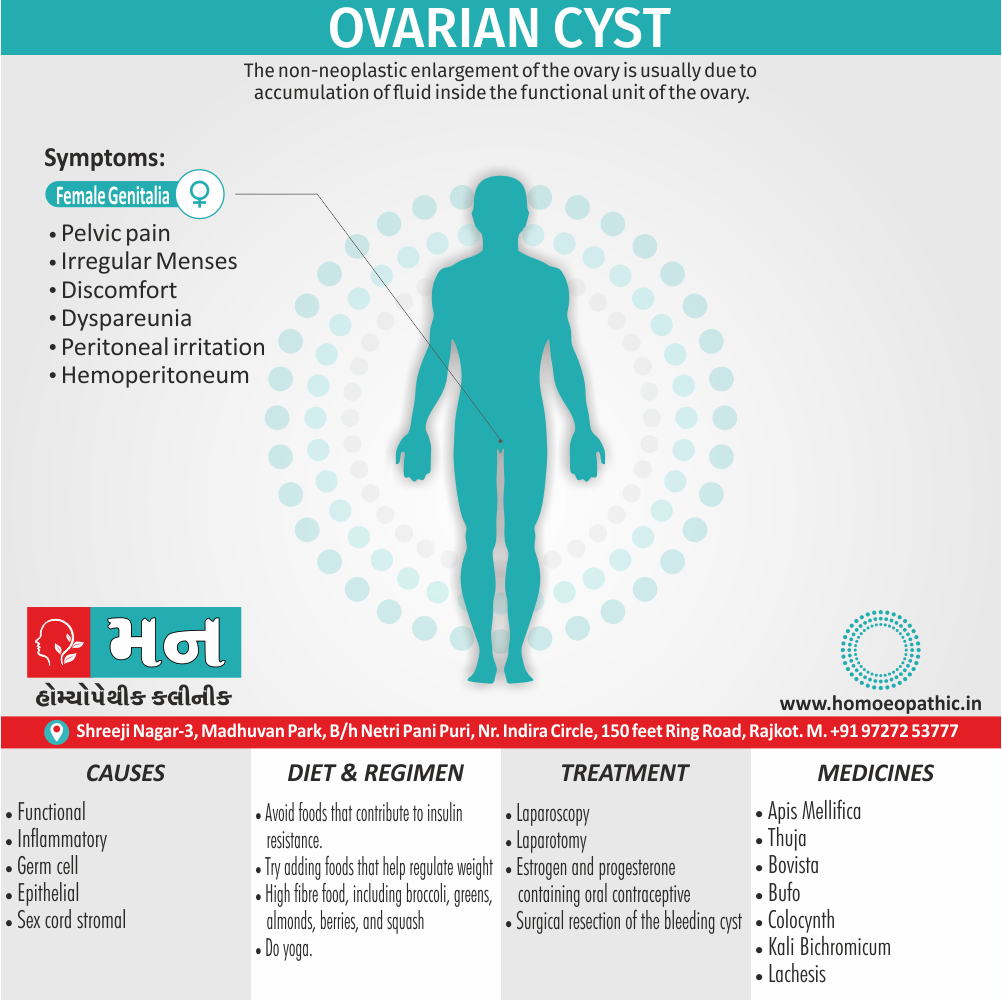
Ovarian Cyst is the non-neoplastic enlargement of the ovary and it is usually due to accumulation of fluid inside the functional unit of the ovary. [1]
There aren’t exact synonyms for the medical term “ovarian cyst,” as it refers to a specific type of fluid-filled sac within the ovary. However, depending on the type of cyst, different terms might be used:
- Follicular cyst: The most common type of ovarian cyst, which forms during ovulation when a follicle fails to release an egg.
- Corpus luteum cyst: Develops from a follicle after it releases an egg. It usually resolves on its own within a few weeks.
- Endometrioma (chocolate cyst): Endometriosis is a condition where tissue similar to the lining of the uterus grows outside the uterus. If this tissue implants on the ovary, it can form an endometrioma. These cysts can bleed internally each month during menstruation, causing the characteristic “chocolate” appearance.
- Dermoid cyst: A rare type of cyst that can contain hair, skin, or other tissues.
- Cystadenoma: A benign (noncancerous) tumor that can grow large. There are two main types: serous cystadenoma and mucinous cystadenoma.
- Functional cyst: The most common type of ovarian cyst, which forms during the menstrual cycle and usually disappears on its own.
These are just some of the most common types of ovarian cysts. If you are concerned that you may have an ovarian cyst, it is important to see a doctor for diagnosis and treatment.
Overview
Epidemiology
Causes
Types
Risk Factors
Pathogenesis
Pathophysiology
Clinical Features
Sign & Symptoms
Clinical Examination
Diagnosis
Differential Diagnosis
Complications
Investigations
Treatment
Prevention
Homeopathic Treatment
Diet & Regimen
Do’s and Don’ts
Terminology
References
Also Search As
Overview
Overview of Ovarian Cyst
- Functional cysts are common in young girls, adolescents and women in their reproductive years.
- Germ cell tumours occur more commonly in young women whereas benign epithelial tumours occur more commonly in older women. [2]
Epidemiology
Epidemiology of ovarian cysts
In India presents with some unique challenges due to factors such as socioeconomic conditions and access to healthcare. While a definitive national prevalence study is still needed, several regional and hospital-based studies provide valuable insights:
- A study by AIIMS (All India Institute of Medical Sciences) suggested that 1 in every 4 Indian women suffers from ovarian cysts. [Image: AIIMS hospital, New Delhi] [8]
- Another study found the overall prevalence of ovarian cysts in women aged 18-45 years in Bangladesh to be 17.6%. Risk factors included advanced age (35-45 years), use of certain hormonal contraceptives, and family history of ovarian cysts or cancer. [Image: Map highlighting Bangladesh] [9]
- A retrospective study conducted in a tertiary care hospital in North East India from January 2016 to April 2017 analyzed 101 patients operated for ovarian cysts. The most common clinical presentation was lower abdominal pain. There were 11 (10.9%) malignant cases, 4 (4%) were intermediate grade and borderline in nature, and 85 (84.1%) cases were benign in nature.Mature cystic teratoma was the most common (20.8%) histopathological diagnosis followed by serous cystadenoma (19.8%). [10]
Causes
Causes of Ovarian Cyst
Functional e.g.
- Follicular cyst
- Corpus luteal cyst
- Theca luteal cyst
Inflammatory e.g.
- Tubo-ovarian abscess
- Endometrioma
Germ cell e.g.
- Benign teratoma
Epithelial e.g.
- Serous cystadenoma
- Mucinous cystadenoma
- Brenner tumour
Sex cord stromal e.g.
- Fibroma
- Thecoma [2]
Types
Classification of Ovarian Cyst
- Follicular cysts
- Corpus luteum cyst
- Theca lutein and granulosa lutein cysts
- Polycystic ovarian syndrome
- Endometrial cyst (in other words, chocolate cyst). [1]
Risk Factors
Risk Factors of Ovarian Cysts
Several factors can increase a woman’s risk of developing ovarian cysts. These include:
- Hormonal Imbalances: Conditions that affect hormone levels, such as polycystic ovary syndrome (PCOS) or hypothyroidism, can contribute to cyst formation.
- Fertility Treatments: Drugs used to stimulate ovulation, like clomiphene citrate, can increase the risk of developing ovarian cysts.
- Endometriosis: This condition, where tissue similar to the lining of the uterus grows outside the uterus, can sometimes lead to the formation of endometriomas (chocolate cysts) on the ovaries.
- Pelvic Infections: Severe pelvic infections can sometimes spread to the ovaries, causing cysts.
- Pregnancy: Occasionally, a follicle that releases an egg during ovulation may persist and develop into a corpus luteum cyst.
- Previous Ovarian Cysts: Women who have had ovarian cysts in the past are more likely to develop them again. [11]
Pathogenesis
Pathogenesis of Ovarian Cysts
The pathogenesis, or development, of ovarian cysts can vary based on the type of cyst. Here’s a brief overview:
1. Functional Cysts:
- Follicular Cysts: These arise when a dominant follicle fails to rupture and release an egg during ovulation.The follicle continues to grow, accumulating fluid and forming a cyst.
- Corpus Luteum Cysts: After ovulation, the ruptured follicle transforms into the corpus luteum, producing progesterone. If the corpus luteum fails to regress, it can fill with fluid or blood and form a cyst.
2. Non-functional Cysts:
- Endometriomas: These are cysts filled with endometrial tissue (similar to the lining of the uterus) that implants on the ovary. They are associated with endometriosis.
- Dermoid Cysts (Teratomas): These arise from germ cells and can contain various tissues, such as hair, teeth, or skin.
- Cystadenomas: These are benign epithelial tumors that can grow large and contain fluid. [12]
Pathophysiology
Pathophysiology of Ovarian Cysts
The pathophysiology, or the functional changes associated with ovarian cysts, can differ depending on the type of cyst:
Functional Cysts:
- Follicular Cysts: Normally, during ovulation, a dominant follicle ruptures to release an egg. If this rupture doesn’t occur, the follicle can continue to grow and fill with fluid, forming a follicular cyst.
- Corpus Luteum Cysts: After ovulation, the ruptured follicle transforms into the corpus luteum, which produces progesterone to support a potential pregnancy. If pregnancy doesn’t occur, the corpus luteum typically regresses. However, if it doesn’t regress and continues to fill with fluid or blood, it forms a corpus luteum cyst.
Non-functional Cysts:
- Endometriomas (Chocolate Cysts): These cysts arise from endometriosis, where endometrial tissue (similar to the lining of the uterus) implants outside the uterus, including on the ovaries. The implanted tissue responds to hormonal changes, causing bleeding and inflammation within the cyst, leading to its characteristic dark, “chocolate” appearance.
- Dermoid Cysts (Teratomas): These are germ cell tumors that can contain various tissues, such as hair, teeth, or skin. They arise from totipotent germ cells that have the ability to differentiate into various tissue types.
- Cystadenomas: These are benign epithelial tumors that arise from the surface epithelium of the ovary. They can grow large and are often filled with fluid. The exact cause of their development is not fully understood, but it’s thought to involve abnormal cell growth and proliferation. [13]
Clinical Features
Clinical Features of Ovarian Cysts
Ovarian cysts can present with a variety of clinical features, or sometimes, no symptoms at all. Here are some of the common clinical features:
- Asymptomatic: Many ovarian cysts are discovered incidentally during routine pelvic examinations or imaging studies.
- Pelvic Pain or Discomfort: This can range from a dull ache to sharp, stabbing pain, and may be localized to one side of the lower abdomen or pelvis. Pain can be associated with ovulation, cyst rupture, or torsion (twisting) of the ovary.
- Menstrual Irregularities: Changes in menstrual bleeding patterns, such as heavier flow, irregular periods, or bleeding between periods, can sometimes occur.
- Pelvic Pressure or Fullness: A feeling of pressure or fullness in the pelvis, especially with large cysts.
- Bloating or Abdominal Distension: The abdomen may appear swollen or feel bloated.
- Urinary Symptoms: Frequent urination, urgency, or difficulty emptying the bladder can occur if the cyst presses on the bladder.
- Gastrointestinal Symptoms: Constipation or changes in bowel habits can occur if the cyst presses on the rectum or intestines. [14]
Sign & Symptoms
Sign & Symptoms of Ovarian Cyst
- Pelvic pain
- Discomfort
- Dyspareunia
Cyst can even rupture leading to i.e.
- Peritoneal irritation
- Peritonitis
- Hemoperitoneum
- Hypovolemia [3]
Clinical Examination
Clinical / Physical Examination For Ovarian Cyst
Pelvic examination usually discloses an enlarged, tender, cystic, or solid adnexal mass. [5]
A thorough clinical examination is crucial in assessing a patient with suspected ovarian cyst. It includes:
- Inspection: Look for any abdominal distension or asymmetry.
- Palpation: Gently palpate the abdomen to assess for tenderness, masses, or any signs of peritoneal irritation (guarding or rebound tenderness).
- Percussion: Percuss the abdomen to help delineate the size and location of any masses and to assess for ascites (fluid in the abdomen).
Pelvic Examination:
- Bimanual Examination: This involves inserting two fingers into the vagina and gently palpating the pelvic organs with the other hand placed on the abdomen. The examiner assesses the size, shape, mobility, and tenderness of the ovaries and uterus. An ovarian cyst may be felt as a smooth, mobile, and sometimes tender adnexal mass.
- Speculum Examination: A speculum is inserted into the vagina to visualize the cervix and vaginal walls. This can help rule out other causes of pelvic pain or bleeding. [15]
Diagnosis
Diagnosis of Ovarian Cyst
- In general, The diagnosis relies on comparison of the torted ovary with the opposite side.
- The ovary appears congested also oedematous; additionally multiple small cysts may be seen at the periphery of a markedly enlarged ovary. [4]
- Chocolate cysts- They can reach 10 cm in size and have a characteristic ‘Ground Glass’ appearance on USS. [2]
Differential Diagnosis
Differential Diagnoses of Ovarian Cyst
Here are some common differential diagnoses:
Other Gynecologic Conditions:
- Ectopic Pregnancy: This is a life-threatening condition where a fertilized egg implants outside the uterus, often in the fallopian tube. It can cause pelvic pain and bleeding, similar to a ruptured ovarian cyst.
- Pelvic Inflammatory Disease (PID): This is an infection of the female reproductive organs, often caused by sexually transmitted infections.It can present with pelvic pain, fever, and abnormal vaginal discharge.
- Endometriosis: This condition involves the growth of endometrial tissue (similar to the lining of the uterus) outside the uterus. It can cause pelvic pain, painful periods, and infertility.
- Uterine Fibroids: These are benign tumors that grow in the uterus. They can cause pelvic pain, heavy menstrual bleeding, and pressure on the bladder or rectum.
Non-Gynecologic Conditions:
- Appendicitis: Inflammation of the appendix can cause right lower abdominal pain, which may be mistaken for an ovarian cyst on the right side.
- Diverticulitis: Inflammation or infection of diverticula (small pouches) in the colon can cause left lower abdominal pain.
- Irritable Bowel Syndrome (IBS): This functional disorder of the gastrointestinal tract can cause abdominal pain, bloating, and changes in bowel habits.
- Kidney Stones: These can cause severe flank pain that may radiate to the groin or lower abdomen. [16]
Complications
Complications of Ovarian Cysts
While most ovarian cysts are benign and resolve on their own, some can lead to complications that require medical attention.
These complications include:
Ovarian Torsion:
- This occurs when a cyst grows large enough to cause the ovary to twist on its blood supply, leading to decreased or complete loss of blood flow to the ovary.It is a medical emergency that can result in severe pain, nausea, vomiting, and potentially, the loss of the ovary if not treated promptly.
Cyst Rupture:
- A cyst can rupture, spilling its contents into the abdominal cavity.This can cause sudden, severe pain and internal bleeding. Large cysts are more likely to rupture, especially after strenuous activity or intercourse.
Infection:
- In rare cases, a cyst can become infected, leading to fever, chills, and worsening pelvic pain. This requires prompt antibiotic treatment.
Malignancy:
- While most ovarian cysts are benign, a small percentage can be malignant (cancerous).Certain types of cysts, such as those that are complex or those that occur in postmenopausal women, carry a higher risk of malignancy. [14]
Investigations
Investigation of Ovarian Cyst
Ultrasound examination i.e.:
The following information should be gained from an ultrasound examination of an ovarian tumour.
- The side of the lesion- either Unilateral or Bilateral.
- The size – Three dimensions if possible.
- Consistency – either Cystic or Solid
- Internal structures – Unilocular, Multilocular, Complex.
- Nature of septa- either Thin or Thick.
- Internal wall – Smooth, Irregular presence of papillary projections
- Echogenicity [4]
Treatment
Treatment of Ovarian Cyst
- Laparoscopy
- Laparotomy [1]
- Alternatively, an estrogen and progesterone containing oral contraceptive may be given to suppress gonadotropin stimulation of the cyst.
- Surgical resection of the bleeding cyst. [5]
Prevention
Prevention of Ovarian Cysts
While there’s no foolproof way to prevent all ovarian cysts, certain measures might help reduce the risk or recurrence of some types of cysts:
Hormonal Contraception:
- Oral contraceptive pills (OCPs) can help regulate ovulation and reduce the risk of developing functional cysts (follicular and corpus luteum cysts).
Early Diagnosis and Treatment of Endometriosis:
- Managing endometriosis can help reduce the risk of endometriomas (chocolate cysts).
Prompt Treatment of Pelvic Infections:
- Seeking prompt medical attention for any pelvic infections can help prevent the spread of infection to the ovaries and reduce the risk of cyst formation.
Regular Pelvic Exams:
- Routine pelvic exams can help detect ovarian cysts early, even when they are asymptomatic. Early detection allows for monitoring and timely intervention if needed. [11]
Homeopathic Treatment
Homeopathic Treatment of Ovarian Cyst
Homeopathy treats the person as a whole. It means that homeopathic treatment focuses on the patient as a person, as well as his pathological condition. The homeopathic medicines selected after a full individualizing examination and case-analysis.
which includes
- The medical history of the patient,
- Physical and mental constitution,
- Family history,
- Presenting symptoms,
- Underlying pathology,
- Possible causative factors etc.
A miasmatic tendency (predisposition/susceptibility) also often taken into account for the treatment of chronic conditions.
What Homoeopathic doctors do?
A homeopathy doctor tries to treat more than just the presenting symptoms. The focus is usually on what caused the disease condition? Why ‘this patient’ is sick ‘this way’?.
The disease diagnosis is important but in homeopathy, the cause of disease not just probed to the level of bacteria and viruses. Other factors like mental, emotional and physical stress that could predispose a person to illness also looked for. No a days, even modern medicine also considers a large number of diseases as psychosomatic. The correct homeopathy remedy tries to correct this disease predisposition.
The focus is not on curing the disease but to cure the person who is sick, to restore the health. If a disease pathology not very advanced, homeopathy remedies do give a hope for cure but even in incurable cases, the quality of life can greatly improved with homeopathic medicines.
Homeopathic Medicines for Ovarian Cyst:
The homeopathic remedies (medicines) given below indicate the therapeutic affinity but this is not a complete and definite guide to the homeopathy treatment of this condition. The symptoms listed against each homeopathic remedy may not be directly related to this disease because in homeopathy general symptoms and constitutional indications also taken into account for selecting a remedy, potency and repetition of dose by Homeopathic doctor.
So, here we describe homeopathic medicine only for reference and education purpose. Do not take medicines without consulting registered homeopathic doctor (BHMS or M.D. Homeopath).
Medicines:
Apis Mellifica:
- Ovaries; either numb, or congested, with suppressed menses.
- Ovarian cysts.
- Burning, stitching pains in either ovaries or uterus.
- Worse – specifically Heat of room, of weather, of fire, hot drinks, bath, bed, touch, even of hair, pressure, after sleep, lying down, suppressed eruptions, 4 m. On the other hand, Better – cool air, cool bathing, uncovering, slight expectoration, motion, sitting erect.
Thuja:
- Left ovary inflamed, with tearing pain < menses.
- Ovarian cysts.
- Erosion especially of cervix.
- Cauliflower excrescences bleeding easily.
- Worse -Cold, damp, specifically heat of bed, Periodically-3 a.m. and 3 p.m., yearly, increasing moon, moonlight, during menses, urinating, tea, coffee, sweets, fat food, onions, sun, chewing, bright light, mercury, syphilis, stretching, coitus, closing eyes. whereas Better – warm, wrapping, air, wind, free secretions, sneezing, motion, crossing legs, touch, drawing up limbs, rubbing, scratching.
Bovista:
- Occasional show between the periods.
- Parovarian cyst.
- In detail, Thick, acrid, yellow-green leucorrhea, leaving green spots on linen aggravation while walking; after menses.
- Worse – menses, full moon, hot weather, getting warm, cold food, wine, coffee. On the other hand, Better – bending double, hot food, eating
Bufo:
- Tumours also polypi of uterus.
- Moreover, Ulcers of cervix.
- Burning in ovaries also uterus.
- Cord like swelling from groin to knee.
- Violent pain in mammae aggravation specifically at night.
- Besides this, Hydatids in ovaries.
- Offensive purulent leucorrhea.
- Worse – warm room, sexual excitement, masturbation, least motion, injuries. Whereas Better – bleeding, cool air, cold bathing, feet in hot water
Colocynth:
- Clutching pain in ovarian region amelioration specifically by drawing up double, with restlessness.
- Ovarian cysts, tumours.
- Worse -Emotion, Vexation, chagrin, anger, lying on painless side, night, in bed, draughts, taking cold, before also after urination. On other hand, Better -Hard pressure, on edge, heat, rest, gentle motion, after stool or flatus, doubling up.
Kali Bichromicum:
- Basically, Cystic tumours of ovaries.
- Fibroids
- Sub-involution.
- Sexual feeling lost, aversion to coition.
- Worse – mental exertion, emotions-anger, fright, worry, grief, periodically, especially night, 2 a.m., summer, new moon, sexual excess, puberty, unsatisfied sexual desire.
- Better – when busy mentally and physically
Lachesis:
- Left ovary, swollen, indurated, painful, must lift covers.
- Generally, Uterine and ovarian pains specifically ameliorated by flow of blood.
- Uterus feels as if the os is open.
- Climacteric troubles; palpitation, flushes of heat, haemorrhages etc. In detail, Ovarian tumours
- Worse – after sleep, Lachesis sleeps into aggravation, ailments that come especially on during sleep, left side, in the spring, warm bath, pressure or constriction, hot drinks, closing eyes. Whereas, Better – appearance of discharges, warm applications. [6]
Diet & Regimen
Diet & Regimen of Ovarian Cyst
Avoid foods that contribute to insulin resistance. These include refined carbohydrates and highly processed foods, for example:
- White bread
- White potatoes
- Anything made with white flours
- Pastries, desserts, muffins, also other sugary foods
Instead of filling up on processed carbs, try adding foods that help regulate weight and fight insulin resistance.
Healthy options include i.e.:
- High fibre food, including broccoli, greens, almonds, berries, also squash
- Lean proteins, including fish, tofu, also chicken
- Anti-inflammatory food and spices, including tomatoes, turmeric, kale, olive oil, also almonds. [7]
Do’s and Don’ts
Do’s & Don’ts
Ovarian Cyst do’s & don’ts
Do’s:
Schedule regular pelvic exams:
This is crucial for early detection, even if you are asymptomatic.
Pay attention to your body:
Be mindful of any changes in your menstrual cycle, pelvic pain, or other unusual symptoms.
Seek medical advice if you experience:
Follow your doctor’s recommendations:
This might include “watchful waiting” with repeat ultrasounds, hormonal therapy, or surgery.
Maintain a healthy lifestyle:
Eat a balanced diet, exercise regularly, and manage stress, as these can support overall health and hormonal balance.
Ask questions:
If you are diagnosed with an ovarian cyst, don’t hesitate to ask your doctor about the type of cyst, treatment options, and potential complications.
Don’ts:
Ignore persistent or worsening symptoms:
Seek medical advice if you experience new or worsening pelvic pain or other concerning symptoms.
Self-diagnose:
Only a healthcare professional can accurately diagnose and assess an ovarian cyst.
Panic:
Most ovarian cysts are benign and resolve on their own.
Engage in strenuous activity if experiencing pain:
This can potentially worsen symptoms or lead to complications like cyst rupture or torsion.
Hesitate to seek a second opinion:
If you are unsure about your diagnosis or treatment plan, it’s always okay to seek another medical opinion.
Terminology
Terminology
Here are some key terminologies commonly encountered when discussing ovarian cysts, along with their meanings:
General Terminologies :
Ovarian Cyst:
A fluid-filled sac or pocket that develops within or on the surface of an ovary.
Benign:
Non-cancerous; most ovarian cysts are benign.
Malignant:
Cancerous; a small percentage of ovarian cysts can be malignant.
Functional Cysts:
These are the most common type of ovarian cyst and are formed as a normal part of the menstrual cycle. They include:
Follicular Cyst:
Occurs when a follicle fails to rupture and release an egg during ovulation.
Corpus Luteum Cyst:
Forms from the corpus luteum (the structure that remains after ovulation) if it fails to regress.
Non-functional Cysts:
These cysts arise from other causes besides the normal menstrual cycle. They include:
Endometrioma (Chocolate Cyst):
A cyst filled with endometrial tissue (similar to the lining of the uterus), associated with endometriosis.
Dermoid Cyst (Teratoma):
A cyst that can contain various tissues, such as hair, teeth, or skin.
Cystadenoma:
A benign epithelial tumor that can grow large and contain fluid.
Ovarian Torsion:
Twisting of the ovary on its blood supply, usually due to a large cyst, which can cause severe pain and potentially lead to loss of the ovary.
Cyst Rupture:
When a cyst breaks open, spilling its contents into the abdominal cavity, which can cause pain and internal bleeding.
Pelvic Inflammatory Disease (PID):
An infection of the female reproductive organs, often caused by sexually transmitted infections, which can present with pelvic pain and other symptoms.
Endometriosis:
A condition where endometrial tissue grows outside the uterus, causing pain and potentially leading to the formation of endometriomas.
Ultrasound:
An imaging technique that uses sound waves to create pictures of internal organs, commonly used to diagnose and monitor ovarian cysts.
Laparoscopy:
A minimally invasive surgical procedure used to diagnose and treat various conditions, including ovarian cysts.
CA-125:
A blood test that measures the level of a protein called CA-125, which can be elevated in certain conditions, including ovarian cancer.
Fundamental Principles of Homeopathy:
“Similia Similibus Curentur” (Like Cures Like):
This central principle suggests that a substance that can cause symptoms in a healthy person can also cure similar symptoms in a sick person when administered in a highly diluted form.
Law of Minimum Dose:
This principle states that the lower the dose of a homeopathic remedy, the greater its effectiveness. Remedies are prepared through a process of serial dilution and succussion (vigorous shaking), believed to enhance their therapeutic power.
Individualization:
Homeopathic treatment is tailored to the individual patient, considering their unique physical, mental, and emotional symptoms.
Vital Force:
Homeopathy posits the existence of a vital force or energy that animates the body and maintains health. Disease is seen as a disturbance of this vital force, and homeopathic remedies aim to restore balance.
Key Terminologies:
Remedy:
A substance prepared according to homeopathic principles and used to treat specific symptoms or conditions.
Proving:
A systematic process of observing the symptoms produced by a substance in healthy individuals to determine its potential therapeutic uses.
Repertory:
A reference book listing symptoms and the remedies associated with them, used by homeopaths to select appropriate remedies.
Materia Medica:
A collection of detailed information about the properties and therapeutic uses of homeopathic remedies.
Potency:
The degree of dilution and succussion of a homeopathic remedy.
Aggravation:
A temporary worsening of symptoms after taking a remedy, sometimes considered a positive sign of healing.
Homeopathic Remedies:
- Homeopathic remedies are derived from various sources, including plants, minerals, and animal products.
- Some commonly used remedies include:
- Arnica montana (for injuries and bruises)
- Belladonna (for fever and inflammation)
- Chamomilla (for teething and irritability in children)
- Nux vomica (for digestive complaints and stress)
- Pulsatilla (for hormonal imbalances and emotional sensitivity)
References
References use for Article Ovarian Cyst
[1] DC Dutta’s Textbook of Gynecology (PDF Drive)
[2] Gynecology by Ten Teachers
[3] Sudha Salhan – Textbook of Gynecology
[4] Dewhurst_s_Textbook_of_Obstetrics _and_Gynaecology_7th_ed
[5]Obstetrics_and_Gynecology__Sixth_ Edition__Obstetrics_and_Gynecology__ Beckman
[6] Homeopathic Body System Prescribing- A Practical Workbook of Sector Remedies.
[7] https://www.healthline.com/health/womens-health/ovarian-cyst-treatment-at-home#diet
[8] AIIMS study: Unfortunately, specific details regarding the AIIMS study (year of publication, etc.) are not readily available online.
[9] Bangladesh study: Prevalence and Risk Factors of Ovarian Cysts in Women Aged 18-45 Years in Bangladesh (Journal of Advances in Reproductive & Gynecological Obstetrics, 2023)
[10] North East India study: Clinico-pathological profile of ovarian cysts in a tertiary care hospital (Indian Journal of Reproductive and Contraceptive Obstetrics and Gynecology, 2017)
[11] Comprehensive Gynecology (7th Edition) by Linda C. Giudice, John O. Schorge, et al. (2017, Elsevier)
[12] Williams Gynecology (4th Edition) by Barbara L. Hoffman, John O. Schorge, et al., 2020, McGraw Hill Professional
[13] Novak’s Gynecology ( 16th Edition ) by Jonathan S. Berek, Evelyn Nicole F. Peck, et al. (2020, Wolters Kluwer)
[14] Te Linde’s Operative Gynecology (13th Edition)., John O. Schorge, Joseph I. Schaffer, et al., (2020, Wolters Kluwer)
[15] Clinical Gynecologic Endocrinology and Infertility (9th Edition) by Marc A. Fritz, Leon Speroff , (2019, Wolters Kluwer)
[16] Danforth’s Obstetrics and Gynecology (11th Edition), by Ronald S. Gibbs, F. Gary Cunningham, et al.(2019, Wolters Kluwer)
Also Search As
Also Search As
Here are some effective ways people can search for homeopathic articles on Ovarian Cysts:
1. Utilize Search Engines:
- Specific Keywords: Use precise search terms like “homeopathy ovarian cysts,” “homeopathic treatment for ovarian cysts,” or “homeopathic remedies for ovarian cysts.”
- Include Synonyms: Search for related terms like “polycystic ovaries,” “chocolate cysts,” or “functional cysts.”
- Specify the Type of Information: Add words like “case studies,” “research articles,” or “clinical trials” to narrow down your search.
- Refine Search: Use advanced search options like quotation marks for exact phrases or minus signs to exclude certain terms.
2. Explore Homeopathic Resources:
- Homeopathic Journals and Websites: Visit websites or online libraries of reputable homeopathic journals like “The American Homeopath,” “The British Homeopathic Journal,” or “Homeopathy.”
- Homeopathic Organizations: Check the websites of organizations like the National Center for Homeopathy or the American Institute of Homeopathy for articles and resources.
- Homeopathic Practitioner Websites: Many homeopathic practitioners have informative articles on their websites.
3. Consult a Librarian:
- Medical Libraries: If you have access to a medical library, ask a librarian for assistance in finding relevant homeopathic literature.
4. Ask a Homeopathic Practitioner:
- Recommendations: Your homeopath can likely recommend specific articles or resources based on your individual case.
Example Search Queries:
- “homeopathic treatment of ovarian cysts case study”
- “clinical trials homeopathy polycystic ovaries”
- “research articles on homeopathy for chocolate cysts”
- “homeopathic remedies for functional cysts”
- “National Center for Homeopathy ovarian cysts”
There are several ways to search for information on Ovarian Cysts, each with its own strengths and potential uses:
1. Online Search Engines:
- Advantages: Easily accessible, wide range of information available, quick results.
- How to search:
- Use general search terms like “ovarian cysts,” “symptoms of ovarian cysts,” or “treatment for ovarian cysts.”
- Specify the type of cyst (e.g., “dermoid cyst,” “endometrioma”) for more targeted results.
- Use quotation marks for exact phrases, like “ovarian cyst rupture.”
- Add location-specific terms (e.g., “ovarian cysts in India”) for locally relevant information.
- Resources: Google, Bing, DuckDuckGo, etc.
2. Medical Websites and Databases:
- Advantages: Reliable information from trusted sources, often peer-reviewed articles and studies.
- How to search:
- Visit websites of reputable health organizations like Mayo Clinic, Cleveland Clinic, WebMD, etc.
- Search within medical databases like PubMed or Google Scholar for research articles and clinical trials.
- Use medical terminology for more specific results.
- Resources: Mayo Clinic, Cleveland Clinic, WebMD, PubMed, Google Scholar, etc.
3. Books and Libraries:
- Advantages: In-depth information, access to medical textbooks and journals.
- How to search:
- Visit your local library or medical library.
- Search the library catalog for books on gynecology, women’s health, or specific topics related to ovarian cysts.
- Consult with a librarian for assistance.
- Resources: Public libraries, medical libraries, university libraries.
4. Consult a Healthcare Professional:
- Advantages: Personalized advice and guidance from a qualified expert.
- How to search:
- Schedule an appointment with your gynecologist or primary care physician.
- Ask specific questions about your concerns or symptoms.
- Discuss treatment options and preventive measures.
Frequently Asked Questions (FAQ)
What is Ovarian Cyst?
Ovarian Cyst is the non-neoplastic enlargement of the ovary and it is usually due to accumulation of fluid inside the functional unit of the ovary.
Are ovarian cysts dangerous?
Most ovarian cysts are benign (non-cancerous) and resolve on their own without treatment. However, some cysts can cause complications like torsion (twisting of the ovary) or rupture, which require medical attention.
What are the types of Ovarian Cyst?
- Follicular cysts
- Corpus luteum cyst
- Theca lutein and granulosa lutein cysts
- Polycystic ovarian syndrome
- Endometrial cyst
Give the symptoms of Ovarian Cyst?
- Pelvic pain
- Discomfort
- DyspareuniaCyst can even rupture leading to:
- Peritoneal irritation
- Peritonitis
- Hemoperitoneum
- Hypovolemia
What is the main cause of Ovarian Cyst?
- Follicular cyst
- Corpus luteal cyst
- Theca luteal cyst
- Tubo-ovarian abscess
- Endometrioma
- Benign teratoma
- Serous cystadenoma
- Mucinous cystadenoma
- Brenner tumour
Can homeopathy help with ovarian cysts?
Homeopathy aims to stimulate the body’s self-healing abilities and address the underlying imbalances that contribute to cyst formation.
Some homeopathic remedies are believed to help shrink cysts, regulate hormonal function, and alleviate symptoms associated with ovarian cysts.
Is homeopathic treatment safe for ovarian cysts?
Homeopathic remedies are generally considered safe when prescribed by a qualified practitioner.
However, it’s important to inform your healthcare provider about any homeopathic treatment you’re considering, especially if you have a diagnosed ovarian cyst.
How does a homeopath choose the right remedy for ovarian cysts?
A homeopath will conduct a detailed case-taking, considering the patient’s physical, mental, and emotional symptoms, as well as their medical history and family history.
Based on this information, they will select the most appropriate remedy.
How long does it take to see results with homeopathic treatment for ovarian cysts?
The response to homeopathic treatment varies from person to person.
Some individuals may experience improvement in symptoms within a few weeks, while others may require a longer duration of treatment.
Homeopathic Medicines used by Homeopathic Doctors in treatment of Ovarian Cyst?
Homoeopathic Medicines for Ovarian Cyst
- Apis Mellifica
- Thuja
- Bovista
- Bufo
- Colocynth
- Kali Bichromicum
- Lachesis
Ovarian Cyst is the non-neoplastic enlargement of the ovary and it is usually due to accumulation of fluid inside the functional unit of the ovary.
Most ovarian cysts are benign (non-cancerous) and resolve on their own without treatment. However, some cysts can cause complications like torsion (twisting of the ovary) or rupture, which require medical attention.
- Follicular cysts
- Corpus luteum cyst
- Theca lutein and granulosa lutein cysts
- Polycystic ovarian syndrome
- Endometrial cyst
- Pelvic pain
- Discomfort
- DyspareuniaCyst can even rupture leading to:
- Peritoneal irritation
- Peritonitis
- Hemoperitoneum
- Hypovolemia
- Follicular cyst
- Corpus luteal cyst
- Theca luteal cyst
- Tubo-ovarian abscess
- Endometrioma
- Benign teratoma
- Serous cystadenoma
- Mucinous cystadenoma
- Brenner tumour
Homeopathy aims to stimulate the body’s self-healing abilities and address the underlying imbalances that contribute to cyst formation.
Some homeopathic remedies are believed to help shrink cysts, regulate hormonal function, and alleviate symptoms associated with ovarian cysts.
Homeopathic remedies are generally considered safe when prescribed by a qualified practitioner.
However, it’s important to inform your healthcare provider about any homeopathic treatment you’re considering, especially if you have a diagnosed ovarian cyst.
A homeopath will conduct a detailed case-taking, considering the patient’s physical, mental, and emotional symptoms, as well as their medical history and family history.
Based on this information, they will select the most appropriate remedy.
The response to homeopathic treatment varies from person to person.
Some individuals may experience improvement in symptoms within a few weeks, while others may require a longer duration of treatment.
Homoeopathic Medicines for Ovarian Cyst
- Apis Mellifica
- Thuja
- Bovista
- Bufo
- Colocynth
- Kali Bichromicum
- Lachesis