Ranunculus Bulbosus
Overview:
From the humble field buttercup arises the homeopathic remedy Ranunculus bulbosus, a balm for those whose bodies are acutely attuned to the atmosphere. It addresses a particular kind of suffering where the muscles and nerves, especially around the delicate cage of the ribs, register every shift in damp or stormy weather with sharp, stitching pains. This profound sensitivity extends from the bruised soreness of intercostal neuralgia to the fiery nerve paths of shingles, offering solace to the patient who flinches at the slightest touch and feels the coming storm in their very bones.
Memory Tips for Guiding Symptoms
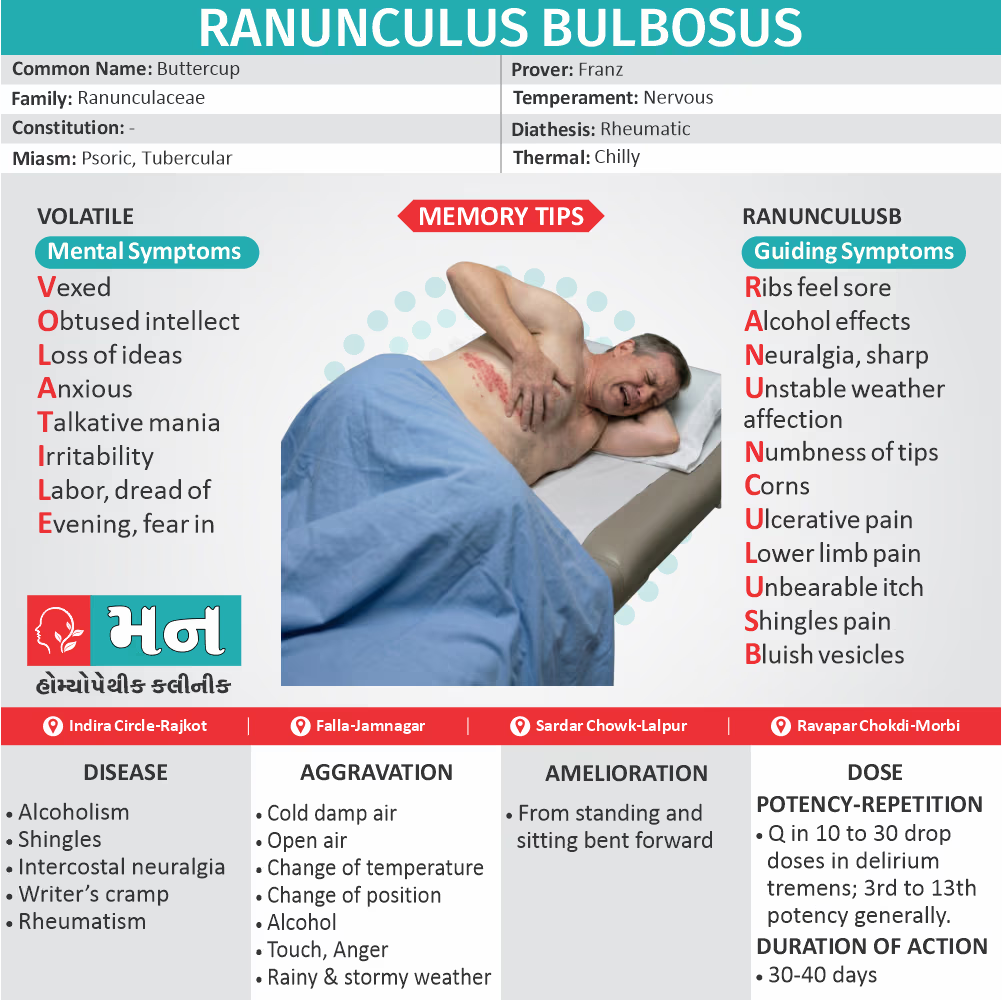
Hi Friends Let’s memorize guiding symptoms of Ranunculus Bulbosus through name of Medicine ‘RANUNCULUS B’.
R
A
N
U
N
C
U
L
U
S
B
R
R – Ribs feel sore
Description: A hallmark symptom is the sensation of bruised soreness in the chest, particularly in the ribs, sternum, and intercostal spaces. Patients experience sharp, stitching, or shooting pains that are intensely aggravated by the slightest motion, touch, or deep inspiration. This makes it a primary remedy for intercostal rheumatism, pleurisy, and chest wall injuries where the muscles feel beaten.
Reference: Boericke, William. Pocket Manual of Homoeopathic Materia Medica & Repertory.
A
A – Alcohol effects
Description: Ranunculus b. is indicated for various ailments stemming from the abuse of alcoholic beverages. It is particularly noted for treating spasmodic hiccough and the neurological effects seen in delirium tremens. It addresses the nervous system’s hypersensitivity and tremors resulting from chronic alcohol use.
Reference: Clarke, J.H. A Dictionary of Practical Materia Medica
N
N – Neuralgia, sharp
Description: This remedy is famous for its action on sharp, stabbing neuralgic pains, especially intercostal neuralgia. The pain follows the nerve’s path, is intensely sharp, and is triggered or worsened by movement, breathing, or changes in weather. It feels like a knife is being stabbed into the chest wall.
Reference: A Synoptic Key of the Materia Medica by Cyrus Maxwell Boger
U
U – Unstable weather
Description: The patient is extremely sensitive to atmospheric changes. All complaints, from rheumatic pains to skin eruptions, are markedly aggravated by damp, stormy, or cold weather. They can often predict an approaching storm due to the worsening of their symptoms, making them a human “barometer.”
Reference: Lectures On Homoeopathy By Kent J. T.
N
N – Numbness of tips
Description: A peculiar symptom is the crawling and tingling sensation in single parts, especially in the fingertips and toes, which feel as if they have “fallen asleep.” This numbness can accompany the neuralgic or rheumatic pains, indicating a direct effect on peripheral nerves.
Reference: Phatak, S.R. A Concise Materia Medica of Homoeopathic Remedies.
C
C – Corns
Description: Ranunculus b. is specific for corns that are exceedingly sensitive and painful. They exhibit a characteristic stinging and burning pain, making them very sore to the touch. The pain is often worse in the evening and from the pressure of shoes.
Reference: Dictionary Of Practical Materia Medica (All 3 Vol.) By Clarke J. H.
U
U – Ulcerative pain
Description: Sticking pain and as of subcutaneous ulceration in the left chest (fifteenth day). Jerking (violent pulsating) in the region of the left short ribs over night, also several times in the daytime (fourth day).
Reference: Encyclopedia Of Pure Materia Medica, Vol.8 By Allen T.F.
L
L – Lower limb pain
Description: Drawing pains along thighs (extending downwards). Spasmodic, piercing pains, and itching in middle of thighs. Great weakness in lower limbs when walking, forenoons. Cracking in knee-joints. Painful stiffness in joints of feet. Cramps in instep. Pulsative lancinations in heels (1., when standing). Pain in heels as if pinched by boots (when boots were off). Violent stitches in. left fourth toe. Sore pain and stitches in tips of toes, between the toes, on dorsa of toes. Pains as
Reference: Dictionary Of Practical Materia Medica (All 3 Vol.) By Clarke J. H.
U
U – Unbearable itch
Description: The skin symptoms are marked by an intense and almost unbearable itching. This itching accompanies the vesicular eruptions and is often worse in the evening or from getting warm. The patient is compelled to scratch, which may offer temporary relief but can lead to burning sensations.
Reference: Kent, J.T. Lectures on Homoeopathic Materia Medica.
S
S – Shingles pain
Description: This is a premier remedy for Herpes Zoster (shingles). It is indicated when there are bluish vesicles that follow the path of a nerve, typically around the trunk. The eruption is preceded, accompanied, and often followed by the classic sharp, stitching, burning, and intensely sore pains of intercostal neuralgia.
Reference: Clarke, J.H. A Dictionary of Practical Materia Medica.
B
B – Bluish vesicles
Description: The color of the skin eruption is a key diagnostic feature. The vesicles, or small blisters, have a distinct bluish or almost black appearance. They appear in clusters, are filled with serum, and are associated with burning-stinging pains, especially in cases of shingles and pemphigus.
Reference: Clarke, J.H. A Dictionary of Practical Materia Medica.
Memory Tips for Mental Symptoms
Hi Friends Let’s memorize Mental symptoms of Ranunculus Bulbosus through name of Medicine ‘VOLATILE’.
V
O
L
A
T
I
L
E
V
V – Vexed
Description: Vexed and inclining to be angry; quarrels and scolds when the slightest cause is offered
Reference: [Encyclopedia Of Pure Materia Medica, Vol.8 By Allen T.F.]
O
O – Obtused intellect
Description: Obtuseness of intellect.
Reference: [Dictionary Of Practical Materia Medica (All 3 Vol.) By Clarke J. H.]
L
L – Loss of ideas
Description: Oppression, with much weeping. Loss of ideas. Difficulty in meditating. Vanishing of thought on reflection.
Reference: [Dictionary Of Practical Materia Medica (All 3 Vol.) By Clarke J. H.]
A
A – Anxious
Description: Anxious. Worse thinking of complaints.
Reference: [Nature’s Materia Medica By Robin Murphy, Md]
T
T – Talkative mania
Description: Delirium tremens, with talkative mania, unusual exertions and powerful efforts to escape from bed.
Reference: [Nature’s Materia Medica By Robin Murphy, Md]
I
I – Irritability
Description: Irritability, with pains.
Reference: [Nature’s Materia Medica By Robin Murphy, Md]
L
L – Labor, dread of
Description: (Dread of labor; he has to make a great effort to bring himself to note down the observations which he has gathered).
Reference: [Encyclopedia Of Pure Materia Medica, Vol.8 By Allen T.F.]
E
E – Evening, fear in
Description: Fearfulness in the evening, she does not want to remain alone, she is afraid she may be haunted by ghosts.
Reference: [Encyclopedia Of Pure Materia Medica, Vol.8 By Allen T.F.]
Introduction
Constitution
Clinical
Mental Symptoms
Guiding Symptoms
Characteristic
Therapeutic Value
Modality
Remedy Relationship
Dose
Reference
Terminologies
Also Search As
Introduction
Introduction of Ranunculus Bulbosus
Common name:
Buttercup [1]
Synonyms
Common field buttercup[2]
Family / Group / Class / Order
Vegetable kingdom
Habit and habitat / Description
The Bulbous Buttercup, Ranunculus bulbosus, is a low-growing perennial herb commonly found in dry pastures, lawns, and open woodlands across Europe and parts of North America. Its most distinguishing feature is the swollen, bulb-like corm at the base of the stem from which it grows each spring. The plant produces deeply cut, three-lobed basal leaves and bears solitary, glossy yellow flowers on hairy stems. A key identifier for this species is its sepals, which are bent sharply downwards, reflexed away from the bright petals. The entire plant contains a caustic, acrid juice that can cause irritation.
Name of prover
Franz
Introduction and history
The caustic and pain producing properties of Ranunculaceae reach their highest expression in the Buttercups themselves. Ranunculus bulbosus forms a constituent of some arsenical plasters used to disperse cancers. It was proved by Franz. Some effects of its external application have been observed, while some symptoms were obtained from results of inhaling the fumes while collecting the plant or when the plant was burned.
Parts used
Mother tincture is prepared from the whole
Preparation
Mother tincture of whole fresh plant; and dilutions
Constitution
Constitution of Ranunculus Bulbosus
Physical make up
No particular Physical make up
Temperament
Nervous
Diathesis
Rheumatic
Relation with heat & cold
Chilly [3]
Miasm
Psoric, Tubercular
Clinical
Clinical conditions of Ranunculus Bulbosus
Alcoholism. Breast, pain below. Chest, pains in. Chilblains. Corns. Delirium tremens. Diarrhoea. Dropsy. Dyspnoea. Eczema. Epilepsy. Feet, pains in. Gastralgia. Hay-fever. Herpes zoster. Hiccough. Hydrocele. Jaundice. Liver, pain in. Neuralgia. Nyctalopia. Ovaries, neuralgia of. Pemphigus. Pleuritic adhesion. Pleurodynia, Rheumatism. Spinal irritation. Warts. Writer’s cramp [4]
Sites of action / Pharmacodynamics
It is a pain remedy, affecting
NERVES, muscles, eyes, serous membranes, CHEST, skin, fingers, toes and left
side
Causation (Causes / Ailments from)
Anger (slightest fit of, causes trembling and dyspnoea),
change of temperature or weather, injury, alcohol.
Physiological action
When used on the skin, this remedy is a strong irritant that causes redness.
When taken internally, it affects muscles and connective tissues, creating symptoms that feel like the sharp chest pains of pleurisy and rheumatism between the ribs.
Patho-physiological changes / Pathogenesis
1. It acts especially upon the muscular tissues and skin, and its most characteristic effects are upon the chest walls, like pleurodynia.
2. The root, the stalk, the leaves and the flowers when chewed cause a burning
pain in the tongue; also pain in teeth and gums.
Mental Symptoms
Characteristic Mental Symptoms (psychology) of Ranunculus Bulbosus
-Restlessness at night.
–Depression, desire to die. Great dejection about his condition, which is out of proportion to the severity of his illness.
-Weeping in evening.
-Irritable and touchy.
-Thinking of complaints aggravates.
–Delirium tremens (Agar, Bell, Caps, Kali-br, Nux-v, Stram).
-Cowardice.
-Fear of ghosts in the evening. Cannot remain alone.
Guiding Symptoms
Guiding Symptoms of Ranunculus Bulbosus
Generalities
Acts especially upon the muscular tissue and skin, and its most characteristic effects are upon the chest walls, like pleurodynia. BAD EFFECTS OF ALCOHOL; DELIRIUM TREMENS. Spasmodic hiccough. Hydrothorax. Shocks throughout the whole body. Sensitive to air and touch. Chronic sciatica.[5]
Head
Irritable, pains in forehead and eyeballs. Creeping sensation in scalp. Pressing pain in forehead from within outward.
Eye
Day-blindness; mist before eyes; pressure and smarting in eyes, as from smoke. Pain over right eye; better, standing and walking. Herpes on cornea. Vesicles on cornea, with intense pain, photophobia, and lachrymation.
Nose
Crawling and tingling in nostrils, in posterior nares; tries to relieve it by hawking and blowing the nose.[6]
Mouth
Crawling on palate; wants to scratch it. Cramp, spasms of lips. Increased saliva. Butter tastes too sweet.
Throat
Scrapping, burning down the throat.
Stomach
Spasmodic hiccough; of drunkards.
Abdomen
Hypochondria bruised. Tenderness to pressure. Pinching colic; alternating with chest pains. Jaundice; itching of body esp. palms.
Sexual Organ
Frequent erections towards morning and dizziness in head. Emissions towards morning.
Acrid and gnawing leucorrhoea. Ovarian neuralgia always excited by atmospheric changes.
Respiratory System
Various kinds of pains and SORENESS, AS IF BRUISED IN STERNUM, ribs, intercostal spaces, and both hypochondria. INTERCOSTAL RHEUMATISM. CHILLINESS IN CHEST WHEN WALKING IN OPEN AIR. Stitches in chest, between shoulder-blades; worse, inspiring, moving. Rheumatic pain in chest, as from subcutaneous ulceration. TENDERNESS OF ABDOMEN TO PRESSURE. MUSCULAR PAIN ALONG LOWER MARGIN OF THE SHOULDER-BLADE; burning in small spots from sedentary employment.
Extremities
Crawling and tingling in fingers. Itching palms. Sudden jerking, stitching pain in forearm (right) while writing. Pain in heels as if pinched by boots.
Skin
BURNING AND INTENSE ITCHING; WORSE, CONTACT. Hard excrescences. HERPETIC ERUPTIONS, with great itching. SHINGLES; BLUISH VESICLES. Itching in palms. Blister-like eruption in palms. Corns sensitive. Horny skin. Finger-tips and palms chapped. Vesicular and pustular eruptions.
Fever
*Chilliness, worse open air.
Characteristic
Important characteristic features of Ranunculus Bulbosus
Keynotes / Redline
1. Thinking of complaints <.
2. Stitching pains remaining in chest after pleurisy.
3. Day blindness with mist in front of eyes.
Guiding
Intercostal neuralgia and rheumatism
Herpes zoster (shingles), especially around the trunk
Ailments from abuse of alcohol
Painful, sensitive corns
Aggravation from damp, cold, stormy weather
PQRS
Bluish vesicles of herpes zoster
Sore, bruised pain in the sternum and ribs
Extreme sensitivity to atmospheric changes (human barometer)
Fear of ghosts, especially in the evening
Stitching pains aggravated by the slightest motion or inspiration
Confirmatory
1. Complaints brought on by atmospheric change.
2. Rheumatic, myalgic, neuralgic pains in chest, coming in paroxysms < wet, stormy weather.
3. Herpetic eruption, bluish black, with burning and intense itching.
Therapeutic Value
Therapeutic Value of Ranunculus Bulbosus
Alcoholism, Brain affections, Chest pain, Corns,
Diarrhoea, Eczema, Jaundice, Lung affections, Neuralgia, Rheumatism, Skin
complaints, Writer’s cramps, etc
Modality
Modality of Ranunculus Bulbosus
Aggravation
Cold damp air
Draft of cold air
Open air
Change of temperature
Change of position
Alcohol
Motion of arms
Breathing
Touch
Eating
Fright
Vexation
Anger
Rainy and stormy weather
Standing
Amelioration
From standing and sitting bent forward
Remedy Relationship
Remedy Relationship of Ranunculus Bulbosus
Complimentary
Follows Well
Kali-c, Rhus-t, Sep, Bry, Nux-v, Ign
Inimical
Sulph, Staph, Acet-ac.
Antidoted By
Bry, Camph, Puls, Rhus-t.
It Antidotes
Camph, Rhus-t, Anac, Puls, Bry
Comparison
Acon, Agar, Ant-c, Arn, Ars, Asar, Brom, Bry, Cact, Cadm-s, Calc, Carb-an, Carb-v, Chel, Cimic, Cinch, Cocc, Grind, Kali-i, Lach, Lyc, Mez, Mur-ac, Phos, Psor, Puls, Querc, Ran-a, Ran-s, Rhus-t, Sabad, Sal-ac, Sep, Sil, Zinc
Dose
Dose of Ranunculus Bulbosus
Potency
Mother tincture, in ten to thirty drop doses in delirium tremens; third to thirtieth potency generally.
Duration of Action
30-40 Days
Reference
Reference of Ranunculus Bulbosus
[1] Allen’s Keynotes
[2] Gems textbook of materia medica By Dr.Patil
[3] Gemini
[4] Dictionary Of Practical Materia Medica (All 3 Vol.) By Clarke J. H.
[5] Materia Medica by W.Boericke
[6] Concise Materia Medica Of Hom. Remedies By S.R. Phatak
Terminologies
Terminologies of Ranunculus Bulbosus
Materia Medica:
A collection of literature detailing the symptoms and therapeutic applications of homeopathic remedies. An article on Ranunculus bulbosus is a piece of materia medica.
Proving:
The systematic process of testing a substance on healthy individuals to discover the symptoms it is capable of producing, and therefore, curing.
Guiding Symptom:
A highly characteristic symptom of a remedy that is a strong indicator for its prescription. For Ranunculus b., “sore, bruised pain in the chest wall” is a guiding symptom.
PQRS Symptom:
Stands for Peculiar, Queer, Rare, and Strange. These are unusual, individualizing symptoms that are given high value in selecting a remedy (e.g., “fear of ghosts in the evening”).
Diathesis:
A constitutional predisposition or inherited tendency to a particular disease state. Ranunculus b. is strongly associated with a rheumatic diathesis.
Miasm:
A term for a deep-seated, inherited or acquired disease tendency that influences a person’s health. Ranunculus b. primarily corresponds to the Sycotic miasm, due to its vesicular eruptions and sensitivity to dampness.
Modality:
The circumstances or conditions that make a symptom better (amelioration) or worse (aggravation). For Ranunculus b., aggravation from damp, stormy weather is a key modality.
Potency:
The level of dilution and energization (succussion) of a remedy, such as 30C, 200C, or 1M.
Synoptic Key:
A concise summary of a remedy’s most essential features, often arranged mnemonically for easy recall.
Temperament:
The characteristic mental and emotional disposition of an individual. The Ranunculus b. temperament is often described as irritable, quarrelsome, and anxious
Also Search As
Also Search As of Ranunculus Bulbosus
1.Direct Search by Remedy Name
The most straightforward method is to search using the remedy’s name itself. A beginner might type the full name, “homeopathic medicine Ranunculus bulbosus,” while a student or practitioner would likely use the common abbreviation, “Ranunculus b materia medica.” Some may even search by its common name, “buttercup homeopathic remedy,” to find foundational information about its source and preparation. This approach yields general profiles, materia medica listings, and broad overviews of the remedy.
2.Searching by Clinical Application or Disease
A very common approach, especially for patients or those new to homeopathy, is to search based on a specific health problem. For instance, someone suffering from shingles would search for “homeopathic treatment for herpes zoster” or “best homeopathic remedy for shingles pain.” Similarly, a person with pleurisy or rib injuries might search for “homeopathy for intercostal neuralgia” or “remedy for bruised rib pain worse on breathing.” These condition-based searches will often lead them to articles where Ranunculus bulbosus is featured as a primary treatment option.
3.Searching by Unique Symptoms and Modalities
Homeopathic students and practitioners often search for remedies by looking for their most unique and characteristic symptoms (PQRS symptoms) and modalities (what makes the symptoms better or worse). To find Ranunculus bulbosus, they might use highly specific queries like, “homeopathic remedy extremely sensitive to damp, stormy weather,” or “stitching chest pains worse from the slightest motion or touch.” A search for its peculiar mental state, such as “remedy with fear of ghosts in the evening,” is another effective way to pinpoint articles specifically detailing the unique picture of Ranunculus b.
4.Comparative and Differentiating Searches
To truly understand a remedy, homeopaths must compare it with others that treat similar conditions. Therefore, advanced searches often involve comparing two or more remedies. For example, a practitioner trying to decide between remedies for chest pain might search “Compare Ranunculus bulbosus and Bryonia for pleurisy” or “Difference between Ranunculus b and Rhus tox for rheumatic pains.” This type of search helps in differential diagnosis and leads to more nuanced, in-depth articles and academic discussions.
Frequently Asked Questions (FAQ)
What is the single most important symptom for prescribing Ranunculus bulbosus?
Important Symptoms
Its most defining feature is sharp, stitching pain in the chest wall (intercostal neuralgia) that is intensely sore and aggravated by the slightest motion, touch, or breath.
How does Ranunculus bulbosus relate to weather changes?
Weather Effects
Individuals needing this remedy are like a “human barometer,” as their rheumatic pains, neuralgia, and skin complaints are significantly worse before and during damp, cold, or stormy weather.
Is Ranunculus bulbosus a primary remedy for shingles?
Yes, it is a leading remedy for shingles (herpes zoster), especially when the blisters are bluish and follow the nerve path around the chest, accompanied by its characteristic sharp, neuralgic pain.
What makes Ranunculus bulbosus different from Bryonia in chest pain?
Difference
While both have pains worse from motion, Ranunculus bulbosus has a unique bruised soreness and extreme sensitivity to touch and drafts, often with a history of herpetic eruptions. Bryonia’s pain is more associated with dryness of membranes and a need to hold the chest still.
What is a peculiar mental symptom of Ranunculus bulbosus?
Mind
A unique and guiding mental symptom is a distinct fear of ghosts, especially in the evening, combined with an irritable, quarrelsome disposition where they cannot bear to be alone.
How does Ranunculus bulbosus help with alcohol-related issues?
Alcohol Issue
Ranunculus bulbosus specifically targets the nervous system’s response to alcohol abuse. Consequently, it is an important remedy for conditions like spasmodic hiccough and the agitated delirium (delirium tremens) that can arise from excessive drinking.
What defines the corns that Ranunculus bulbosus treats?
Corns
Unlike ordinary corns, the ones indicating Ranunculus bulbosus are exceptionally sensitive and painful. They exhibit a characteristic stinging and burning, and furthermore, they become intensely sore from the slightest touch or pressure of a shoe.
For what type of person is Ranunculus bulbosus typically suited?
Constitution
This remedy best suits an irritable and quarrelsome individual who is also quite fearful and anxious, especially in the evening. Moreover, this person is physically and mentally oversensitive, reacting strongly to atmospheric changes, touch, and emotional vexation like anger.
Important Symptoms
Its most defining feature is sharp, stitching pain in the chest wall (intercostal neuralgia) that is intensely sore and aggravated by the slightest motion, touch, or breath.
Weather Effects
Individuals needing this remedy are like a “human barometer,” as their rheumatic pains, neuralgia, and skin complaints are significantly worse before and during damp, cold, or stormy weather.
Yes, it is a leading remedy for shingles (herpes zoster), especially when the blisters are bluish and follow the nerve path around the chest, accompanied by its characteristic sharp, neuralgic pain.
Difference
While both have pains worse from motion, Ranunculus bulbosus has a unique bruised soreness and extreme sensitivity to touch and drafts, often with a history of herpetic eruptions. Bryonia’s pain is more associated with dryness of membranes and a need to hold the chest still.
Mind
A unique and guiding mental symptom is a distinct fear of ghosts, especially in the evening, combined with an irritable, quarrelsome disposition where they cannot bear to be alone.
Alcohol Issue
Ranunculus bulbosus specifically targets the nervous system’s response to alcohol abuse. Consequently, it is an important remedy for conditions like spasmodic hiccough and the agitated delirium (delirium tremens) that can arise from excessive drinking.
Corns
Unlike ordinary corns, the ones indicating Ranunculus bulbosus are exceptionally sensitive and painful. They exhibit a characteristic stinging and burning, and furthermore, they become intensely sore from the slightest touch or pressure of a shoe.
Constitution
This remedy best suits an irritable and quarrelsome individual who is also quite fearful and anxious, especially in the evening. Moreover, this person is physically and mentally oversensitive, reacting strongly to atmospheric changes, touch, and emotional vexation like anger.