Ruta Graveolens
Overview:
Ruta Graveolens is a cornerstone homeopathic remedy primarily used for injuries to fibrous tissues, specifically the periosteum (bone-covering), cartilage, and tendons. Its guiding symptom is a deep, bruised soreness, as if the affected part has been beaten, making it invaluable for sprains, chronic back pain, tendonitis, and especially eyestrain from overuse. Consequently, it is an essential medicine for complaints arising from repetitive strain, overexertion, or mechanical injury where weak, and bruised feeling predominates.
Memory Tips for Guiding Symptoms
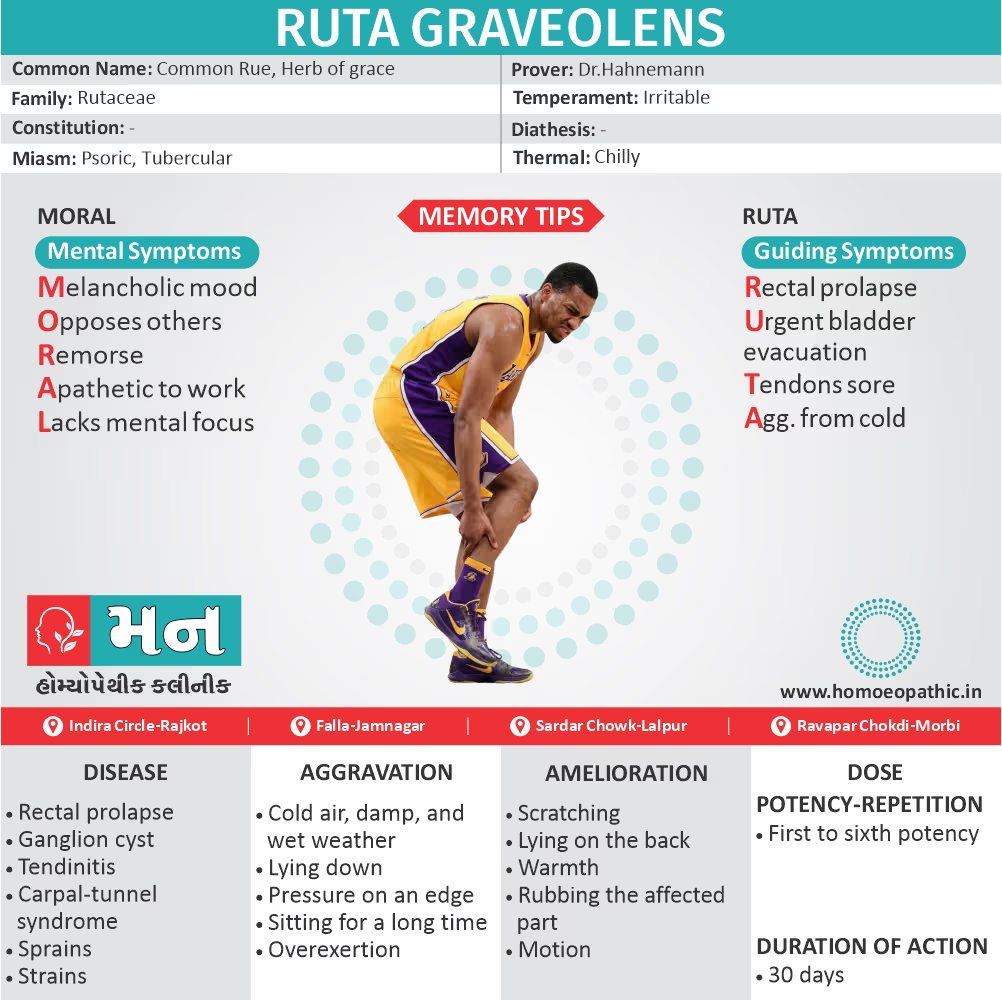
Hi Friends Let’s memorize guiding symptoms of Ruta Graveolens through name of Medicine ‘RUTA’.
R
U
T
A
R
R – Rectal Prolapse
Description: Prolapse of the rectum immediately on attempting a passage, or from the slightest stooping. It can occur frequently during the day. This symptom is often associated with a sense of pressure and pain, as if the rectum is a foreign body.
Reference: [A Dictionary of Practical Materia Medica by John Henry Clarke, M.D.]
U
U – Urgent Bladder
Description: A constant, painful pressure on the bladder, as if it were always full. This sensation is present even after urination, leading to a frequent and pressing urge to urinate. Sometimes, a small amount of urine is passed involuntarily when walking, coughing, or with sudden exertion.
Reference: [Condensed Materia Medica by Constantine Hering]
T
T – Tendons Sore
Description: A prominent feature is soreness in the tendons, especially the flexor tendons. The wrists and ankles often feel as if sprained. This soreness is aggravated by exertion, leading to a feeling of lameness and stiffness. It is particularly noted in carpenters or individuals who do fine, close work.
Reference: [Boericke’s New Manual of Homoeopathic Materia Medica with Repertory by William Boericke, M.D.]
A
A – Agg. from Cold
Description: General aggravation of symptoms from cold, wet weather and from lying down. The patient feels a deep, internal chilliness and their complaints, especially rheumatic pains, are worse in cold air.
Reference: [Leaders in Homoeopathic Therapeutics by E. B. Nash, M.D.]
Memory Tips for Mental Symptoms
Hi Friends Let’s memorize mental symptoms of Ruta Graveolens through name of Medicine ‘MORAL’.
M
O
R
A
L
M
M – Melancholy mood
Description: “Melancholy and moral dejection (towards evening).”
Reference: [Dictionary Of Practical Materia Medica (All 3 Vol.) By Clarke J. H.]
O
O – Opposes others
Description: “Disposition to quarrel and to contradict.”
Reference: [Dictionary Of Practical Materia Medica (All 3 Vol.) By Clarke J. H.]
R
R – Remorse
Description: “Very anxious all day, as though he had done something wrong”
Reference: [Encyclopedia Of Pure Materia Medica, Vol.8 By Allen T.F.]
A
A – Apathetic to work
Description: “Unfitness for labour.”
Reference: [Dictionary Of Practical Materia Medica (All 3 Vol.) By Clarke J. H.]
L
L – Lacks mental focus
Description: “Frequent absence of mind.”
Reference: [Dictionary Of Practical Materia Medica (All 3 Vol.) By Clarke J. H.]
Introduction
Constitution
Clinical
Mental Symptoms
Guiding Symptoms
Characteristic
Therapeutic Value
Modality
Remedy Relationship
Dose
Terminologies
Reference
Also Search As
Introduction
Introduction of Ruta Graveolens
Common name:
Common Rue, Herb of Grace[1]
Synonyms
Rue, Bitter herb
Family / Group / Class / Order
Rutaceae
Habit and habitat / Description
Southern Europe
Name of prover
Dr Samuel Hahnemann
Introduction and history
The common Rue of our gardens is a native of
southern Europe. It was formerly of great repute in medicine for epilepsy, hysteria,
hydrophobia, weakness of sight (from excessive reading), ozaena, epistaxis, foul
gumboils and inertia of bowels, having cured
them empirically.
Parts used
Tincture of whole fresh plant
Preparation
Mother tincture of the fresh herb; and dilutions.[3]
Constitution
Constitution of Ruta Graveolens
No particular.
Physical make up
No particular.
Temperament
Irritable
Diathesis
–
Relation with heat & cold
Chilly
Miasm
Psoric, Tubercular
Clinical
Clinical conditions of Ruta Graveolens
Amblyopia. Anus, prolapse of. Bone, bruised, pains in. Bruises. Bursitis. Cartilages, bruises of, pains in. Chest, sternum, pains in. Constipation. Dislocations. Dyspepsia. Enuresis. Epistaxis. Exostosis. Eyes, sight weak, pains in. Facial paralysis, from cold. Fevers. Fractures. Ganglion. Haemorrhages. Hands, pains in. Paralysis. Perichondritis. Periostitis. Rectum, affections of, prolapse of. Restlessness. Rheumatism. Sciatica. Spleen, affections of. Sprain. Stammering. Tongue cramp in, swelling of. Urination, difficulty of. Varicocele. Veins, swollen, varicose. Warts.[4]
Sites of action / Pharmacodynamics
It mainly acts on fibrous tissues,
flexor tendons, joints, ankles, wrists, cartilages, periosteum, uterus and skin .
Causation (Causes / Ailments from)
Injuries of bones, bruises, fractures, sprains, carrying heavy weights, overexertion of eyes.
Physiological action
This agent produces pain in the limbs and eyes that simulate rheumatism. It is an emmenagogue and an abortifacient.
Patho-physiological changes / Pathogenesis
Acts on fibrous tissues, joints
producing rheumatism. Acts on bones, fibrous tissues, wrists causing formation of deposits or nodes in the periosteum, tendons and about the joints, especially wrists.
Mental Symptoms
Characteristic Mental Symptoms (psychology) of Ruta Graveolens
1. Anxiety, as from a troubled conscience.
2. Patient has a disposition to quarrel and to contradict.
3. Feels unfit for labour.
4. Patient is cross and suspicious; imagined he was always being deceived.
5. Patient is dissatisfied with himself and others, and is disposed to weep.
6. Melancholy and moral dejection towards the evening.
7. Slowness of conception.
8. There is frequent absence of mind.
Guiding Symptoms
Guiding Symptoms of Ruta Graveolens
Generalities
This remedy has a special affinity for *fibrous tissue; *flexor tendons; *joints; *ankles; *wrists; *cartilages; *periosteum; *uterus and skin. It is the chief remedy for injured or bruised bones; therefore the pains are ***BRUISED; ***SORE, ***ACHING WITH RESTLESSNESS. *Feeling of intense painful weariness. *Heaviness; as of a weight in forehead or hanging to feet; or lower limbs. *As of a rough blunt plug in part, head, nose etc. *Paralytic rigidity. Distortions. Gnawing-burning pains, neuralgia. Rheumatism. Formation of deposits or nodes in the periosteum, tendons and about the joints esp. wrists. Ill effects of bruises, fractures; carrying heavy weights. Lameness after sprains. Bones brittle. Lain on parts become sore; even in bed. Feeling of intense lassitude, weakness and despair.
Head
Aches as if a nail is driven into it. Stitches worse Reading.
Eye
Red, hot and painful, from reading fine print, sewing. *Vision dim. Lachrymation. Itching inner canthi. Asthenopia. Spasm in lower eyelids, when it ceases, lachrymation starts.
Ears
Pain as from a blunt piece of wood.
Nose
Sweat on. Pressive aching at the root of nose; with epistaxis.
Mouth
Cramp in tongue, causing embarrassment of speech. Woody taste.
Stomach
Sudden nausea while eating; with vomiting of food. Burning_gnawing pain. Dyspepsia from carrying heavy weight. Violent thirst for ice cold water. Nausea felt in rectum Tension in stomach better drinking milk.
Abdomen
Urging to stool, but only *rectum prolapses. Prolapse of rectum on stooping; after delivery, during stools hard or soft. Faeces often escape when stooping. Painful swelling of the spleen. Cancer of lower bowel. Stricture of rectum.
Urinary Organ
Constant pressure on bladder as if it is full or moving up and down. Constant urging, can hardly retain urine, if forcibly retained she could not pass afterwards, with severe pain.
Sexual Organ
Corrosive leucorrhoea after irregular or suppressed menses.
Respiratory System
Short breath, with tightness of chest. Weak feeling in chest after thick, yellow, sputum. Painful spot on sternum. Ill effects of mechanical injury to chest.
Neck & Back
Weak, bruised feeling in small of back, hips and lower limbs in a.m. Coldness of spine, downwards. Back ache better lying on back and pressure.
Extremities
*Thighs feel broken worse when stretching the legs. Sore tendons. Totters; stumbles easily. Pains as if deep in long bones; must walk about. Nodes in palms. Ganglion of the wrist. *Bursae. Pain in bones of the feet, cannot step heavily on them. Contractions; of fingers; of feet, of toes. Hamstrings feel shortened. Cracking in joints worse walking in open air. Sciatica; worse lying down, at night better during daytime. Legs give out as one attempts to rise from a chair, has to make several attempts before one can succeed. Paralytic weakness of legs, after spraining of the back. Legs feel weak, knees give way, while ascending and descending stairs. Ankles swollen.
Skin
*Easily chafed; from walking, riding; also in children. Erosive itching. Flat smooth painful warts; on palms. Itching after eating meat.
Sleep
Wakes frequently; vivid, confused dreams. Yawns, stretches and extends hands.
Fever
Frequent attacks of quick flushes of heat. Glowing heat on face, skin etc.
Characteristic
Important characteristic features of Ruta Graveolens
Keynotes / Redline
1. Phthisis after mechanical injuries to chest.
2. Eyes burn, ache, red, hot like balls of fire.
3. Prolapse of rectum immediately on attempting a passage, from slightest stooping.
Guiding
Bruised Soreness of Bones and Periosteum
Eyestrain from Overuse and Fine Work
Sprains and Injuries to Tendons and Cartilage
Lower Back Pain, Worse on Lying Down
Lameness and Weakness After Exertion
PQRS
Anxiety as if From a Guilty Conscience
Rectal Prolapse from the Slightest Stoop
Sensation of Scraped or Broken Bones
Cough Triggered Immediately Upon Lying Down
Ganglion Cysts on the Back of the Wrist
Confirmatory
1. Bad effects of mechanical injuries, dislocation, fractures.
2. Bruised sore, feeling all over body.
3. Lameness, remaining after sprains.
4. Overstrain of ocular muscle.
5. Prolapse of rectum immediately on attempting a passage, from slightest stooping, continued after delivery.
Nucleus symptoms
-Special affection for the periosteum.
-Bad effects of mechanical injuries, dislocation, fractures.
-Tendency to formation of nodes. Deposits in periosteum, tendon, joints.
-Overstrain of ocular muscle.
Therapeutic Value
Therapeutic Value of Ruta Graveolens
-Special affection for the periosteum.
-Bad effects of mechanical injuries, dislocation, fractures.
-Lameness remaining after sprains.
-Tendency to formation of nodes. Deposits in periosteum, tendon, joints.
-Overstrain of ocular muscle.
Modality
Modality of Ruta Graveolens
Aggravation
Cold air, damp, and wet weather
Lying down
Pressure on an edge
Sitting for a long time
Uncooked or indigestible food
Stooping
Going up or down stairs
During menses
Overexertion
Amelioration
Scratching
Lying on the back
Warmth
Rubbing the affected part
Motion
Remedy Relationship
Remedy Relationship of Ruta Graveolens
Complimentary
Calc-P
Follows Well
Arn, Calc, Caust, Lyc, Ph-ac, Puls, Sul-ac, Sulph, Symph
Inimical
Antidoted By
Camph
It Antidotes
Merc
Comparison
Dose
Dose of Ruta Graveolens
First to sixth potency.
Potency
Duration of Action
30 Days
Terminologies
Terminologies of Ruta Graveolens
Core Homeopathic Concepts
Materia Medica:
A reference book detailing the symptom profiles of homeopathic remedies, established through provings.
Proving:
The process of testing a substance on healthy individuals to determine the symptoms it produces, and can therefore cure.
Keynote:
A unique, guiding, or highly characteristic symptom of a remedy (e.g., bruised pain in the periosteum for Ruta).
Potency:
The level of dilution and energization of a remedy, such as 6C, 30C, or 200CK.
Symptom Description & Analysis
Modality:
The specific circumstances that make a symptom better (amelioration) or worse (aggravation).
Aggravation (> or agg.):
The worsening of a symptom. For Ruta, this includes cold, damp weather and lying down.
Amelioration (< or amel.):
The improvement of a symptom. For Ruta, some pains are better from motion.
Totality of Symptoms:
The complete and unique set of a patient’s physical, mental, and emotional symptoms used to select a remedy.
Anatomical & Clinical Terms (Specific to Ruta)
Periosteum:
The dense membrane that covers the surface of bones. Ruta has a strong affinity for this tissue, making it a primary remedy for bone-bruises.
Tendons:
The tough, flexible cords of tissue that connect muscles to bones. Ruta is indicated for sprained or overused tendons.
Asthenopia:
The medical term for eyestrain, a major keynote for Ruta, especially from fine work or reading.
Ganglion:
A small, benign cyst that forms on a tendon sheath or joint capsule, commonly on the wrist, for which Ruta is often used.
Prolapse:
The slipping or falling down of an organ from its normal position. Ruta is known for rectal prolapse upon stooping or straining.
Reference
Reference of Ruta Graveolens
[1] Zomeo
[2] Gems textbook of materia medica by Dr.Patil
[3] A Manual Of Materia Medica, Therapeutics And Pharmacology By Blackwood, Alexander Leslie
[4] Dictionary Of Practical Materia Medica (All 3 Vol.) By Clarke J. H.
[5] Concise Materia Medica Of Hom. Remedies By S.R. Phatak
Also Search As
Also Search As of Ruta Graveolens
1. Academic & Research Databases
These platforms provide access to peer-reviewed and scholarly articles.
Google Scholar:
A broad search engine for academic literature.
Search Terms: "Ruta graveolens" homeopathy clinical trial, "Ruta" periosteum, "Ruta" asthenopia case report
PubMed:
The primary database for biomedical and life sciences literature.
Search Terms: (Ruta graveolens) AND (homeopathy), Ruta graveolens[Title/Abstract]
CCRH (Central Council for Research in Homoeopathy):
India’s official research organization has its own database and publications.
Search Terms: Use the search function on the official CCRH website for “Ruta”.
2. Dedicated Homeopathic Websites
These are large repositories and communities focused entirely on homeopathy.
Hpathy.com:
A comprehensive portal with thousands of articles, case studies, and an e-journal. Use their internal search bar.
Homeopathy360:
Another major platform with articles, research updates, and webinars.
Internet Archive (archive.org):
Ideal for finding foundational texts.
Search Terms: "Clarke Materia Medica", "Hering Guiding Symptoms" to read the original remedy provings.
3. Strategic Google Searching
Using specific search operators in Google can yield more precise results.
Use Specific Keywords: Combine the remedy with a condition.
Example: Ruta graveolens for eyestrain homeopathy, Ruta materia medica comparison
Search for Filetypes: Find articles and papers often saved as PDF files.
Example: Ruta graveolens research filetype:pdf
Search Within a Trusted Site: Limit your search to a specific, reliable website.
Example: Ruta case study site:hpathy.com
Frequently Asked Questions (FAQ)
What is Ruta Graveolens primarily used for in homeopathy?
Uses
Ruta Graveolens is a key remedy for injuries to connective tissues. It is most frequently used for sprains and strains of joints (especially wrists and ankles), bruised bones, tendonitis, ganglion cysts, and pain from overuse or repetitive motion, such as in carpal tunnel syndrome.
Is Ruta an effective remedy for eyestrain?
Eye
Yes, Ruta is one of the leading remedies for eyestrain (asthenopia). It is indicated when the eyes feel tired, hot, and ache after straining them through reading, sewing, or prolonged screen time. The vision may seem dim, with a feeling of pressure over the eyes.
Can Ruta help with back pain?
Back Pain
Ruta is highly effective for a specific type of lower back and sacral pain. It addresses deep, aching, or bruised pain that is often worse in the morning before moving and can be ameliorated by lying on the back or applying pressure.
What are the key guiding symptoms for choosing Ruta?
The most characteristic symptom for Ruta is a feeling of being bruised, sore, or beaten in the affected part. The pain is often deep, affecting the bones and tendons. Weakness in the joints, stiffness, and a general feeling of lameness after exertion are also strong indicators.
How is homeopathic Ruta taken and is it safe?
Safety
Homeopathic Ruta is prepared in various potencies (e.g., 6C, 30C) and is considered safe when used as directed. It is typically taken as small pellets that dissolve under the tongue. For correct potency and dosage for your specific condition, it is essential to consult with a qualified homeopathic practitioner.
How do homeopaths differentiate between Ruta and Rhus Tox for joint pain?
While both remedies treat joint pain, a practitioner differentiates them based on the affected tissue and key symptoms. Specifically, Rhus Tox addresses injuries to muscles and ligaments, marked by a significant restlessness and stiffness that improves with continued motion. In contrast, Ruta targets the tendons and bone-covering (periosteum), where the primary complaint is a deep, bruised soreness rather than just restless stiffness.
Can Ruta address modern ailments like Carpal Tunnel Syndrome?
Yes, homeopaths often consider Ruta for Carpal Tunnel Syndrome due to its strong affinity for overuse injuries. Because this condition results from repetitive strain on the wrist’s tendons, Ruta’s action on flexor tendons makes it a prime candidate. It specifically helps when a bruised, aching pain develops in the wrist and hand after prolonged activity.
Beyond injuries, what kind of cough might indicate a need for Ruta?
Beyond Injuries
Interestingly, Ruta addresses a particular type of cough that is often overlooked. Practitioners look for a spasmodic, tickling cough that is triggered immediately upon lying down at night. This cough may be accompanied by thick, yellow expectoration and a feeling of soreness in the chest, which aligns with Ruta’s characteristic bruised sensation.
Uses
Ruta Graveolens is a key remedy for injuries to connective tissues. It is most frequently used for sprains and strains of joints (especially wrists and ankles), bruised bones, tendonitis, ganglion cysts, and pain from overuse or repetitive motion, such as in carpal tunnel syndrome.
Eye
Yes, Ruta is one of the leading remedies for eyestrain (asthenopia). It is indicated when the eyes feel tired, hot, and ache after straining them through reading, sewing, or prolonged screen time. The vision may seem dim, with a feeling of pressure over the eyes.
Back Pain
Ruta is highly effective for a specific type of lower back and sacral pain. It addresses deep, aching, or bruised pain that is often worse in the morning before moving and can be ameliorated by lying on the back or applying pressure.
The most characteristic symptom for Ruta is a feeling of being bruised, sore, or beaten in the affected part. The pain is often deep, affecting the bones and tendons. Weakness in the joints, stiffness, and a general feeling of lameness after exertion are also strong indicators.
Safety
Homeopathic Ruta is prepared in various potencies (e.g., 6C, 30C) and is considered safe when used as directed. It is typically taken as small pellets that dissolve under the tongue. For correct potency and dosage for your specific condition, it is essential to consult with a qualified homeopathic practitioner.
While both remedies treat joint pain, a practitioner differentiates them based on the affected tissue and key symptoms. Specifically, Rhus Tox addresses injuries to muscles and ligaments, marked by a significant restlessness and stiffness that improves with continued motion. In contrast, Ruta targets the tendons and bone-covering (periosteum), where the primary complaint is a deep, bruised soreness rather than just restless stiffness.
Yes, homeopaths often consider Ruta for Carpal Tunnel Syndrome due to its strong affinity for overuse injuries. Because this condition results from repetitive strain on the wrist’s tendons, Ruta’s action on flexor tendons makes it a prime candidate. It specifically helps when a bruised, aching pain develops in the wrist and hand after prolonged activity.
Beyond Injuries
Interestingly, Ruta addresses a particular type of cough that is often overlooked. Practitioners look for a spasmodic, tickling cough that is triggered immediately upon lying down at night. This cough may be accompanied by thick, yellow expectoration and a feeling of soreness in the chest, which aligns with Ruta’s characteristic bruised sensation.